2026 Market Trends: Spinlock Dumbbell Kits & Bumper vs Iron Plates
Analyze 2026 free weight market trends. We compare bumper vs iron plates and evaluate the legacy spinlock dumbbell sector for home gym investments.

The 2026 Free Weight Market Landscape
As we navigate the fitness equipment market in 2026, consumer spending in the 'Free Weights & Racks' sector has bifurcated into distinct micro and macro investment channels. On the micro-level, budget-conscious home gym owners are still evaluating the utility of the traditional spinlock dumbbell setup against modern adjustable alternatives. On the macro-level, the 2-inch Olympic plate market is experiencing a massive surge, driven primarily by the enduring bumper plate vs iron plate debate. According to recent data from Grand View Research's fitness equipment market analysis, the global free weight segment continues to expand at a CAGR of 4.8%, with specialized Olympic plates capturing the lion's share of premium capital.
This trend report dissects the current manufacturing standards, pricing models, and practical applications of these distinct weight categories. Whether you are outfitting a commercial functional fitness facility or finalizing a garage gym build, understanding the material science and market positioning of these plates is critical for maximizing your return on investment.
Bumper Plate vs Iron Plate: The Core Comparison
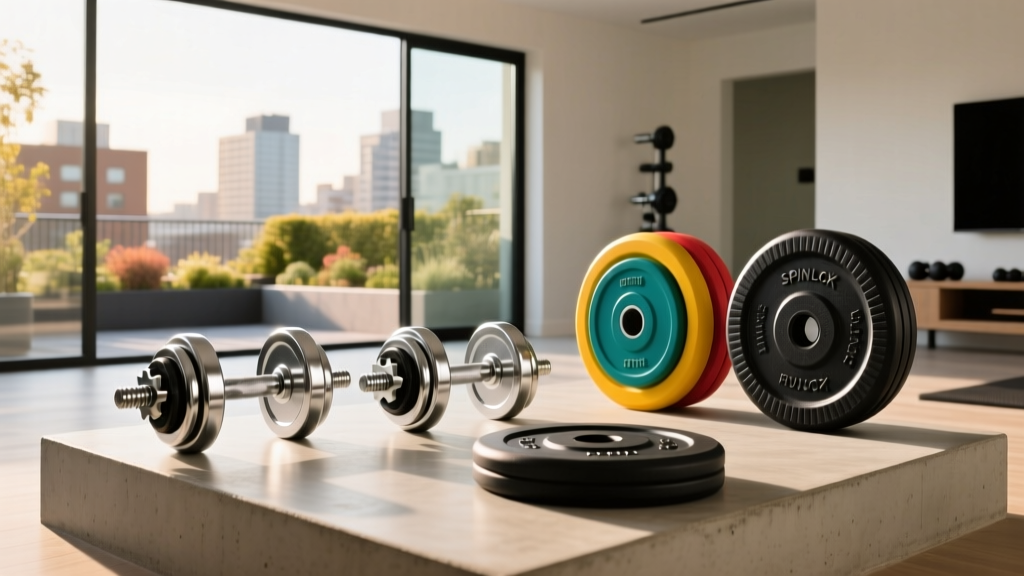
The decision between bumper plates and cast iron plates is no longer just about noise reduction; it is a fundamental choice regarding training modality, floor preservation, and equipment longevity. Bumper plates, constructed from high-density rubber or urethane, are engineered to be dropped from overhead. Iron plates, typically cast from gray iron and coated in enamel or chrome, offer superior density and cost-efficiency for controlled lifting environments.
Critical Warning on Drop Ratings: Not all rubber plates are 'bumpers'. The market is currently flooded with 'rubber-coated iron plates' that look like bumpers but feature a rigid iron core. Dropping these from overhead will transfer kinetic energy directly into your barbell sleeves and flooring, leading to catastrophic equipment failure. True bumpers feature a steel insert encased in a continuous rubber matrix designed to absorb and disperse impact.Head-to-Head Data Matrix
| Feature | Cast Iron Plates | Virgin Rubber Bumpers | Crumb Rubber Bumpers |
|---|---|---|---|
| Avg. Cost per Pound (2026) | $1.40 - $2.20 | $3.50 - $5.50 | $2.00 - $3.00 |
| Shore A Durometer | N/A (Rigid Metal) | 85A - 90A (High Density) | 70A - 80A (Softer, Bouncy) |
| Thickness (45lb Plate) | 1.2 - 1.5 inches | 2.1 - 3.2 inches | 3.5 - 4.5 inches |
| Primary Failure Mode | Enamel chipping, rust, casting voids | Steel insert blowout, rubber tearing | Edge crumbling, excessive bounce |
The Spinlock Dumbbell & Standard Plate Micro-Market
While the 2-inch Olympic market dominates the premium sector, the 1-inch standard plate market—most commonly utilized with a spinlock dumbbell handle—retains a fascinating, albeit shrinking, footprint. In 2026, the traditional spinlock dumbbell setup (a 14-inch or 16-inch threaded steel handle secured by star-lock nuts) is largely viewed as a legacy system. The rise of premium adjustable dumbbells (like the Nuobell or Bowflex SelectTech) has cannibalized the high-end standard plate market.
However, the spinlock dumbbell ecosystem remains highly relevant for two specific demographics: budget-restricted beginners and niche bodybuilders who prefer the micro-loading capabilities of standard 1.25lb and 2.5lb cast iron plates. Standard 1-inch cast iron plates currently average around $1.00 to $1.50 per pound on the secondary and closeout markets. The primary advantage of the spinlock system is its absolute mechanical reliability; unlike dial-based adjustable dumbbells, a threaded spinlock handle has zero internal plastic gears to strip or break during heavy floor transitions.
Edge Case: The 1-Inch Rubber Coated Trap
Consumers buying standard 1-inch plates for spinlock dumbbell handles often opt for rubber-coated variants to reduce noise. Industry testing highlighted by BarBend's comprehensive guide on plate materials frequently notes that cheap 1-inch rubber-coated plates suffer from severe off-gassing and dimensional inaccuracies. Because the center hole is simply punched or cast into a steel ring before being dipped in low-grade rubber, the 1-inch tolerance often shrinks to 0.95 inches, making them nearly impossible to slide onto a standard spinlock dumbbell sleeve without chipping the rubber coating.
Material Science & Manufacturing Trends in 2026
The manufacturing processes for both iron and bumper plates have seen significant refinements over the last three years, driven by supply chain optimizations and stricter International Weightlifting Federation (IWF) tolerances.
- Urethane vs. Virgin Rubber: Commercial facilities in 2026 are heavily pivoting toward urethane-coated iron plates and urethane bumpers. Urethane resists UV degradation and does not emit the volatile organic compounds (VOCs) associated with traditional vulcanized rubber. While urethane bumpers carry a 30% price premium over virgin rubber, their lifespan in high-traffic drop zones is nearly double.
- CNC-Machined Steel Inserts: The most common failure point in older bumper plates was the steel hub separating from the rubber matrix. Modern premium bumpers (such as the Rogue Echo series) now feature flanged, CNC-machined steel inserts with mechanical interlocking grooves that bond chemically and physically to the rubber during the vulcanization process.
- Calibrated Iron Plates: For powerlifting, the market has shifted toward calibrated steel and machined cast iron plates. These are milled to a strict 10-gram tolerance, addressing the historical issue of casting voids in cheap iron plates that could cause a 45lb plate to actually weigh 43.5lbs, creating dangerous barbell imbalance during heavy squats.
Cost-Benefit Analysis: Where Should You Invest?
Allocating your 2026 equipment budget requires matching the plate material to your specific training stimulus. Based on current market pricing and durability metrics, here is the optimal investment framework:
1. The Olympic Weightlifter & CrossFit Athlete
Verdict: 100% Virgin Rubber or Urethane Bumper Plates.
Rationale: Overhead drops and high-repetition cleans from the floor mandate the shock absorption of bumpers. The higher cost per pound ($3.50+) is justified by the protection of your barbell bearings and lifting platform. Look for plates with a dead-bounce rating (Shore A 88+) to prevent the bar from rebounding dangerously into your shins during missed snatches.
2. The Powerlifter & Bodybuilder
Verdict: Machined Cast Iron or Calibrated Steel Plates.
Rationale: Powerlifters and bodybuilders rarely drop weights from overhead. Iron plates offer superior density, allowing you to load more weight onto the barbell sleeve without running out of real estate. Furthermore, the thinner profile of iron plates keeps the center of gravity closer to the bar's knurling, improving biomechanical stability during heavy deadlifts and squats. At $1.50 per pound, it is the most economical choice for building a massive weight inventory.
3. The Budget Home Gym & Apartment Dweller
Verdict: Standard 1-inch Iron Plates with a Spinlock Dumbbell Kit, supplemented by Crumb Rubber Bumpers for light barbell work.
Rationale: If you are outfitting a space on a strict budget and cannot afford a $400+ pair of premium adjustable dumbbells, a heavy-duty threaded spinlock dumbbell handle paired with standard cast iron plates remains a virtually indestructible, low-cost entry point. For the barbell, economy crumb rubber bumpers (made from recycled tires) offer a middle ground: they are cheaper than virgin rubber and quieter than iron, though they do emit a distinct odor for the first few months and have a higher bounce rate.
Expert Verdict & Market Forecast
The free weight market in 2026 rewards informed buyers who understand the physics of their training. The bumper plate vs iron plate comparison ultimately boils down to impact tolerance versus spatial density. Meanwhile, the legacy spinlock dumbbell and standard plate sector, while overshadowed by high-tech adjustables, remains a testament to the enduring value of simple, mechanical reliability.
As manufacturing hubs in Southeast Asia continue to refine vulcanization techniques and steel milling tolerances, consumers can expect the price gap between premium urethane bumpers and standard iron plates to narrow slightly by late 2026. Until then, prioritize your spending based on your drop-frequency: if the weight leaves your hands from above the waist, invest in high-durometer bumpers; if it stays in the rack or on the bench, maximize your budget with high-density cast iron.
'The best weight plate is the one that survives your worst missed lift. In 2026, that means trusting the durometer rating on your bumpers and the casting integrity of your iron, rather than just the brand name stamped on the side.' — Equipment Testing Directorate, Garage Gym Reviews
More gear to consider
All reviews
Power Rack vs Squat Stand Setup for Aerobic Dumbbell Exercises
Building a Dumbbell Lawn Mower Sled: Olympic vs Standard Plates Setup

Optimizing Gym Layouts: Storage for a Dumbbell Calf Workout

Optimizing Rows with Dumbbells: Rubber Hex vs Urethane Value
EZ Curl Bar vs Straight Bar: Arm Strength for the Dumbbell Get Up
