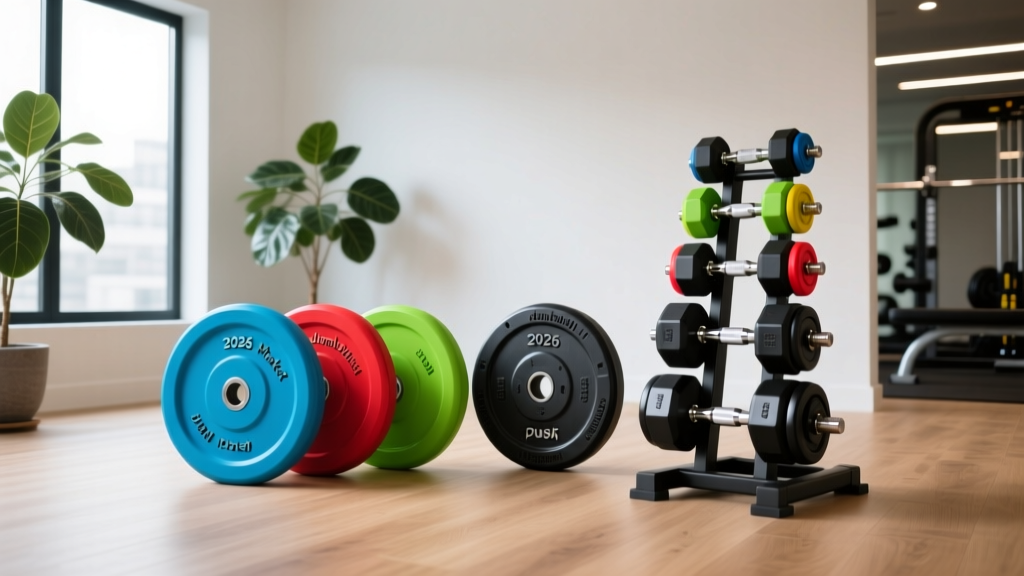
2026 Plate Market: Bumper vs Iron & The Dumbbell Push Trend
Analyze the 2026 bumper plate vs iron plate market. Discover how the dumbbell push trend impacts pricing, density, and home gym buying decisions.

The 2026 Free Weight Market Landscape
The fitness equipment market in 2026 has reached a fascinating inflection point. Following the massive home-gym boom of the early 2020s, consumer purchasing behavior has matured from panic-buying any available iron to highly strategic, data-driven equipment allocation. At the center of this evolution is the ongoing debate between bumper plates and cast iron plates. While traditional powerlifters and bodybuilders remain loyal to iron, the explosive growth of functional fitness and hybrid training methodologies has kept bumper plates in high demand.
However, a new variable is heavily influencing how gym owners and home lifters allocate their budgets this year: the surging popularity of the dumbbell push movement pattern. As programming shifts toward unilateral overhead work and hybrid push-press variations, lifters are fundamentally changing how they buy weight plates. This trend report breaks down the technical, financial, and spatial realities of the bumper vs. iron plate market in 2026, and explains why your approach to the dumbbell push might dictate your next plate purchase.
Bumper vs. Iron: Technical & Material Comparison
To understand the market shift, we must first look at the raw material science and manufacturing standards governing modern weight plates. According to comprehensive equipment analyses by Garage Gym Reviews, the gap in quality between economy and premium plates has narrowed, but the physical properties of rubber versus iron remain vastly different.
| Feature | Premium Bumper Plates (Virgin Rubber) | Economy Bumper Plates (Crumb Rubber) | Machined Cast Iron Plates |
|---|---|---|---|
| Density / Thickness (45lb) | ~3.2 inches | ~3.8 inches | ~1.3 inches |
| Durometer Rating (Shore A) | 90+ (Low Bounce) | 70-75 (High Bounce) | N/A (Solid Metal) |
| IWF Diameter Tolerance | 450mm (+/- 1mm) | 450mm (+/- 3mm) | Varies (Often <450mm) |
| Drop Rating (2m) | 10,000+ drops | 1,000 - 3,000 drops | Not rated for drops |
| Avg. 2026 Price Per Pound | $3.50 - $5.00 | $1.80 - $2.50 | $1.50 - $2.20 |
The Sleeve Real Estate Problem
One of the most critical, yet frequently overlooked, factors in the bumper vs. iron debate is barbell sleeve capacity. A standard Olympic barbell sleeve is roughly 16.3 inches long. If you are loading 45lb machined iron plates (like the Rogue Deep Dish), you can comfortably fit five plates per side (225 lbs on the bar, plus the bar weight). Conversely, loading 45lb virgin rubber bumpers maxes out at roughly three to four plates per side before you risk the collar failing to secure the load. For elite strength athletes moving 500+ lbs, iron is not just a preference; it is a spatial necessity.
The 'Dumbbell Push' Effect on Equipment Allocation
Perhaps the most intriguing market trend of 2026 is how the dumbbell push—encompassing the strict dumbbell press, the dumbbell push press, and the dumbbell jerk—is altering plate purchasing ratios. Biomechanics experts at Stronger By Science have long noted the superior stabilizer recruitment and hypertrophic stimulus of unilateral overhead pressing. In response, modern functional programming has heavily integrated heavy dumbbell push variations.
Market Insight: The Budget Pivot
Historically, a lifter might buy a full set of fractional bumper plates (10lb, 15lb, 25lb) to micro-load barbell push presses or supplement overhead work. In 2026, market data shows a massive pivot. Consumers are capping their plate purchases at a basic, heavy iron set for barbell squats and deadlifts, and redirecting the remaining $400–$600 of their budget toward premium adjustable dumbbells (such as Nuobell or PowerBlock). This allows them to program heavy dumbbell push variations with precise 5lb micro-jumps without needing a full rack of fixed dumbbells or expensive fractional bumpers.
Because the dumbbell push requires high neurological stabilization, lifters prefer the ergonomic grip and balanced center of mass of dedicated adjustable dumbbells over trying to awkwardly tape small bumper plates to a barbell or using sub-optimal fixed-weight pairs. Consequently, the demand for 10lb and 15lb bumper plates has softened slightly in the home-gym sector, while 45lb iron plates and adjustable dumbbell systems are seeing record Q1 2026 sales.
2026 Pricing & Supply Chain Realities
The global supply chain for raw materials has stabilized significantly compared to the volatility of previous years, but distinct pricing tiers remain. When evaluating the best weight plates on the market, industry authorities like Barbend highlight that shipping costs still heavily dictate the final retail price of iron due to its extreme density.
- Cast Iron Plates: The raw material cost of cast iron is relatively low, but the freight cost is immense. Expect to pay between $1.50 and $2.20 per pound. Brands like Rep Fitness and Rogue Fitness have optimized their shipping logistics, but iron remains a heavy, expensive commodity to transport to your door.
- Crumb Rubber Bumpers: Made from recycled tires, these are the most cost-effective bumpers. Priced around $1.80 to $2.50 per pound, they are excellent for garage gyms where noise dampening is required, though they suffer from a strong initial off-gassing odor and higher bounce rates.
- Virgin Rubber Bumpers: Priced at a premium ($3.50 to $5.00+ per pound), these are essential for commercial gyms or home gyms where dropping weights from overhead (such as missed snatch attempts) is common. The high Shore A durometer ensures the plate absorbs impact without bouncing back dangerously.
Longevity, Maintenance, and Failure Modes
A true market analysis must account for the total cost of ownership, which includes maintenance and failure rates. Iron plates are virtually indestructible. The only failure mode for cast iron is cosmetic rust if stored in a humid, unclimate-controlled garage. A quick wire brushing and a coat of 3-IN-ONE oil will restore them perfectly.
Bumper plates, however, have specific failure modes that buyers must anticipate:
- Hub Insert Separation: The metal ring in the center of a bumper plate can loosen over time if the barbell is aggressively dropped on uneven surfaces (like concrete without horse-stall mats). Once the hub pushes through the rubber, the plate is structurally compromised.
- Edge Tearing: Economy crumb bumpers are prone to chipping and tearing at the outer edge if they are frequently dropped from overhead heights.
- UV Degradation: If your gym space receives direct sunlight, lower-quality rubber compounds will dry out, crack, and degrade within 18 to 24 months.
'The modern home gym is no longer just a place to max out on the barbell. It is a hybrid performance space. The equipment you buy must reflect the diversity of your programming, from heavy bilateral pulls to highly technical dumbbell push mechanics.'
The Hybrid Gym Decision Matrix
How should you allocate your 2026 equipment budget? Use this decision framework to determine your ideal plate and dumbbell configuration.
Scenario A: The Powerlifter / Strength Purist
If your primary goals are the squat, bench, and deadlift, and you rarely drop weights from overhead, buy machined iron plates. The space savings on the barbell sleeve, the lower cost per pound, and the satisfying acoustic feedback of iron clanking are unmatched. Pair this with a basic set of fixed dumbbells for accessory rows and tricep extensions.
Scenario B: The CrossFit / Functional Athlete
If your programming includes Olympic weightlifting (cleans, snatches) and high-repetition barbell drop sets, virgin rubber bumper plates are mandatory. Dropping iron plates will destroy your barbell, your flooring, and your joints. Invest in a matched set of 45lb and 25lb bumpers.
Scenario C: The Hybrid Hypertrophy & Performance Lifter
This is the dominant 2026 demographic. If you want to build a well-rounded physique and prioritize the dumbbell push press for shoulder development, adopt the hybrid allocation strategy:
- Buy a moderate set of cast iron plates (e.g., 2x45, 2x25, 2x10) for heavy barbell work and space efficiency.
- Skip the expensive fractional bumpers and light bumper sets.
- Reallocate the saved capital into a high-end adjustable dumbbell set (ranging from 5 to 50+ lbs). This gives you the precise increments needed to progressively overload your dumbbell push variations, lateral raises, and unilateral pressing movements without cluttering your gym with a massive dumbbell rack.
Final Market Outlook
As we move deeper into 2026, the bumper vs. iron plate debate is no longer about which material is universally 'better.' It is about strategic portfolio management for your home or commercial gym. The rise of targeted, stabilizer-heavy movements like the dumbbell push has proven that lifters are becoming smarter with their capital. By leveraging iron for maximum barbell density and utilizing adjustable technology for unilateral pressing, the modern lifter achieves a more versatile, cost-effective, and space-optimized training environment than ever before.
More gear to consider
All reviews
Home Gym Setup Walkthrough: Integrating a 45 lb Dumbbell Pair

Best Racks for Hip Thrusts with Dumbbells: 2026 Budget Guide

What Dumbbell Weight Should I Start With? Female Neoprene Mistakes

Space-Saving Gym: Kettlebells & How to Work Tricep with Dumbbells

Single-Arm Dumbbell Rows: Adjustable Dumbbell Mistakes & Top Picks
