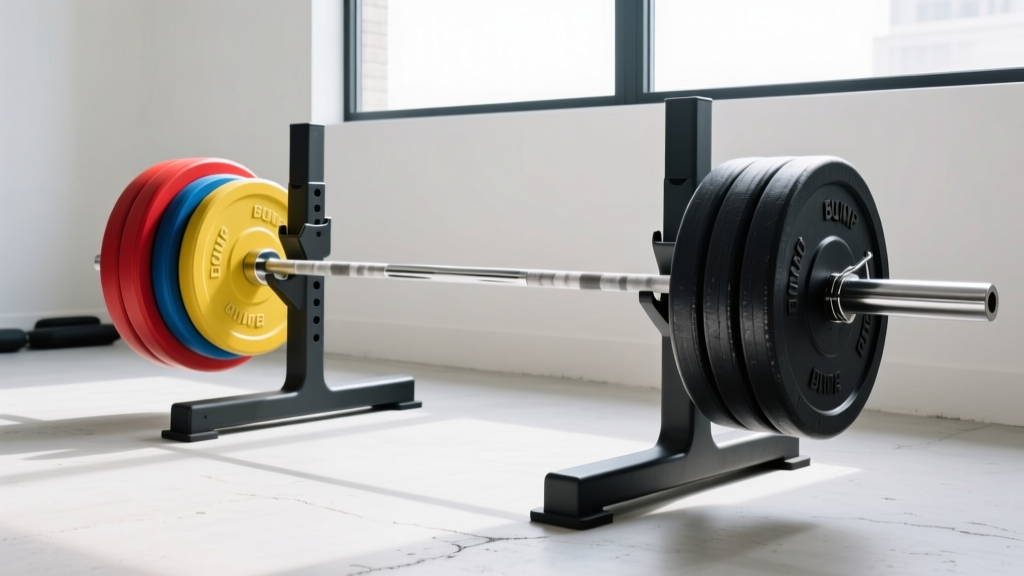
Bumper vs Iron Plates: Budgeting for a Dumbbell Weight Routine
Compare bumper vs iron plates for your home gym. We break down costs, durability, and value for barbell and plate-loaded dumbbell weight routines.

The Home Gym Economics: Fixed vs. Plate-Loaded Systems
Outfitting a home gym for a comprehensive strength program often leads to a major financial crossroads: how do you afford the equipment necessary for a high-volume dumbbell weight routine without spending thousands on fixed hex dumbbells? The smartest budget hack in the modern garage gym is the plate-loaded dumbbell handle. Brands like Yes4All and Titan Fitness offer heavy-duty plate-loaded handles that allow you to use your existing barbell plates for dumbbell work, effectively cutting your free weight budget in half.
However, this strategy introduces a secondary dilemma: which type of plates should you buy? Bumper plates and cast iron plates serve different purposes, possess vastly different physical dimensions, and carry distinct price tags. If you are trying to maximize value for a hybrid barbell and dumbbell weight routine, understanding the mechanical and financial differences between rubber bumpers and machined iron is critical to avoiding expensive mistakes.
Budget Insight: The Cost-Per-Pound Reality
In 2026, the average cost per pound for high-quality virgin rubber bumper plates hovers between $2.50 and $3.80. Conversely, precision-cast iron plates typically range from $1.40 to $2.00 per pound. When scaling up to a 300lb total plate inventory to support both barbell lifts and heavy plate-loaded dumbbell presses, that delta represents a $300 to $500 difference in your initial capital outlay.
Bumper vs. Cast Iron: The Core Comparison Matrix
Before diving into the specific mechanics of plate-loaded dumbbells, it is essential to understand the baseline differences between these two plate categories. According to extensive testing by BarBend's equipment review team, the choice between bumper and iron fundamentally alters your gym's noise profile, drop tolerance, and spatial footprint.
| Feature | Virgin Rubber Bumper Plates | Machined Cast Iron Plates |
|---|---|---|
| Cost Per Pound | $2.50 - $3.80 | $1.40 - $2.00 |
| 10lb Plate Thickness | ~1.3 to 1.8 inches | ~0.8 to 0.9 inches |
| Drop Rating | High (Designed for Olympic drops) | Low (Will crack flooring or chip) |
| Acoustic Profile | Quiet, dull thud | Loud, metallic clang |
| Dumbbell Suitability | Poor (Too thick for most handles) | Excellent (Slim profile fits sleeves) |
The 'Thickness Problem' in Plate-Loaded Dumbbell Routines
Here is where most home gym owners make a costly error. When designing a dumbbell weight routine using plate-loaded handles, the physical width of the plate becomes your primary limiting factor.
Standard Olympic bumper plates maintain a uniform 17.7-inch diameter regardless of weight, meaning a 10lb bumper plate is essentially a thin, wide disc. To maintain structural integrity and prevent the plate from bending under the steel hub, manufacturers must make lighter bumper plates surprisingly thick. For example, a 10lb Rogue Echo Bumper Plate is roughly 1.3 inches thick, while a 15lb plate is nearly 1.8 inches thick.
Real-World Sleeve Math: Why Bumpers Fail on Dumbbells
Let's look at the popular Yes4All 14-inch plate-loaded dumbbell handle. The loadable sleeve length is exactly 4.5 inches. If you attempt to load a 35lb dumbbell using 10lb bumper plates, you would need three 10lb plates per side (totaling 4.5 inches of width when accounting for the lip). This leaves zero millimeters of clearance for the spring collar or screw clamp.
Conversely, a 10lb machined cast iron plate (like those from Rep Fitness or Rogue) is only about 0.85 inches thick. You can easily stack three 10lb iron plates and a 2.5lb fractional plate on the same sleeve, securing it safely with a standard star-lock nut. If your dumbbell weight routine involves heavy goblet squats, floor presses, or Bulgarian split squats, the slim profile of iron plates is non-negotiable for achieving the necessary weight increments safely.
"The biggest mistake I see in garage gym builds is buying all bumpers to save the floor, only to realize they can't load their plate-loaded dumbbells past 25 pounds per side. You end up buying a set of iron fractions anyway." — Home Gym Engineering Consensus
Budget Breakdown: Building a 250lb Hybrid Kit
To illustrate the financial and practical value, let's break down the cost of building a 250lb plate inventory optimized for both a barbell and a plate-loaded dumbbell weight routine in 2026.
Scenario A: The All-Bumper Approach
- Inventory: 2x45lb, 2x35lb, 2x25lb, 2x15lb, 2x10lb (Virgin Rubber)
- Average Cost: ~$3.00/lb
- Total Cost: $750.00
- The Catch: You cannot safely load the 15lb or 10lb bumpers onto standard plate-loaded dumbbell handles. Your dumbbell routine is artificially capped at light weights.
Scenario B: The All-Iron Approach
- Inventory: 2x45lb, 2x35lb, 2x25lb, 2x10lb, 2x5lb, 2x2.5lb (Machined Cast Iron)
- Average Cost: ~$1.70/lb
- Total Cost: $425.00
- The Catch: Dropping a loaded barbell from the shoulder or overhead will destroy your concrete subfloor and deafen your neighbors. Iron requires strict control and premium horse-stall matting.
Scenario C: The Smart Hybrid (Maximum Value)
The optimal setup for a mixed-modality home gym separates the budget based on movement mechanics.
- Barbell Bumpers (For Drops & Deadlifts): 2x45lb, 2x35lb, 2x25lb Bumpers (160 lbs @ $2.80/lb = $448)
- Dumbbell Iron (For Handles & Isolation): 2x10lb, 4x5lb, 2x2.5lb Iron (45 lbs @ $1.60/lb = $72)
- Total Hybrid Cost: $520.00
This hybrid approach saves you over $200 compared to the all-bumper route, protects your floors during heavy barbell deadlifts, and guarantees your plate-loaded dumbbell handles can be loaded efficiently for high-rep hypertrophy work.
Durability, Torque, and Material Degradation
When executing a demanding dumbbell weight routine, the plates are subjected to unique lateral torques that barbell lifts do not produce. Movements like dumbbell lunges, renegade rows, and floor presses often result in the plates scraping against concrete or rubber matting at awkward angles.
According to long-term durability analyses featured in BarBend's iron plate reviews, machined cast iron plates with a baked enamel or zinc finish easily survive this lateral abrasion. Bumper plates, however, are vulnerable to 'chunking'—where the rubber edge tears away from the steel center hub when dragged across rough surfaces. Using expensive virgin rubber bumpers on plate-loaded dumbbells for floor-based exercises is a fast track to ruining a $300 set of plates.
⚠️ Warning on Handle Compatibility: If you are using older or budget plate-loaded dumbbell handles with 1-inch standard pegs rather than 2-inch Olympic sleeves, bumper plates will not fit at all. Furthermore, the rotational force of heavy dumbbell pressing can bend cheap 1-inch steel pegs. Always invest in 2-inch Olympic plate-loaded handles (like the Titan Fitness 18-inch model) to ensure compatibility with standard iron and bumper plates.Final Verdict: Structuring Your Equipment Budget
Choosing between bumper and iron plates is not a binary decision; it is a spatial and mechanical puzzle. If your primary focus is Olympic weightlifting and you rarely use dumbbells, bumpers are mandatory. However, if your programming relies heavily on a versatile, heavy dumbbell weight routine utilizing plate-loaded handles, cast iron plates offer superior value, better sleeve ergonomics, and higher resistance to lateral abrasion.
For the ultimate budget-conscious home gym, adopt the hybrid model: invest in a pair of 45lb and 35lb bumpers for your barbell deadlifts and cleans, and allocate the rest of your budget to a comprehensive set of machined iron plates (down to 1.25lb fractions) to perfectly calibrate your plate-loaded dumbbells. This strategy ensures floor protection, maximizes your loadable sleeve space, and keeps your hard-earned capital where it belongs—in your pocket.
More gear to consider
All reviews
Beyond the Dumbbell Bracelet: Dumbbell Rack Storage Trends

Rubber Hex vs Urethane Dumbbells: Best for Dumbbell Rows?

Olympic vs Standard Plates: Troubleshooting & Bowflex 560 Dumbbells

Best Neoprene Dumbbells for Home Use & Dumbbell Pull Down Guide (2026)

Bumper vs Iron Plates: Space Layouts & Wide Dumbbell Curl Zones
