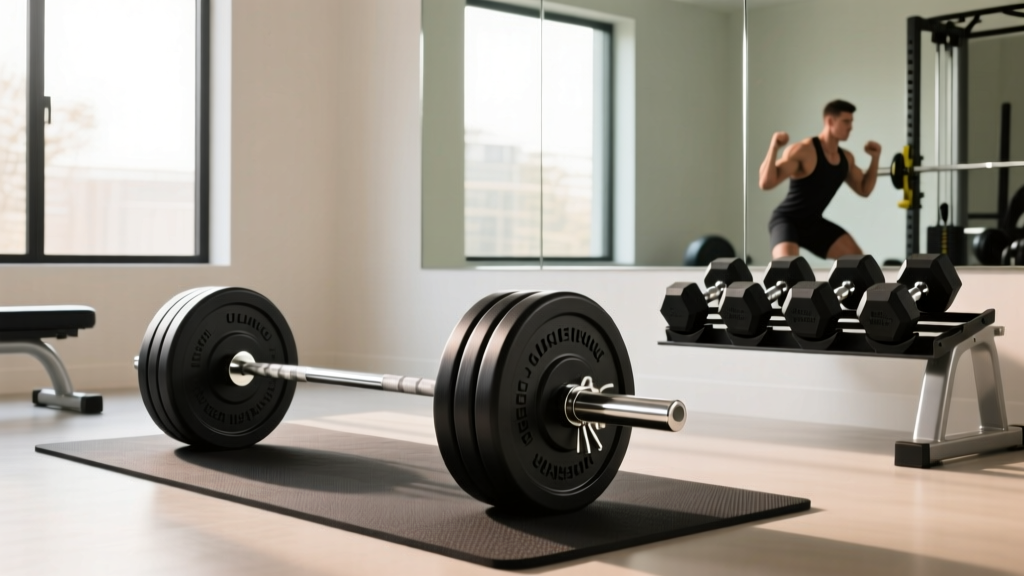
Bumper vs Iron Plates: Budgeting for Dumbbell Exercises Lateral Raises
Compare bumper plate vs iron plate costs per pound. Learn how to budget your home gym build to afford quality dumbbells for lateral raises and isolation work.

The Home Gym Budget Bottleneck: Plates vs. Isolation Weights
Building a home gym in 2026 requires ruthless financial prioritization. The most common mistake new lifters make is blowing their entire free-weight budget on premium barbell plates, only to realize they have nothing left for isolation work. While a heavily loaded barbell is essential for compound movements, your physique's aesthetic details—specifically shoulder width and medial deltoid development—rely heavily on targeted isolation. If you overspend on your plate selection, you starve your accessory fund, leaving you without the proper tools for effective dumbbell exercises lateral raises being the most critical for achieving that capped-shoulder look.
This guide provides a comprehensive budget breakdown and value analysis of the bumper plate vs iron plate comparison. By understanding the true cost-per-pound and practical utility of each plate type, you can strategically reallocate your capital to ensure your gym is fully equipped for both heavy barbell lifts and precise dumbbell isolation work.
Bumper Plate vs Iron Plate Comparison: 2026 Pricing Matrix
Before we dive into the specific economics of funding your dumbbell rack, we need to establish the baseline costs of barbell plates in the current market. Prices have stabilized since the supply chain issues of the early 2020s, but the gap between cast iron and polymer bumpers remains significant.
| Feature | Cast Iron Plates (e.g., Titan Fitness) | Crumb Rubber Bumpers (e.g., Fringe Sport) | Virgin Rubber Bumpers (e.g., Rogue Echo) |
|---|---|---|---|
| Average Cost Per Pound (2026) | $1.30 - $1.60 / lb | $2.00 - $2.40 / lb | $2.60 - $3.10 / lb |
| Cost for 260lb Set | ~$390 | ~$570 | ~$750 |
| Drop Rating | Low (Will crack concrete/flooring) | High (Excellent shock absorption) | Medium-High (Dead bounce, high durability) |
| Thickness (45lb Plate) | 1.15 inches | 2.15 inches | 1.30 inches |
| Primary Use Case | Powerlifting, budget builds | Garage gyms, high-volume dropping | Competitive weightlifting, commercial gyms |
Cast Iron Plates: The Budget King
If your training consists primarily of powerlifting movements (squats, bench presses, deadlifts) where the barbell is either lowered under control or dropped onto safety pins, cast iron is the undisputed value champion. Brands like Rogue Fitness and Titan Fitness offer machined or cast iron plates that deliver exceptional longevity. The primary drawback of iron is its acoustic footprint and its potential to damage subflooring if dropped from shoulder height. However, from a pure budget breakdown perspective, iron saves you roughly $1.00 to $1.50 per pound compared to virgin rubber bumpers.
Bumper Plates: Paying for Polymer and Peace of Mind
Bumper plates are engineered to be dropped. According to extensive testing by Garage Gym Reviews, high-quality virgin rubber bumpers can withstand tens of thousands of drops from overhead without deforming. If your programming includes Olympic weightlifting (snatches, cleans) or high-rep CrossFit-style deadlifts where dropping the bar is a safety necessity, bumpers are a mandatory purchase. However, you are paying a premium for the rubber matrix and the steel hub insert. This premium is exactly what we need to minimize if we want to fund our isolation equipment.
The Accessory Fund: Financing Dumbbell Exercises Lateral Raises
Here is where the budget breakdown becomes actionable. Let's assume you are building a 260lb plate set. By choosing a high-quality cast iron set ($390) over a premium virgin rubber bumper set ($750), you instantly free up $360 in capital. This is your 'Accessory Fund.'
Many home gym owners search for dumbbell exercises lateral raises to target their side delts, but fail to realize that this specific movement requires highly specialized weight increments. Unlike a barbell bench press where you can jump 10 or 20 pounds, the lateral raise is an isolation movement governed by strict biomechanical leverage. According to kinesiology data from ExRx.net, the moment arm on a lateral raise places immense stress on the supraspinatus and medial deltoid, meaning most lifters require precise weight jumps between 10 lbs, 15 lbs, 20 lbs, and 25 lbs to properly apply progressive overload without sacrificing form.
The 60/30/10 Gym Budget Rule
To maximize your free weight ROI, allocate your budget as follows:
- 60% Foundational Barbell Gear: Barbell, rack, bench, and cast iron plates.
- 30% Isolation & Accessory: Adjustable dumbbells, kettlebells, and resistance bands.
- 10% Ergonomics & Maintenance: Flooring, barbell oil, and plate storage.
By adhering to this framework, you ensure that your 'Accessory Fund' is never cannibalized by over-purchasing barbell plates.
Where to Allocate the $360 Savings
With $360 in hand, you have two distinct paths to properly equip yourself for lateral raises and other dumbbell movements:
- The Fixed Hex Route ($250 - $350): You can purchase a targeted rack of rubber-coated hex dumbbells. A pair of 15s, 20s, and 25s will cost roughly $2.00 per pound. Hex dumbbells are ideal for lateral raises because the flat edges prevent them from rolling off your bench or floor, and the grip diameter is usually consistent and comfortable for high-rep isolation sets.
- The Adjustable Dumbbell Route ($350 - $450): If you stretch your budget slightly, investing in a pair of adjustable dumbbells like the Nuobell or PowerBlock Elite EXP is the ultimate value play. These models allow for 2.5 lb micro-jumps. Micro-loading is the secret to mastering dumbbell exercises lateral raises; moving from 15 lbs to 17.5 lbs is a much more sustainable progression than jumping to 20 lbs, reducing the risk of rotator cuff impingement.
Edge Cases: When You Must Ignore the Budget and Buy Bumpers
While cast iron is the logical choice for funding your dumbbell rack, there are specific failure modes and environmental constraints where buying iron plates becomes a costly mistake:
- Garage Gym Acoustics: If your gym is above a living space or shares a wall with neighbors, the acoustic shockwave of dropping 300 lbs of cast iron will cause structural vibrations and noise complaints. Crumb rubber bumpers act as a sound deadener.
- Outdoor or Humid Environments: If your gym is in a non-climate-controlled garage in a high-humidity region (like the US Southeast), cast iron plates will oxidize and rust rapidly unless you commit to weekly wire-brushing and mineral oil applications. Urethane or virgin rubber bumpers are impervious to moisture.
- Olympic Weightlifting Aspirations: If you plan to train the snatch or clean and jerk, dropping the bar from overhead is non-negotiable for safety. Cast iron plates will shatter, destroy your barbell sleeves, and crack concrete foundations under overhead impact.
Expert Verdict: Maximizing Your Free Weight ROI
The bumper plate vs iron plate comparison ultimately comes down to your training style and your environmental constraints. If you are a powerlifter, bodybuilder, or general fitness enthusiast who controls the eccentric portion of your barbell lifts, cast iron plates offer an unbeatable cost-per-pound ratio. By choosing iron, you actively protect your accessory budget, ensuring you have the capital required to purchase the precise 15 lb and 20 lb dumbbells necessary for strict, effective lateral raises and isolation work. Do not let the aesthetic appeal of colorful bumper plates rob you of the foundational tools needed to build a complete, well-rounded physique.
Frequently Asked Questions
Can I use bumper plates for dumbbell exercises like lateral raises?
No. Bumper plates are designed for barbells. While you can technically grip a 10lb bumper plate by the center hub for a makeshift lateral raise, the thick rubber profile (often over 2 inches thick for lighter weights) makes the grip highly awkward and alters the biomechanical leverage, reducing medial deltoid activation compared to a properly balanced dumbbell.
Are urethane plates worth the extra cost over rubber bumpers?
Urethane plates are significantly more durable than rubber, resist UV degradation, and lack the strong 'off-gassing' odor associated with cheap crumb rubber. However, at $4.00+ per pound in 2026, they are a luxury commercial-gym investment. For a home gym budget focused on maximizing accessory equipment, standard cast iron or virgin rubber remains the superior value proposition.
How heavy should my dumbbells be for lateral raises?
Weight is entirely dependent on your strength level, but form dictates the load. Because the lateral raise is a single-joint isolation movement with a long moment arm, most intermediate lifters will find their working sets fall between 15 lbs and 25 lbs per hand. This reinforces the need to reallocate plate savings toward lighter, precise dumbbell increments rather than solely funding heavy 45lb barbell plates.
More gear to consider
All reviews
Best Dumbbell Racks for Small Gyms + Dumbbell Chest Workout No Bench
Best Dumbbell Racks & Storage for Functional Training with Dumbbells (2026)
How Much Can I Bench If I Dumbbell Press 50? Barbell Buying Guide

EZ Curl Bar vs Straight Bar: Does a 12lb Dumbbell Win?

Upgrading From Merach Dumbbells: Olympic Barbell Weight & Knurling