Bumper vs Iron Plates: Budgeting Your Dumbbell and Barbell Workout
Compare bumper vs iron plates for your dumbbell and barbell workout. We break down 2026 pricing, failure modes, and budget frameworks to maximize value.

The True Cost of Equipping Your Dumbbell and Barbell Workout
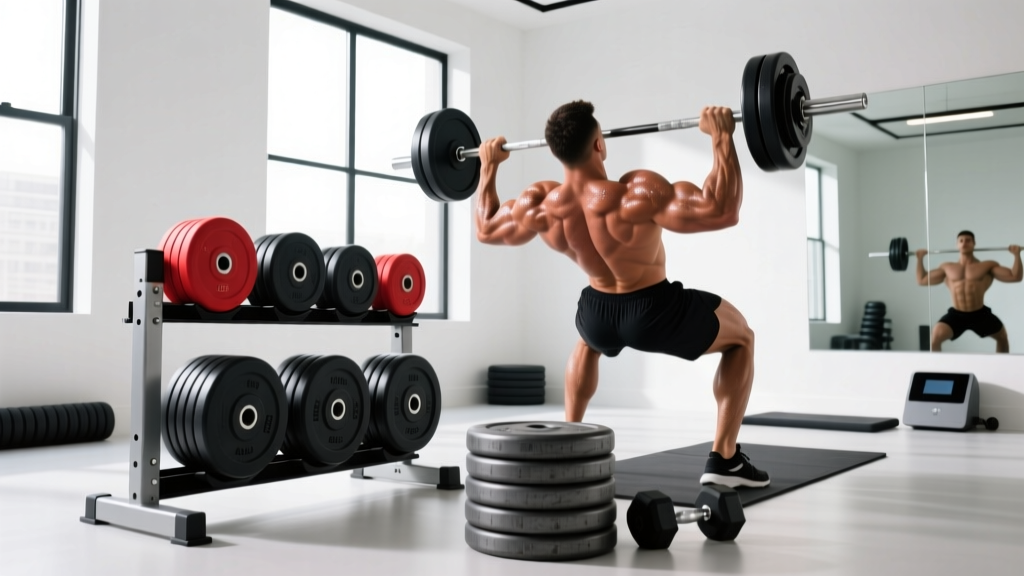
Building a comprehensive home gym in 2026 requires ruthless budget optimization. When designing a versatile dumbbell and barbell workout space, weight plates represent your largest single equipment investment. The debate between bumper plates and cast iron plates is rarely just about aesthetics; it is a complex calculation involving price-per-pound, equipment longevity, floor preservation, and specific training modalities.
According to Garage Gym Reviews' extensive weight plate testing, the average home gym owner spends between $400 and $800 on their initial plate set. However, choosing the wrong material for your specific training style can lead to premature equipment failure, forcing a costly replacement cycle within three years. This guide breaks down the exact financial and functional realities of plate selection in the current market.
2026 Market Breakdown: Price and Performance Matrix
To understand the value proposition, we must look at the current 2026 pricing structures across the four primary plate categories. The table below outlines the average cost per pound, total cost for a standard 300-pound set, and critical performance metrics.
| Plate Type | Material | Avg Price/Lb | 300lb Set Cost | Weight Variance | Drop Rating |
|---|---|---|---|---|---|
| Standard Cast Iron | Cast Iron / Enamel | $1.20 - $1.60 | $360 - $480 | +/- 5% | Low (Floor Damage Risk) |
| Crumb Rubber Bumper | Recycled Rubber | $1.50 - $2.10 | $450 - $630 | +/- 3% | Medium-High |
| Virgin Rubber Bumper | Virgin Rubber / Steel Hub | $2.50 - $3.80 | $750 - $1,140 | +/- 1% | High (Olympic Standard) |
| Calibrated Steel | Machined Steel | $4.50 - $7.00 | $1,350 - $2,100 | +/- 0.2% | Low (Requires Platforms) |
The Dumbbell Dilemma: Clearance and Compatibility
A critical, often overlooked factor in planning a dumbbell and barbell workout routine is how your plate choice affects plate-loaded dumbbell handles. If your budget relies on adjustable plate-loaded dumbbells (like the Titan Fitness Adjustable Dumbbell Handles or classic Spinlock models) rather than fixed hex dumbbells, bumper plates are largely incompatible.
Expert Insight: A standard 10-pound bumper plate has the same 450mm diameter as a 45-pound bumper plate. This massive width prevents you from loading more than one or two plates per side on a standard 1-inch or 2-inch dumbbell handle, severely limiting your progressive overload for pressing movements.
Therefore, a hybrid approach is often the most financially sound strategy for 2026 home gym builders: purchase a set of cast iron or machined steel plates specifically for your dumbbell and barbell workout accessory work, while reserving a smaller set of virgin rubber bumpers for barbell Olympic lifts and heavy deadlifts.
Hidden Costs and Failure Modes (The Value Killers)
Bumper Plate Failure: Hub Tear-Out and UV Degradation
The most common catastrophic failure in budget crumb rubber bumpers is hub tear-out. This occurs when the steel center insert separates from the surrounding rubber matrix. According to BarBend's durability analysis, this is heavily exacerbated by temperature fluctuations. If your garage gym drops below 40°F (4°C) in the winter, the rubber stiffens, and the shear force of a dropped barbell can rip the hub completely out of the plate. Furthermore, cheap recycled rubber off-gasses heavily and degrades under UV exposure, turning into a crumbly mess if left near an open garage door.
Iron Plate Failure: Oxidation and Caliper Inaccuracy
Cast iron plates do not suffer from hub tear-out, but they are victim to oxidation and manufacturing variances. A budget 45-pound cast iron plate with a 5% variance might actually weigh 42.75 pounds. While this seems negligible, across a barbell loaded with eight 45s, you are missing over 18 pounds of total resistance, completely invalidating your progressive overload tracking. Additionally, chipped enamel exposes raw iron to humidity, leading to rust pitting that stains floors and ruins barbell knurling when loading and unloading.
The 'Drop Test' Physics: Why Floor Protection Matters
When a 300-pound barbell is dropped from a height of 4 feet, the kinetic energy transferred to your floor is immense. The National Strength and Conditioning Association (NSCA) notes that Olympic lifts generate peak forces that can easily crack standard concrete garage slabs. Virgin rubber bumpers feature a durometer rating (usually between 85 and 90 Shore A) specifically engineered to absorb and disperse this kinetic energy laterally. Cast iron, possessing zero shock absorption, transfers 100% of the impact vertically into the floor, necessitating a specialized 3/4-inch horse stall mat platform setup, which adds an extra $300-$500 to your overall budget.
Step-by-Step Maintenance to Maximize Plate Lifespan
- Monthly Hub Inspection (Bumpers): Run your thumb around the steel insert. If you feel a gap exceeding 1mm between the metal and rubber, the plate is at risk of tear-out. Apply a flexible marine-grade polyurethane adhesive to seal micro-tears before they propagate.
- Bi-Annual Caliper Audits (Iron): Use a digital hanging scale to weigh your 45lb plates. If variance exceeds 3%, contact the manufacturer. Premium brands offer replacement guarantees for out-of-spec castings.
- Sleeve Lubrication Protocol: Rubber dust from bumpers and iron oxide from cast plates accumulate on your barbell sleeves. Wipe sleeves with a nylon brush and apply a light coat of 3-in-One oil monthly to prevent sleeve scoring and ensure smooth plate loading during your dumbbell and barbell workout transitions.
Budget Allocation Framework: Where to Spend and Where to Save
Scenario A: The Functional Fitness & CrossFit Athlete
Focus: High-volume dropping, Olympic lifting, metabolic conditioning.
- Buy: 260 lbs of Virgin Rubber Bumpers (e.g., Rogue Echo or Fringe Sport Black Series). Budget: ~$750.
- Skip: Calibrated steel and cast iron. The noise and floor damage from high-rep cleans will destroy your equipment and your relationship with your neighbors.
Scenario B: The Powerlifter & Bodybuilder
Focus: Maximal load, precise progressive overload, plate-loaded dumbbell work.
- Buy: 300 lbs of Machined Steel or High-Grade Urethane-Coated Iron (e.g., Rep Fitness Steel Plates). Budget: ~$900 - $1,200.
- Skip: Bumper plates. You rarely drop the bar from overhead, and the thick profile of bumpers limits how much weight you can sleeve onto a barbell for heavy squats or load onto plate-loaded dumbbell handles for heavy Romanian deadlifts.
Frequently Asked Questions
Can I mix iron and bumper plates on the same barbell?
Yes, but with a strict caveat. Always load the bumper plate on the sleeve first, closest to the barbell collar, followed by the iron plates. The bumper plate is designed to absorb the impact of the drop; if you place an iron plate on the outside, the bumper will compress upon impact, transferring the shock directly to the rigid iron plate, which can crack the casting or bend your barbell sleeve.
Are urethane-coated iron plates worth the premium over standard enamel?
Absolutely. Urethane is virtually impervious to moisture, preventing the rust pitting common in enamel-coated plates. It also significantly dampens the acoustic 'clank' of iron plates colliding during a heavy dumbbell and barbell workout, making it the superior choice for attached garage gyms where noise transfer into the living space is a primary concern.
More gear to consider
All reviews
Adjustable Dumbbell Setup for the Lying Dumbbell Chest Press
Barbell Guide: Weight, Knurling & Delt Flyes Dumbbell Mistakes

Rubber Hex vs Urethane Dumbbells for a Space-Saving Dumbbell Circuit
Smith Machine Squat vs Leg Press vs Neoprene Dumbbells for Home Use
Loadable Dumbbells for Donkey Kicks With Dumbbells: 2026 Top Picks