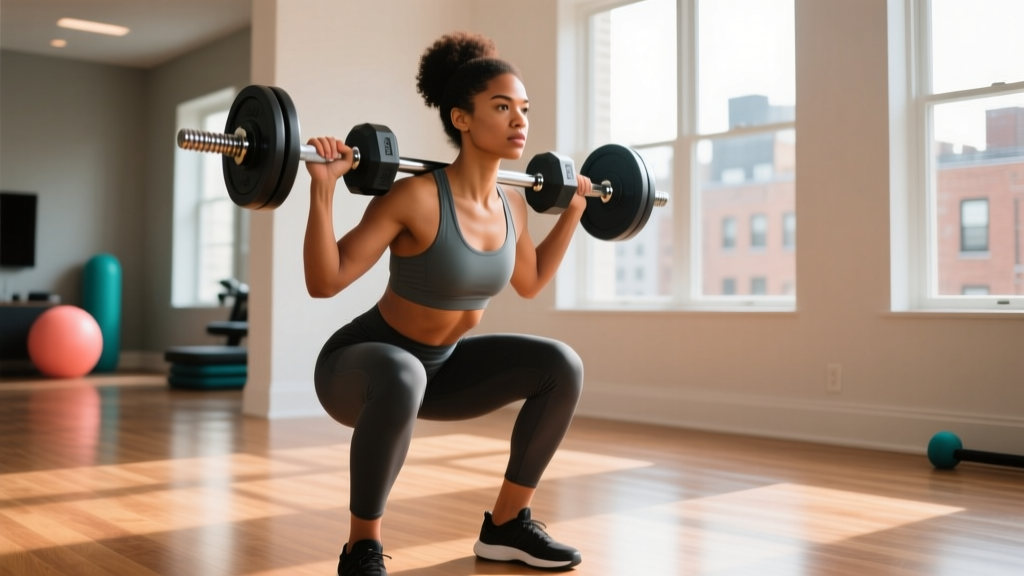
Bumper vs Iron Plates Value & Deltoid Workouts with Dumbbells
Analyze the true cost of bumper vs iron plates in 2026. Learn how smart plate budgeting funds better gear for deltoid workouts with dumbbells.

The Zero-Sum Game of Home Gym Budgeting
Building a comprehensive home gym in 2026 requires navigating a harsh economic reality: every dollar allocated to your barbell plates is a dollar siphoned away from your dumbbell rack. When fitness enthusiasts research equipment, they often isolate their purchases, failing to see the interconnected web of home gym economics. This disconnect is most evident when lifters overspend on specialized weight plates, only to find their budget depleted when it comes time to purchase the adjustable dumbbells necessary for targeted isolation work.
In this budget breakdown and value analysis, we are going to dissect the true cost-per-pound of bumper plates versus traditional cast iron plates. More importantly, we will explore the opportunity cost of these decisions, specifically how smart plate budgeting directly funds higher-quality equipment for high-volume deltoid workouts with dumbbells. Whether you are outfitting a garage gym for Olympic weightlifting or bodybuilding hypertrophy, understanding this financial matrix is critical to maximizing your return on investment (ROI).
The 2026 Budget Allocation Rule
Never spend more than 40% of your total free-weight budget on barbell plates unless you are a competitive Olympic weightlifter. The remaining 60% should be aggressively funneled into adjustable dumbbells, specialized barbells, and rack attachments to ensure balanced muscular development.
The True Cost Per Pound: Iron vs. Bumper Plates
The market for weight plates has stabilized in 2026, but the price gap between raw cast iron and vulcanized rubber remains significant. To understand the value proposition, we must break down the current pricing tiers and what you actually receive for your money.
1. Traditional Cast Iron Plates
Cast iron remains the undisputed king of cost-efficiency. In 2026, standard machined cast iron plates (such as the Titan Fitness Cast Iron Grip Plates) hover between $1.50 and $1.80 per pound. Premium, deep-dish milled options like the Rogue Deep Dish plates push closer to $2.00 to $2.20 per pound. Iron plates offer maximum weight density, allowing you to load over 500 pounds on a standard sleeve without needing specialized barbell collars. They are virtually indestructible, though they are prone to surface rust if stored in unclimate-controlled garages.
2. Bumper Plates (Crumb, Virgin Rubber, and Competition)
Bumper plates are engineered to be dropped from overhead, absorbing kinetic energy to protect your flooring and barbell. However, you pay a premium for this vulcanized engineering.
- Crumb Rubber: Made from recycled tires, these are the cheapest bumpers at roughly $1.80 to $2.20 per pound. They are thick, bouncy, and often emit a strong rubber odor that can take months to off-gas.
- Virgin Rubber: The standard for most home gyms. Models like the Rogue Echo Bumper Plates cost between $2.75 and $3.50 per pound. They offer a dead bounce and a much slimmer profile than crumb rubber.
- Competition Urethane/Rubber: Calibrated to exact IWF standards, these plates cost upwards of $5.50 to $7.00 per pound. Unless you are competing on a sanctioned platform, the ROI on competition plates for a home gym is virtually zero.
Value Matrix: Which Plate Should You Buy?
Below is a comparative breakdown of the physical and financial attributes of the three most common plate types available on the market today.
| Feature | Machined Cast Iron | Virgin Rubber Bumper | Crumb Rubber Bumper |
|---|---|---|---|
| Average Cost (2026) | $1.65 / lb | $3.15 / lb | $2.00 / lb |
| Drop Rating | Low (Floor Damage Risk) | High (Dead Bounce) | Medium (High Bounce) |
| Thickness (45lb Plate) | 1.3 inches | 3.25 inches | 4.5 inches |
| Primary Failure Mode | Surface Rust / Chipped Paint | Steel Insert Tearing | Edge Flaking / UV Decay |
The Opportunity Cost: Funding Deltoid Workouts with Dumbbells
Here is where the budget analysis shifts from barbell mechanics to upper-body hypertrophy. Let us assume you have a $1,200 budget to outfit your free-weight station. If you purchase 300 pounds of virgin rubber bumper plates at $3.15/lb, you have spent $945. You are left with just $255 for dumbbells. At this price point, you are relegated to buying a pair of fixed-weight 25-pound hex dumbbells or a low-tier, unreliable adjustable set.
This financial misstep severely cripples your ability to perform effective deltoid workouts with dumbbells. The deltoid muscle group is uniquely complex, featuring three distinct heads (anterior, lateral, and posterior) that require vastly different resistance curves and weight increments.
Why Deltoids Demand Micro-Adjustability
According to principles of progressive overload outlined by the National Strength and Conditioning Association (NSCA), smaller muscle groups like the lateral and posterior deltoids require precise, incremental weight jumps to stimulate hypertrophy without compromising joint integrity. If you are performing strict lateral raises or rear-delt flyes, jumping from 15 pounds to 25 pounds is a massive 66% increase in load—a recipe for rotator cuff strain and form breakdown.
By opting for 300 pounds of high-quality cast iron plates at $1.65/lb ($495 total), you suddenly have $705 remaining in your budget. This allows you to purchase a premium adjustable dumbbell set, such as the Nuobell 80lb Adjustable Dumbbells (retailing around $349 for the pair) or the PowerBlock Elite EXP. These sets offer 2.5-pound to 5-pound micro-increments, which are absolutely vital for isolating the lateral deltoids and safely progressing your overhead pressing strength over a 12-week mesocycle.
"The most common mistake in home gym procurement is over-investing in barbell plates for lifts that only occur twice a week, while under-funding the dumbbells required for the high-volume isolation work that actually drives upper-body hypertrophy."
— Equipment Allocation Analysis, Garage Gym Reviews (Source)
Real-World Failure Modes & Edge Cases
When analyzing value, longevity is just as important as the initial purchase price. Both iron and bumper plates have specific failure modes that can degrade your equipment over a 5-to-10-year lifespan.
Bumper Plate Insert Tearing
The most frequent point of failure on virgin rubber bumpers is the steel center insert. Repeated dropping, especially with lighter weights (like a single 15lb or 25lb bumper), creates immense shear force on the rubber-to-steel bond. Over time, the rubber tears away from the hub, rendering the plate unsafe for dropping. To mitigate this, never drop a barbell loaded with less than a 45-pound bumper on each side, and always use high-quality barbell collars to prevent the plates from shifting laterally upon impact.
Cast Iron and the Humidity Factor
Cast iron plates do not tear, but they do oxidize. If your home gym is located in a coastal region or an uninsulated garage with high humidity fluctuations, bare cast iron will develop surface rust within weeks. While this does not affect the structural integrity or the weight of the plate, it creates a messy, oxidized dust that transfers to your hands, barbell knurling, and flooring. The value play here is to spend an extra $0.20 per pound for enameled or urethane-coated iron plates, which completely seal the metal from moisture.
Budget Scenarios: Which Path Should You Take?
Scenario A: The Olympic Weightlifting & CrossFit Focus
The Strategy: You are performing snatches, clean and jerks, and high-rep deadlifts where dropping the barbell from overhead is mandatory. The Allocation: Dedicate 70% of your free-weight budget to Virgin Rubber Bumpers. You must protect your flooring and your barbell bearings. For your remaining budget, purchase a single pair of mid-weight adjustable dumbbells (e.g., 5-50 lbs) to maintain basic shoulder health and perform occasional deltoid workouts with dumbbells to bulletproof your rotator cuffs for heavy overhead barbell work.
Scenario B: The Powerlifter & Hypertrophy Hybrid
The Strategy: You squat, bench, and deadlift with controlled eccentrics (no dropping the bar), but you also prioritize bodybuilding-style muscle growth. The Allocation: Dedicate 80% of your budget to Machined Cast Iron plates and a premium adjustable dumbbell set. Since you are not dropping the barbell from overhead, the shock-absorption of bumpers is entirely wasted money. The massive savings generated by buying iron allows you to acquire a 5-90 lb adjustable dumbbell set, unlocking the precise weight increments required for heavy seated dumbbell shoulder presses, lateral raises, and front raises.
Final Verdict: Maximizing Your Home Gym ROI
The debate between bumper plates and iron plates is not about which is objectively better; it is about which provides the highest utility for your specific training modalities. Bumper plates are a specialized tool designed to absorb kinetic impact. If your training does not involve dropping the barbell from the hip or overhead, purchasing bumpers is a tax on your budget that yields no physical return.
By critically analyzing the cost-per-pound and recognizing the opportunity cost of your purchases, you can build a vastly superior home gym. Choosing cast iron plates when appropriate frees up critical capital, allowing you to invest in the micro-adjustable dumbbells that are the true engine of upper-body development. Ultimately, a smart budget ensures that when you sit down to execute high-volume deltoid workouts with dumbbells, you have the exact right tools to force adaptation, prevent injury, and maximize every single rep.
More gear to consider
All reviews
Barbell Collar Types: Beyond Dumbbell Exercises for Posture

2026 Dumbbell Rack Market: The Iso Lateral Skull Crusher Effect

EZ Curl Bar vs Straight Bar: Biomechanics & Dumbbell Photo Form Tips
EZ vs Straight Bar: Gear Care & Walking Dumbbell Workout Tips

Best Adjustable Dumbbells for Arms: 2026 Setup Guide