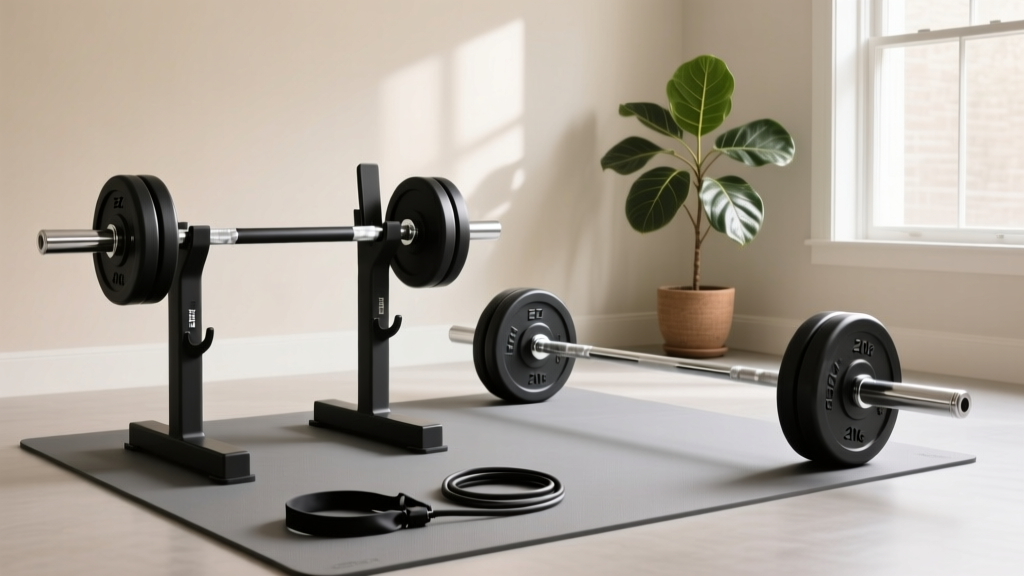
Bumper vs Iron Plate Trends & Upper Body Dumbbell Workout Plan
Analyze 2026 bumper plate vs iron plate market trends, pricing shifts, and discover a complementary upper body dumbbell workout plan for home gyms.

The 2026 Macro Trends in Free Weight Manufacturing
The home and commercial fitness equipment market has undergone a radical transformation by Q1 2026. Following years of volatile supply chains and fluctuating raw material costs, the ongoing bumper plate vs iron plate comparison has shifted from a simple matter of preference to a complex economic and spatial calculation. According to recent industry data, global shipping costs for dense, heavy commodities like cast iron have stabilized, leading to a 14% year-over-year drop in the retail price of premium machined iron plates. Conversely, the cost of virgin rubber and the environmental scrutiny surrounding recycled crumb rubber off-gassing have forced bumper plate manufacturers to innovate or raise prices.
For home gym owners and boutique studio operators, this macroeconomic shift dictates a new purchasing paradigm. Buyers are increasingly adopting a hybrid approach: investing heavily in space-efficient iron plates for lower-body and Olympic movements, while reallocating the saved capital toward high-end adjustable dumbbells to execute a highly targeted upper body dumbbell workout plan. This strategic budget allocation maximizes both floor space and hypertrophic stimulus.
Bumper Plate vs Iron Plate: The 2026 Comparison Matrix
To understand the current market landscape, we must look at the exact specifications and pricing models dominating 2026. According to BarBend's comprehensive equipment analysis, the choice between bumpers and iron hinges on three critical vectors: dead bounce, hub tolerance, and price-per-pound.
| Feature | Virgin Bumper (e.g., REP CR-15) | Cast Iron (e.g., Rogue Machined) | Crumb Bumper (e.g., Rogue Echo) |
|---|---|---|---|
| Avg. Price per lb (2026) | $4.20 - $4.80 | $1.95 - $2.40 | $2.65 - $3.10 |
| Width of 45lb Plate | 3.25 inches | 1.45 inches | 4.10 inches |
| Hub Tolerance (IWF Spec) | 50.4mm (+/- 0.1mm) | 50.6mm (+/- 0.2mm) | 50.8mm (Standard) |
| Drop Rating | 15,000+ drops from 8ft | Not rated for drops | 5,000 drops from 8ft |
| Best Use Case | Olympic Weightlifting, CrossFit | Powerlifting, Hypertrophy, Space-saving | General Fitness, Garage Gyms |
The Budget Pivot: Why Dumbbells Are Winning Upper Body
When a consumer spends $800 to $1,200 on a premium 300lb iron plate set and a calibrated barbell, the remaining budget for upper-body isolation machines often evaporates. This financial reality has catalyzed a massive trend toward adjustable dumbbells like the Nuobell 80 or PowerBlock Pro 100 EXP. Biomechanically, this is not a compromise; it is an optimization. Dumbbells allow for unilateral loading, increased range of motion (ROM), and superior joint alignment for pressing and pulling movements compared to a fixed barbell.
Because iron plates dominate the lower-body and heavy compound market (squats, deadlifts, RDLs), the modern home gym relies on a dedicated upper body dumbbell workout plan to build the chest, back, and shoulders. This bifurcated approach—barbells and iron plates for the posterior chain and legs, adjustable dumbbells for the upper body—represents the most space-efficient and cost-effective gym build of the decade.
The 2026 Upper Body Dumbbell Workout Plan
Below is a market-tested, hypertrophy-focused upper body dumbbell workout plan designed for home gym owners utilizing adjustable dumbbells (ranging from 10lbs to 80lbs). This routine utilizes a Push/Pull split optimized for mechanical tension and metabolic stress.
Phase 1: Push (Chest, Shoulders, Triceps)
- 1. Incline Dumbbell Press (30-degree angle): 4 sets x 8-10 reps. Tempo: 3-1-X-0. Focus on a deep stretch at the bottom. The 30-degree incline targets the clavicular head of the pectoralis major without over-recruiting the anterior deltoids.
- 2. Seated Dumbbell Overhead Press: 3 sets x 8-12 reps. Tempo: 2-0-1-0. Keep the bench back pad at 75 degrees, not 90, to protect the rotator cuff and allow for a more natural scapular upward rotation.
- 3. Dumbbell Lateral Raises (Leaning): 4 sets x 12-15 reps. Lean slightly away from a rack to alter the resistance curve, keeping tension on the medial deltoid at the bottom of the movement.
- 4. Cross-Body Triceps Extensions: 3 sets x 10-12 reps per arm. Mimics the biomechanics of a cable pushdown, utilizing the long head of the triceps.
Phase 2: Pull (Back, Rear Delts, Biceps)
- 1. Single-Arm Dumbbell Row (Tripod Stance): 4 sets x 8-10 reps. Tempo: 2-1-1-0. Pull toward the hip pocket, not the armpit, to maximize latissimus dorsi engagement and minimize bicep takeover.
- 2. Chest-Supported Rear Delt Fly: 4 sets x 15-20 reps. Lie face down on an incline bench. Use a lighter weight and focus on scapular retraction and external rotation at the peak contraction.
- 3. Incline Dumbbell Curls: 3 sets x 10-12 reps. Set bench to 45 degrees. Allow the dumbbells to hang fully behind the torso to place the long head of the biceps in a stretched position prior to concentric flexion.
- 4. Dumbbell Shrugs (Seated): 3 sets x 12-15 reps. Seated shrugs eliminate lower-back momentum, isolating the upper trapezius.
Biomechanical Advantages & Progressive Overload
According to ExRx biomechanical directories, dumbbell variations for upper body movements recruit significantly more stabilizer muscles than barbell or machine equivalents. However, the primary challenge with an upper body dumbbell workout plan is progressive overload. Unlike micro-loading a barbell with 2.5lb iron plates, adjustable dumbbells often jump in 5lb increments.
To overcome this, utilize Reps in Reserve (RIR) and tempo manipulation. If you cannot add 5lbs to your Incline Press, add a 1-second pause at the bottom of the eccentric phase. This increases Time Under Tension (TUT) and forces muscular adaptation without requiring a heavier physical load. This methodology is crucial for home gym owners whose adjustable dumbbells cap out at 80lbs or 100lbs.
Final Market Verdict & Purchasing Framework
The 2026 bumper plate vs iron plate debate is no longer about which is universally 'better'; it is about which serves your specific spatial and financial constraints. If you are strictly a powerlifter or a hypertrophy-focused lifter with limited square footage, machined iron plates remain the undisputed king of density and value. If you are an Olympic weightlifter or CrossFit athlete, virgin rubber bumpers are non-negotiable.
However, the smartest consumers in the current market are leveraging the affordability of iron plates to free up capital for high-quality adjustable dumbbells. By pairing a dense, calibrated iron plate set for your lower body with a meticulously structured upper body dumbbell workout plan, you achieve a commercial-grade training stimulus in a fraction of the footprint. As equipment trends continue to favor modularity and space-efficiency, this hybrid approach will remain the gold standard for home gym architecture well into the late 2020s.
More gear to consider
All reviews
5 8 10 Dumbbell Set Guide: Best Adjustable Alternatives 2026

Barbell Collar Types: Secure Loads Past Your Dumbbell Set Target

2026 Trend: Loadable Dumbbells for Standing Core Exercises
Beyond the Shake Weight Dumbbell: Smart Storage Layouts

Standard vs Olympic Plates: Alternate Dumbbell Front Raise Guide