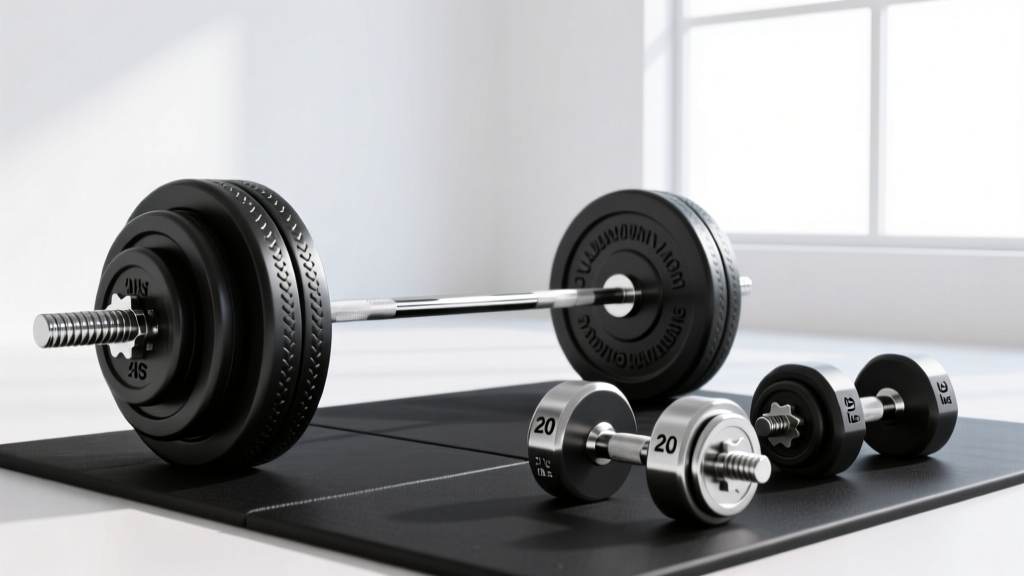
Bumper vs Iron Plate Longevity & Posture Exercises with Dumbbells
Compare bumper vs iron plate longevity, maintenance routines, and floor preservation to optimize your gym for heavy lifts and posture exercises with dumbbells.

The Home Gym Ecosystem: Why Plate Longevity Impacts Your Entire Routine
When building a resilient home gym in 2026, the debate between bumper plates and cast iron plates usually centers on noise reduction and drop-safety. However, from a strict maintenance and longevity perspective, the choice you make dictates the long-term hygiene, structural integrity, and safety of your entire training space. This is especially critical when your programming requires you to transition seamlessly from heavy barbell deadlifts to targeted posture exercises with dumbbells.
Your free weight zone is an interconnected ecosystem. Degraded iron plates shed rust onto your flooring and storage racks. When you subsequently grab your dumbbells to perform posture exercises with dumbbells—such as bent-over reverse flyes, renegade rows, or supine pullovers—that microscopic rust and degraded enamel transfers to the dumbbell knurling. This compromises your grip during critical spinal-stabilization movements and accelerates the wear on your secondary equipment. Furthermore, the floor damage caused by dropping iron plates creates uneven surfaces that are biomechanically hazardous for ground-based posture work.
In this comprehensive guide, we break down the exact degradation vectors of bumper versus iron plates, provide elite-level maintenance protocols, and explain how preserving your primary weight plates directly safeguards your accessory and rehabilitation routines.
The Degradation Matrix: Bumper vs. Cast Iron Failure Modes
To maximize the lifespan of your gym equipment, you must first understand the specific chemical and physical failure modes inherent to each material. According to Eleiko's official maintenance guidelines, environmental factors like humidity, UV exposure, and impact force dictate the lifespan of free weights.
Bumper Plates: UV Degradation and Hub Spin
Bumper plates are primarily manufactured from virgin rubber, crumb rubber, or polyurethane (urethane). While they are designed to absorb impact, they are highly susceptible to environmental degradation.
- Virgin Rubber (e.g., Rogue Echo Bumpers): Prone to UV oxidation. If stored in a garage gym with direct sunlight, the rubber will chalk, dry out, and eventually crack within 3 to 5 years. They also off-gas volatile organic compounds (VOCs) when new, which can leave a greasy residue on nearby equipment.
- Urethane (e.g., Rogue Urethane Plates): The gold standard for longevity. Urethane resists UV damage, scratching, and off-gassing. However, at roughly $3.50 to $4.50 per pound, they represent a massive upfront investment.
- The "Hub Spin" Failure Mode: The most common mechanical failure in mid-tier bumper plates is the separation of the steel center hub from the rubber casing. Repeated drops cause the rubber to tear away from the insert, resulting in a loose hub that spins independently of the plate, rendering it unsafe for Olympic lifts.
Cast Iron Plates: Oxidation and Enamel Spalling
Cast iron plates (like the classic York Legacy or modern Rogue Machined Iron) are virtually indestructible regarding impact, but they are highly reactive to moisture.
- Oxidation (Rust): In environments where relative humidity consistently exceeds 45%, bare or poorly coated cast iron will begin to oxidize within weeks. Rust doesn't just look bad; it physically expands, adding microscopic thickness to the plate and altering the calibrated diameter over time.
- Enamel Spalling: Many budget iron plates are coated in a baked enamel or paint. When these plates are dropped or clank together, the brittle enamel chips and spalls off, leaving sharp edges and exposing the raw iron beneath to rapid corrosion.
If you allow your cast iron plates to oxidize, the rust dust will coat your barbell sleeves and storage tree. When you load your barbell and then move to perform posture exercises with dumbbells, your hands will pick up this iron oxide. Rust on dumbbell handles severely degrades the knurling's bite and can cause minor skin abrasions or staph infections if you have callus tears on your palms.
Step-by-Step Maintenance Protocols for Maximum Longevity
Whether you choose the shock absorption of Rogue Echo Bumper Plates or the classic feel of machined iron, implementing a strict maintenance schedule will easily add a decade to their lifespan.
Bumper Plate Care: The 303 Protectant Method
- Deep Clean (Bi-Annually): Scrub the plates with warm water and a mild, non-bleach dish soap (like Dawn) using a stiff nylon brush. Never use harsh degreasers, which strip the natural oils from the rubber and accelerate drying.
- UV Protection (Quarterly): Apply 303 Aerospace Protectant to a microfiber cloth and wipe down the rubber. This acts as a liquid sunscreen, preventing UV rays from breaking down the polymer chains in the rubber.
- Hub Lubrication: Spray a light coat of silicone lubricant on the steel center insert to prevent the hub itself from rusting and seizing to your barbell sleeve.
Cast Iron Care: Wire Brushing and Oil Curing
- Rust Removal: For surface rust, use a brass wire brush attached to a power drill. Brass is softer than steel, so it will remove the rust without scoring the underlying iron.
- Chemical Conversion: For pitted rust, submerge the plates in a non-toxic rust remover like Evapo-Rust for 12 to 24 hours. This chelates the iron oxide without damaging the healthy metal.
- Sealing (The BLO Method): Wipe the bare iron down with Boiled Linseed Oil (BLO). Allow it to cure for 48 hours. BLO polymerizes into a hard, protective, water-resistant shell that prevents future oxidation while maintaining the raw metal aesthetic.
Floor Preservation and Spatial Longevity
The most overlooked aspect of the bumper vs. iron debate is the longevity of your gym flooring and subfloor. Dropping 225 lbs of cast iron from shoulder height generates thousands of pounds of localized impact force. Even with 3/4-inch horse stall mats, repeated iron drops will eventually crack concrete subfloors and permanently compress the rubber mats, creating permanent divots.
Why does floor preservation matter for accessory work? Consider the biomechanics of posture exercises with dumbbells. Movements like the renegade row, dumbbell floor press, or supine pullover require you to lie flat on the ground or assume a rigid plank position. If your flooring is warped, uneven, or pitted from years of dropped iron plates, your spine and pelvis cannot maintain a neutral alignment. According to the Harvard Health Guide on Posture, performing stabilization exercises on uneven surfaces forces the body into compensatory patterns, exacerbating the very postural imbalances you are trying to correct.
Bumper plates distribute impact force over a wider surface area and absorb the kinetic energy, preserving the structural integrity of your floor. This ensures your training space remains perfectly flat and safe for meticulous, ground-based posture exercises with dumbbells.
2026 Comparison Matrix: Maintenance and Longevity Metrics
| Metric | Virgin Rubber Bumpers | Urethane Bumpers | Cast Iron Plates |
|---|---|---|---|
| Average Cost per Lb (2026) | $2.00 - $2.50 | $3.50 - $4.50 | $1.20 - $1.80 |
| Expected Lifespan | 5 - 10 Years | 20+ Years | Lifetime (if maintained) |
| Primary Failure Mode | UV Cracking / Hub Spin | Extreme Impact Tearing | Oxidation / Enamel Spalling |
| Maintenance Intensity | Low (Cleaning + UV Spray) | Very Low (Wipe down) | High (Wire brushing + Oiling) |
| Floor Impact Risk | Low | Low | Severe (if dropped) |
| Residue Transfer Risk | Moderate (Off-gassing oils) | None | High (Rust dust / Paint chips) |
The Biomechanical Link: Gear Hygiene and Accessory Work
As strength and conditioning professionals increasingly emphasize the importance of structural balance, posture exercises with dumbbells have become a staple in 2026 programming. Exercises like the face pull (using dumbbells on an incline bench), the Y-T-W raise, and the single-arm scapular row require intense focus on mind-muscle connection and precise grip control.
"You cannot execute high-level postural correction if your equipment is compromised. A dumbbell handle coated in iron oxide or degraded rubber residue alters the friction coefficient of the knurling. Your grip will fail before your target rhomboids and lower traps reach mechanical failure, completely neutralizing the benefit of the exercise."
By investing in high-quality urethane bumpers or meticulously maintaining your cast iron plates, you eliminate cross-contamination in your gym. Your barbell sleeves stay clean, your storage racks remain free of debris, and your dumbbells retain their factory knurling. This holistic approach to equipment maintenance ensures that every tool in your gym is ready for both maximal load-bearing lifts and delicate, precision-based rehabilitation work.
The Final Verdict: Choosing for the Long Haul
If your budget allows, urethane bumper plates are the undisputed champions of longevity and low-maintenance care in 2026. They protect your floors, eliminate rust transfer, and require virtually zero upkeep, leaving you more time to focus on your programming—including your vital posture exercises with dumbbells.
However, if you prefer the aesthetic, acoustic feedback, and lower entry cost of cast iron plates, you must commit to a strict humidity-control and oiling regimen. Treat your iron plates like a classic car: store them in a climate-controlled environment, address surface rust immediately, and never drop them on unprotected flooring. By respecting the material science of your free weights, you build a training sanctuary that will safely support your heavy compound lifts and your meticulous postural accessory work for decades to come.
More gear to consider
All reviews
EZ Curl Bar vs Straight Bar: Urethane Dumbbells vs Rubber Dumbbells

Olympic vs Standard Plates for Tricep Exercises with Dumbbells

Rubber Hex vs Urethane: Value Analysis for the Best Workout with Dumbbells for Arms
Compact Dumbbell Racks: Layouts for Pull Downs With Dumbbells

Olympic vs Standard Plates: Building the Biggest Dumbbell Setup