
Barbell Weight & Knurling: Setup for Dumbbell Hang Squat Clean
Master your gym setup. This walkthrough covers Olympic barbell weight, knurling selection, and rack configuration for the dumbbell hang squat clean.

Phase 1: Unboxing and Evaluating Your Olympic Barbell
Building a versatile home gym in 2026 requires more than just dropping a power rack onto a concrete slab. A truly functional free-weight station must accommodate heavy axial loading and dynamic, high-impact conditioning. This complete setup walkthrough begins with the centerpiece of your rack: the Olympic barbell. Understanding barbell weight calibration and knurling profiles is critical before you even touch a wrench to assemble your squat stands.
Weight Calibration and IWF Standards
When investing in a competition-grade or high-tier training bar, weight tolerance is non-negotiable. According to USA Weightlifting and International Weightlifting Federation (IWF) technical rules, a certified 20kg Olympic barbell must weigh within a margin of just 10 grams. In the current 2026 market, premium bars from manufacturers like Eleiko and Uesaka guarantee this calibration, typically pricing between $900 and $1,400. Mid-tier bars ($300–$500), such as the Rogue Ohio Bar, generally hold a tolerance of +/- 15 to 30 grams, which is perfectly acceptable for non-competitive home setups.
Decoding Knurling Profiles
Knurling—the crosshatched pattern machined into the steel shaft—dictates your grip security. Selecting the wrong knurl can lead to torn calluses during high-volume metabolic conditioning or slipped grips during heavy max-effort pulls. Here is a breakdown of the three primary knurling geometries you will encounter when shopping:
| Knurl Type | Geometry & Feel | Best Application | Example Model (2026) |
|---|---|---|---|
| Hill | Rounded peaks, low aggression. Feels smooth. | High-rep CrossFit, beginner lifters. | Standard Commercial Gym Bars |
| Volcano | Crater-like rim with deep grooves. Grippy but not sharp. | Mixed-use, powerlifting, and Olympic lifting. | Rogue Fitness Ohio Bar ($345) |
| Mountain | Sharp, prominent peaks. Highly aggressive. | Heavy deadlifts, specialized power bars. | American Barbell Power Bar ($425) |
Phase 2: Power Rack Installation and Zoning
With your barbell selected, the next step in the walkthrough is installing the power rack and zoning the floor space. A multi-modal station requires specific spatial planning to ensure safety during both racked barbell movements and free-ranging exercises.
Step-by-Step Rack Anchoring
- Positioning: Place your rack at least 36 inches away from any wall to allow for plate loading and spotter arm clearance.
- Drilling: If bolting down a standard 4x4 upright rack, use a hammer drill with a 1/2-inch masonry bit. Drill to a depth of 4.5 inches into cured concrete.
- Anchoring: Insert 1/2-inch wedge anchors. Torque to 45 ft-lbs using a calibrated torque wrench. Note: If your rack sits on a lifting platform, you must use specialized flush-mount anchors or opt for a flat-foot rack weighted with heavy storage pegs.
- J-Cup Configuration: Install your J-cups at mid-chest height for squat un-racking. Ensure the UHMW plastic liners are facing inward to protect your barbell's knurling and chrome/zinc finish.
The 'Drop Zone' Configuration
Because this station will also serve as the staging area for the dumbbell hang squat clean, you must configure a dedicated drop zone. Dropping 50lb+ urethane dumbbells directly onto bare concrete or thin rubber tiles will destroy the implements and crack your subfloor. Install 3/4-inch thick vulcanized horse stall mats (typically $60–$80 per 4x6 sheet in 2026) directly in front of the rack. This provides the necessary shock absorption for dynamic drops.
Phase 3: Implement Selection for the Dumbbell Hang Squat Clean
The National Strength and Conditioning Association (NSCA) emphasizes that the hang squat clean requires explosive triple extension (ankles, knees, hips) followed by a rapid drop under the load. While traditionally a barbell movement, the dumbbell hang squat clean is a staple for unilateral power development and hypertrophy. Setting up your station for this movement requires specific equipment considerations that tie directly back to your barbell buying knowledge.
Dumbbell Handle Knurling and Ergonomics
Just as you evaluated the barbell's knurl, you must evaluate your dumbbells. For the hang squat clean, your hands will experience immense rotational torque at the catch phase.
- Avoid Neoprene/Vinyl: These smooth coatings will slip when you sweat, leading to missed catches or wrist injuries.
- Select Chrome or Hardened Steel Handles: Look for dumbbells with a medium-to-aggressive volcano knurl on the handle shaft.
- Head Profile: Use Urethane Hex dumbbells. The flat edges prevent rolling when you set them down between sets, and the urethane dampens the noise and impact when dropped from the catch position of the clean.
Rack Clearance and Biomechanics
'When executing the dumbbell hang squat clean from a dead-hang start, the lifter must maintain a neutral spine while the dumbbells rest outside the knees. Ensure your power rack's footprint does not restrict your lateral foot placement.' — Biomechanics of Olympic Lifts, 2025 Update
If you are using a squat stand rather than a full cage, ensure the base feet do not extend outward into your landing zone. A standard 24-inch depth rack is ideal here, providing a compact footprint while leaving 48 inches of open mat space in front for the dumbbell hang squat clean.
Phase 4: Calibration, Bushings, and Long-Term Maintenance
The final phase of the setup walkthrough is establishing a maintenance protocol to protect your investment. The rotation system of your barbell—either bushings or bearings—dictates how it performs during Olympic lifts and how you should care for it.
Bushings vs. Bearings
For a mixed-use station, bronze bushings are generally preferred over needle bearings. Bushings provide a slower, more controlled spin that is ideal for powerlifting and general fitness, whereas needle bearings (found in $800+ weightlifting specific bars) offer a lightning-fast spin optimized for the snatch and clean & jerk. If your primary focus includes the dumbbell hang squat clean and general strength, a high-quality bushing bar like the REP Fitness Excalibur ($329) offers the best durability-to-cost ratio.
The 30-Day Knurl Maintenance Routine
Chalk, dead skin, and ambient humidity will quickly clog your barbell's knurling, turning a volcano profile into a smooth hill profile. Implement this maintenance step immediately after your installation is complete:
Monthly Barbell Care Checklist
- Step 1: Scrub the shaft with a stiff nylon brush (never use wire brushes on zinc or cerakote finishes) to dislodge packed chalk.
- Step 2: Wipe down with a microfiber cloth lightly dampened with a 50/50 water and white vinegar solution to kill bacteria.
- Step 3: Apply 3-4 drops of 3-IN-ONE oil or specialized barbell oil to the shaft and the inside of the sleeves.
- Step 4: Spin the sleeves to work the oil into the bronze bushings, then wipe away all excess oil to prevent a slippery grip.
Summary: Your Complete Free-Weight Ecosystem
Setting up a professional-grade home gym in 2026 is an exercise in spatial planning and metallurgical understanding. By selecting an Olympic barbell with the correct weight tolerance and volcano knurling, properly anchoring your rack, and zoning your flooring for dynamic impacts, you create a seamless environment. Whether you are grinding out heavy squats or executing a high-heart-rate set of the dumbbell hang squat clean, your equipment will support your biomechanics safely and effectively.
More gear to consider
All reviews
Best Adjustable Dumbbells for Dumbbell Workouts That Build Muscle (2026)
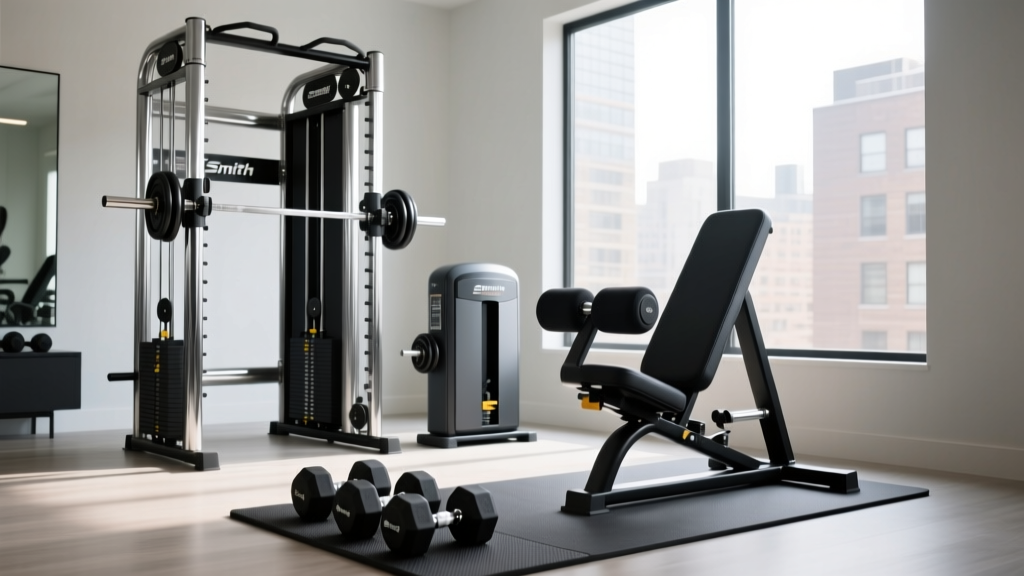
Smith Machine Squat vs Leg Press vs Neoprene Dumbbells for Home Use

Dumbbell Flys Works What Muscles? Top Neoprene Dumbbells Compared

Maintaining Loadable Dumbbells: Dumbbell Bench to Barbell Bench

Prevent the Dumbbell Roll: Storage Rack Value & Budget Guide
