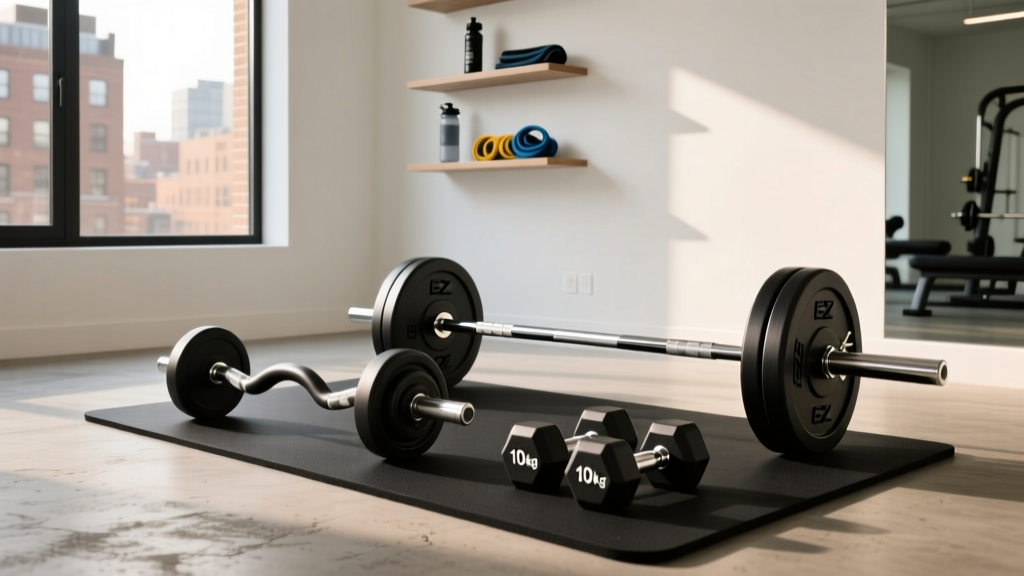
Bumper vs Iron Plate Comparison & Forearm with Dumbbells (2026)
Expert bumper plate vs iron plate comparison for 2026. Plus, discover the best routines to build a massive forearm with dumbbells for ultimate grip strength.

The 2026 Home Gym Foundation: Choosing Your Iron and Rubber
Building a resilient, high-performance home gym in 2026 requires making binary choices that dictate your training style for the next decade. The most critical decision you will face is the bumper plate vs iron plate comparison. This choice impacts everything from your floor integrity and noise levels to the barbell whip during heavy cleans. However, loading the barbell is only half the battle. As you increase your working weights, your grip will inevitably become the limiting factor in your kinetic chain. To support heavy deadlifts and Olympic pulls, you must condition your grip by training the forearm with dumbbells. In this comprehensive hands-on review, we break down the material science of modern weight plates and provide an expert-backed accessory protocol to ensure your grip never fails before your posterior chain does.
Material Science: Bumper Plates vs. Cast Iron
The Bumper Plate: Durometer and Drop Dynamics
Bumper plates are engineered for impact absorption. The defining metric of a high-quality bumper is its Shore A Durometer rating, which measures the hardness of the rubber. For Olympic lifting and CrossFit-style workouts, you want a dead-bounce plate with a durometer rating between 90 and 92. The Rogue HG 2.0 Bumper Plates remain the gold standard in 2026, utilizing virgin rubber that consistently tests at 92 Shore A. This hardness ensures the plate absorbs shock without acting like a superball, protecting both your platform and your shins during missed snatches. However, the trade-off is thickness; a 45-pound bumper plate is roughly 3.25 inches wide, which limits the total weight you can load on a standard 2-meter barbell sleeve before running out of space.
Cast Iron: Machined Precision and Density
If your training revolves around powerlifting, strongman, or high-volume hypertrophy where dropping the bar is unnecessary, cast iron is the superior choice. Modern iron plates have evolved far beyond the rusty, uncalibrated discs of the 1990s. Premium options like the Rogue Deep Dish Cast Iron plates are CNC-machined to a strict tolerance of +/- 1%. This precision is crucial for advanced lifters tracking micro-progressions. Furthermore, iron plates are incredibly dense. A 45-pound iron plate is only about 1.3 inches thick, allowing you to load upwards of 500 pounds on a standard barbell without needing collar extenders. According to BarBend's extensive plate analysis, the primary drawback of iron is the acoustic shock and floor vibration generated during heavy eccentrics or failed reps, requiring a dedicated lifting platform with high-density EVA foam layers.
Hands-On Comparison Matrix
| Feature | Premium Bumper (e.g., Rogue HG 2.0) | Machined Iron (e.g., Rogue Deep Dish) |
|---|---|---|
| Cost per Pound | $3.50 - $4.00 | $2.00 - $2.50 |
| Width (45lb Plate) | 3.25 inches | 1.30 inches |
| Calibration Tolerance | +/- 2% to 3% | +/- 1% |
| Drop Rating | High (Thousands of drops) | Low (Will crack floor/plate) |
| Barbell Whip Effect | Moderate (Wider load distribution) | Minimal (Compact load distribution) |
Real-World Failure Modes: What Breaks First?
Expert Warning: The Bumper Plate 'Taco' EffectA common failure mode in home gyms occurs when lifters drop a barbell loaded with only light bumper plates (e.g., a single 10lb or 15lb plate on each side) from overhead. Because the lighter plates have less structural mass and a smaller diameter, the impact force concentrates on the steel hub, causing the rubber to fold inward or 'taco.' Always use a pair of 45lb bumpers as your base load, adding lighter fractional bumpers to the outside of the collars to distribute impact forces evenly across the largest surface area.
Cast iron plates, conversely, suffer from environmental degradation. If kept in a non-climate-controlled garage gym, the enamel coating can chip, leading to surface oxidation. While surface rust does not immediately compromise structural integrity, it creates a rough texture that tears up calluses and stains your barbell knurling. We recommend wiping down machined iron plates with a light coat of 3-in-One oil or mineral oil twice a year to preserve the finish.
The Grip Bottleneck: Training Your Forearm with Dumbbells
You can invest thousands into calibrated iron plates, but if your hands peel off the bar during a heavy Romanian deadlift, that investment is wasted. The ExRx biomechanics directory highlights that the flexor digitorum profundus and flexor carpi radialis are highly responsive to eccentric overload and sustained isometric tension. If you want to build a massive, resilient forearm with dumbbells, you must move beyond basic wrist curls and integrate multi-planar grip training into your accessory blocks.
1. The Zottman Curl (Eccentric Overload)
The Zottman curl is unparalleled for targeting both the biceps brachii and the brachioradialis while forcing the wrist extensors to stabilize the load.
- Execution: Curl the dumbbells up with a supinated (palms up) grip. At the top of the movement, rotate your wrists 180 degrees into a pronated (palms down) grip. Lower the weight slowly over a strict 3-to-4-second eccentric phase.
- Prescription: 3 sets of 8-10 reps. Use a weight that is roughly 60% of your standard dumbbell curl max to ensure you can control the pronated eccentric.
2. Hex Dumbbell Isometric Holds
Pinch grips and thick-bar holds translate directly to holding a heavily loaded barbell. Instead of buying specialized grip trainers, use the hex dumbbells already in your rack.
- Execution: Stand tall and grip the heads of two heavy hex dumbbells (e.g., 50lb to 70lb) by the smooth sides, pinching them together or holding them individually by the fat ends if your dumbbells lack a knurled handle. Hold for maximum time until grip failure.
- Prescription: 4 sets to failure, resting 90 seconds between sets. Perform these at the very end of your pull-day workout to avoid pre-fatiguing your grip for your primary barbell lifts.
3. Dumbbell Wrist Roller Complex
Wrist rollers are a staple for forearm hypertrophy, but most home gyms lack the dedicated attachment. You can replicate this by looping a lifting strap around the handle of a 25lb or 35lb dumbbell.
- Execution: Stand on an elevated platform or hold the strap with your arms fully extended in front of you. Rotate your wrists to roll the dumbbell up to your hands, then reverse the motion under strict control.
- Prescription: 3 sets of 4 complete rolls (up and down). The burn in the extensor and flexor compartments will be immediate and intense.
'Grip strength is not just a localized muscle trait; it is a central nervous system governor. When your brain senses grip instability, it actively inhibits force production in the lats and glutes to protect the joints. Training the forearm with dumbbells removes this neurological parking brake.' - FitGearPulse Biomechanics Review Team
Expert Verdict & Buying Framework
When finalizing your equipment list, let your training modality dictate your plate purchase. If you are an Olympic weightlifter, a CrossFit athlete, or train in an apartment where noise mitigation is paramount, the premium for virgin rubber bumpers is non-negotiable. If you are a powerlifter, bodybuilder, or general strength enthusiast operating out of a garage with a proper lifting platform, machined cast iron offers superior density, tighter calibration, and a significantly lower cost per pound.
Regardless of the plates you choose to load onto your barbell, remember that the human hand is the weakest link in the chain of force transmission. Dedicate 15 minutes at the end of your lower-body sessions to systematically train your forearm with dumbbells. By pairing the right plates with an iron-clad grip, your 2026 training block will be defined by unbroken pulls and relentless progression.
More gear to consider
All reviews
Barbell Collar Types Comparison vs Bowflex SelectTech Dumbbell Set

Best Storage Solutions for SA Gear Dumbbells & Heavy Free Weights

Olympic vs Standard Plates: Setup for Exercises with Only One Dumbbell

Collar Types & Rotator Cuff Exercises with Dumbbells: Safety Guide

Beyond TJ Maxx Dumbbells: Barbell Collar and Clamp Comparison