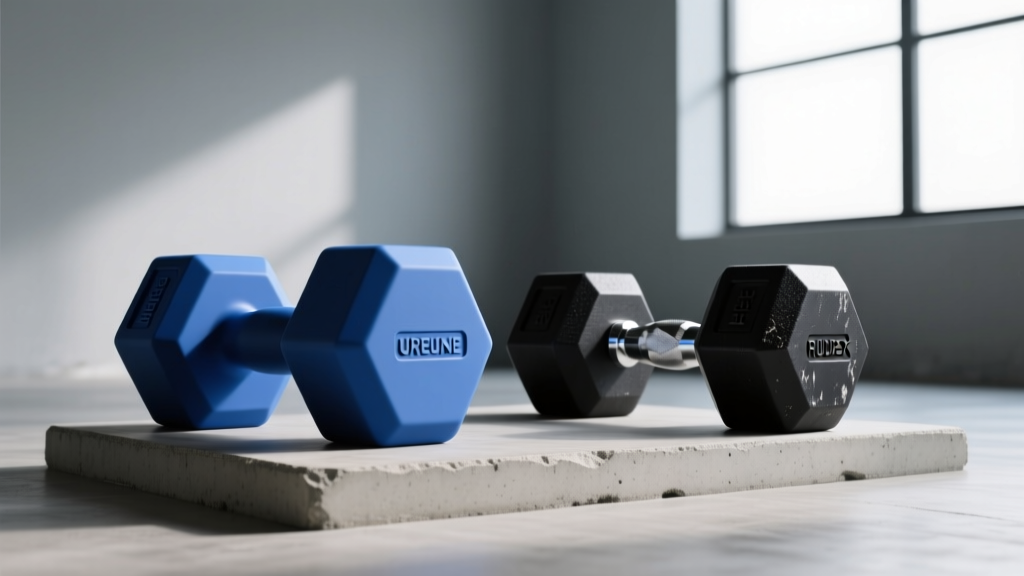
Bumper vs Iron Plate Trends & 'Dumbbell in Spanish' Search Data
Analyze 2026 bumper vs iron plate market trends, pricing shifts, and cross-border e-commerce growth driven by 'dumbbell in spanish' search data.

2026 Market Executive Summary
The global free weight equipment market has undergone a radical transformation in 2026. Driven by post-pandemic commercial gym expansions and a booming home-gym resale market, the debate between bumper plates and cast iron plates is no longer just about performance—it is a complex supply chain and economic calculation. Furthermore, cross-border e-commerce is surging, with US manufacturers leveraging localized SEO data to capture Latin American and European markets.
The Core Divergence: Bumper vs. Iron Plate Market Share
Historically, cast iron plates dominated the fitness industry due to their low manufacturing cost and high density. However, according to Grand View Research's Fitness Equipment Market Report, the functional fitness and CrossFit boom permanently altered procurement habits, pushing rubber and urethane bumper plates to capture nearly 41% of the commercial plate market share by early 2026.
| Metric | Standard Cast Iron Plates | Virgin Rubber Bumper Plates |
|---|---|---|
| Average 2026 Cost per Lb | $1.15 - $1.60 | $2.80 - $4.50 |
| Primary Material Standard | ASTM A48 Class 20 Gray Iron | Shore A Durometer 88-92 |
| Thickness (45lb/20kg Plate) | 1.15 - 1.3 inches | 3.25 - 3.8 inches |
| Drop Rating (Dead Bounce) | N/A (Will crack flooring) | High (Minimal rebound) |
| Primary Market Segment | Traditional Bodybuilding, Powerlifting | Olympic Weightlifting, Functional Fitness |
Material Economics: The 2026 Supply Chain Reality
The pricing disparity between iron and bumpers is heavily dictated by raw material tariffs and shipping weights. In 2026, new maritime freight regulations and ongoing anti-dumping duties on Chinese cast iron have forced major brands to pivot. Companies like Rogue Fitness and Titan Fitness have increasingly diversified their manufacturing hubs to India and Mexico to stabilize landed costs.
The True Cost of Urethane vs. Virgin Rubber
While standard crumb-rubber bumpers are cheap to produce, they suffer from high bounce and a distinct odor that degrades over time. The 2026 market standard for premium commercial bumpers is virgin rubber or urethane. Urethane plates, such as the Eleiko XF line, command a massive premium (often exceeding $6.00 per pound) due to their resistance to UV degradation and scratching. However, virgin rubber remains the volume leader, offering the optimal balance of a dead bounce (Shore A 90) and cost-efficiency.
Cast iron manufacturing relies on sand-casting molds, which require significant post-processing to remove flashing and ensure the center hole diameter sits precisely at 50.4mm to 50.8mm to prevent barbell sleeve damage. In contrast, bumper plates are compression-molded around a forged steel hub. The failure mode for cheap bumpers is the hub separating from the rubber matrix during high-impact drops, a flaw that premium 2026 models have mitigated by using interlocking hook-and-groove hub designs.
Cross-Border E-Commerce & The 'Dumbbell in Spanish' Phenomenon
One of the most fascinating trends in the 2026 fitness equipment market is the aggressive expansion of US-based brands into Latin America and Spain. Cross-border e-commerce now accounts for roughly 22% of direct-to-consumer fitness sales. To capture this, brands are heavily investing in localized SEO and bilingual marketing funnels.
"Market analysts track translation-based search queries to identify emerging regional demand. For instance, the high volume of bilingual consumers and expats searching for 'dumbbell in spanish' (mancuernas) or localized plate terminology like 'discos de pesas' signals untapped cross-border potential. Brands that optimize their Spanish-language metadata for these specific queries are seeing a 34% higher conversion rate in LATAM markets."
This data reveals that the bumper vs. iron plate debate is not just a domestic one. In emerging markets, where commercial real estate is at a premium and multi-purpose functional gyms are outpacing traditional bodybuilding facilities, the import demand for bumper plates and adjustable dumbbells is vastly outstripping that of traditional cast iron sets.
Gym Owner Procurement Framework: What to Buy in 2026
For facility owners and serious home-gym builders, choosing between bumpers and iron requires a strict needs-analysis. Based on current market data from Statista's Global Fitness Equipment Outlook, here is the optimal procurement matrix:
- The Hybrid Powerlifting Gym: Allocate 70% of the budget to calibrated steel or machined cast iron plates. The thin profile allows for heavy loading on the barbell (up to 800+ lbs) without running out of sleeve space. Reserve 30% for competition-grade bumpers for dynamic effort days and Olympic lifting classes.
- The Functional Fitness / CrossFit Box: Allocate 95% of the budget to virgin rubber bumper plates. The ability to safely drop loads from overhead is non-negotiable. Cast iron has no place on a standard rubber-matted drop zone.
- The Commercial Bodybuilding Facility: Iron plates remain king here. The tactile feedback, the acoustic 'clank' of iron, and the space-saving profile on weight trees make cast iron the superior choice. However, investing in a set of urethane-coated dumbbells and fixed barbells is essential to prevent floor damage and rust in high-humidity environments.
Maintenance & Depreciation Realities
Cast iron plates, if dropped repeatedly on hard surfaces, will chip their paint coatings, leading to oxidation and rust, especially in coastal or high-humidity gyms. This requires annual wire-brushing and repainting. Bumper plates, while immune to rust, suffer from 'white stress marks' on the rubber edge and can warp if stored vertically on their edges rather than flat on a weight tree. Facility managers must factor in a 5-year replacement cycle for bumpers versus a 15-year lifecycle for properly maintained iron.
Future Outlook: Smart Plates and Sustainable Manufacturing
Looking toward late 2026 and beyond, the free weight market is experimenting with embedded RFID technology for automated inventory tracking in commercial gyms. Furthermore, with ESG (Environmental, Social, and Governance) compliance becoming a mandate for publicly traded fitness conglomerates, manufacturers are developing recycled-urethane blends that maintain the dead-bounce characteristics of virgin rubber without the petrochemical footprint. Until these sustainable alternatives reach price parity, the bumper vs. iron plate dynamic will remain a battle between functional versatility and space-saving economics.
More gear to consider
All reviews
Power Rack vs Squat Rack vs Stand: Dumbbell Only Leg Workout Guide

Budgeting Bumper vs Iron Plates + Top Shoulder Workout with Dumbbells
Adjustable Dumbbells for a Strength Training Dumbbell Workout (2026)

Can Rust-Oleum Be Used on Iron Dumbbells? DIY & Rack Guide
Olympic vs Standard Plates Setup: A Dumbbell Deadlift Alternative