Budgeting Bumper vs Iron Plates + Top Shoulder Workout with Dumbbells
Compare bumper vs iron plates with our 2026 budget breakdown. Plus, maximize your home gym with a targeted shoulder workout with dumbbells.

The True Cost Per Pound: 2026 Market Breakdown
Outfitting a home gym in 2026 requires a ruthless approach to budget allocation. The barbell plate market has stabilized post-pandemic, but the price gap between virgin rubber bumper plates and traditional cast iron remains a major sticking point for lifters. To make an informed decision, we must look beyond the sticker price and analyze the cost-per-pound, lifespan, and functional utility of each option.
According to extensive equipment testing by Garage Gym Reviews, the price disparity is driven by manufacturing complexity. Virgin rubber requires precise vulcanization and steel hub inserts, whereas cast iron relies on simpler sand-casting methods. Below is the current 2026 market average for a standard 260lb to 300lb plate set.
| Plate Type | Example Model (2026) | Avg. Cost Per Pound | Shore A Durometer | Drop Rating |
|---|---|---|---|---|
| Economy Bumper | Crumb Rubber Recycled | $1.50 - $1.70 / lb | 75-80 (Soft) | Low (Edge tearing risk) |
| Premium Bumper | Rogue Echo Bumper V2 | $2.10 - $2.35 / lb | 88 (Dead Bounce) | High (30,000+ drops) |
| Standard Cast Iron | Titan Fitness Deep Dish | $1.20 - $1.45 / lb | N/A (Rigid) | Zero (Will crack/floor) |
| Machined Iron | REP Fitness Cast Iron | $1.60 - $1.85 / lb | N/A (Rigid) | Zero |
While cast iron saves you roughly $0.80 per pound upfront, dropping iron plates from even knee height on unsealed concrete or standard rubber mats will cause catastrophic floor damage. If your garage gym lacks a reinforced lifting platform, the 'savings' of iron plates will be entirely erased by concrete resurfacing costs, which average $400-$800 in 2026.
Durability, Noise, and Barbell Whip
When analyzing value, longevity is just as critical as the initial purchase price. Premium bumper plates, like the Rogue Echo series, feature a stainless steel insert that grips the barbell sleeve aggressively, preventing the 'wobble' that plagues cheaper models. The 88 Shore A durometer rating ensures a 'dead bounce,' meaning the plate absorbs kinetic energy rather than returning it, keeping your barbell exactly where it lands during heavy Olympic lifts or high-rep CrossFit metcons.
Cast iron plates, conversely, offer superior density. A 45lb iron plate is significantly thinner than a 45lb bumper plate. This matters for powerlifters and strongman athletes who routinely load 500+ lbs onto a barbell; using bumpers would result in 'plate overcrowding' on the sleeve, leaving insufficient space for collars. Furthermore, as noted in biomechanical equipment analyses by BarBend, iron plates provide a more accurate weight calibration, often sitting within 1% of their stated weight, whereas economy bumpers can vary by 3-5%.
The Decision Matrix: Match Your Plates to Your Programming
- Choose Bumper Plates If: You perform Olympic weightlifting (cleans, snatches), CrossFit WODs, or deadlifts without a dedicated 3-inch thick lifting platform. The value here is in equipment and floor preservation.
- Choose Cast Iron If: You are a powerlifter or bodybuilder focused on squats, bench presses, and controlled deadlifts. You have a dedicated platform or horse-stall mat setup, and you need maximum sleeve real estate for heavy loading.
Accessory ROI: The Ultimate Shoulder Workout with Dumbbells
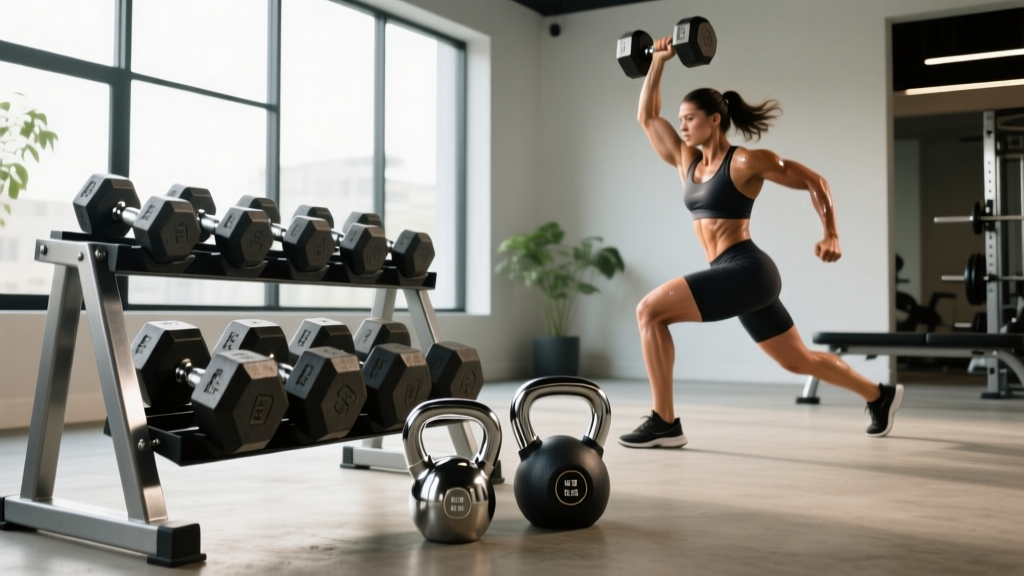
A smart home gym budget doesn't stop at the barbell. While plates dictate your heavy compound lifts, dumbbells are the undisputed kings of unilateral accessory work and joint-friendly isolation. Once you've allocated your budget to the right plates, you must reserve funds for a quality pair of adjustable or fixed hex dumbbells.
To ensure you get immediate ROI on that dumbbell purchase, we've programmed a highly effective shoulder workout with dumbbells that targets all three deltoid heads (anterior, medial, and posterior) without requiring a spotter or a barbell rack. This routine leverages time-under-tension and biomechanical stretch to drive hypertrophy.
1. Seated Arnold Press (Anterior & Medial Delt Focus)
The Arnold press capitalizes on the rotational capacity of the shoulder joint, increasing the range of motion and keeping the anterior deltoid under tension longer than a standard overhead press.
- Sets/Reps: 3 sets x 8-10 reps
- Tempo: 3-1-1-0 (3 seconds lowering, 1 second pause at the bottom with palms facing you, 1 second press and rotation, 0 second pause at top)
- Execution: Set an adjustable bench to 75 degrees (not perfectly vertical, which impinges the rotator cuff). Start with dumbbells in front of your collarbone, palms facing your face. As you press up, rotate your wrists so palms face forward at the top.
2. Lean-Away Lateral Raises (Medial Delt Stretch)
Standard lateral raises often lose tension at the bottom of the movement. By leaning away from a power rack or sturdy pole, you alter the resistance curve, forcing the medial deltoid to work through the bottom 30 degrees of the abduction arc.
- Sets/Reps: 3 sets x 12-15 reps per arm
- RIR (Reps in Reserve): 1 RIR (Stop one rep shy of failure)
- Execution: Hold a rack with your non-working hand and lean your body outward at a 20-degree angle. Let the working dumbbell hang across your thigh. Raise the weight laterally, leading with your elbow, until your arm is parallel to the floor. Do not shrug the trap.
3. Chest-Supported Rear Delt Sweeps (Posterior Delt)
The rear delt is often neglected, leading to postural imbalances and shoulder pain. Using an incline bench removes momentum from the equation, isolating the posterior fibers.
- Sets/Reps: 4 sets x 15-20 reps
- Rest: 45 seconds between sets
- Execution: Set a bench to a 30-degree incline. Lie face down with a light dumbbell in each hand, arms hanging straight down with a neutral grip (palms facing each other). Sweep the weights out and up in a wide arc, squeezing the shoulder blades together at the apex. Imagine you are trying to touch the walls on either side of you.
Expert Biomechanics Tip: When performing any shoulder workout with dumbbells, avoid the 'empty can' position (internal rotation during lateral raises). According to guidelines from the American Council on Exercise (ACE), keeping a slight external rotation or neutral grip during lateral and rear delt movements significantly reduces subacromial impingement risks while maximizing deltoid fiber recruitment.
Final Budget Verdict
Ultimately, the choice between bumper and iron plates comes down to your training environment and lifting style. If you need drop-safety and noise reduction, invest the extra $0.80/lb into high-durometer bumpers. If you are moving maximum tonnage on a reinforced platform, cast iron remains the most cost-effective density solution in 2026. Pair your barbell setup with a versatile set of dumbbells, apply the targeted shoulder protocol above, and your home gym will deliver commercial-grade results on a strict budget.
More gear to consider
All reviews
Dumbbell Wood Chop Muscles Worked: Neoprene Grip & Form Fixes

Cast Iron vs Competition Bells & The Brachioradialis Dumbbell Workout

Kettlebell Value: Water Bottle Shaped Like Dumbbell vs Real Iron

Barbell Clamp Comparison & Bent Over Dumbbell Reverse Flye Setup

Cast Iron vs Competition Kettlebells & Dumbbell Hammer Flys Trends