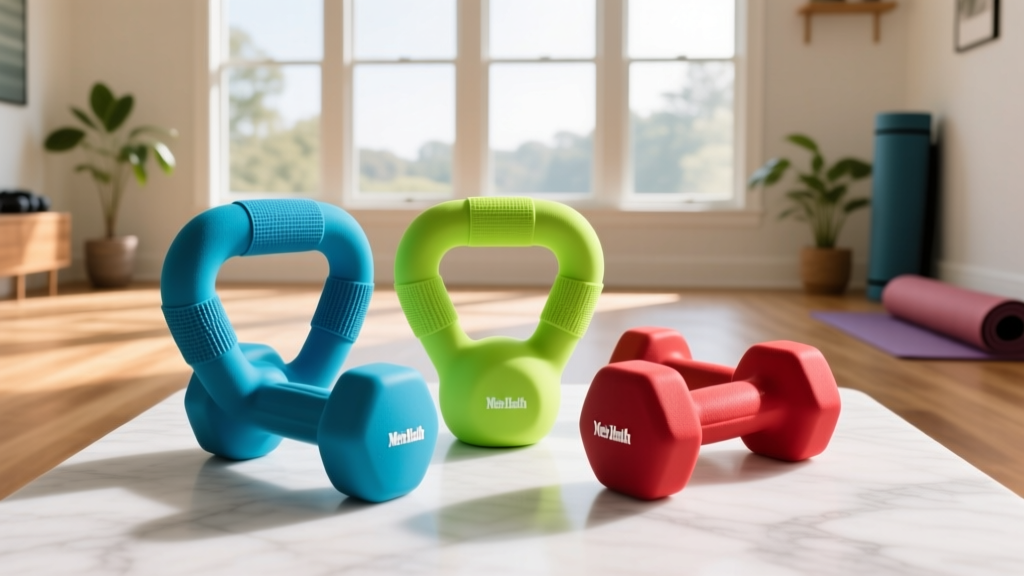
Bigger Biceps Workout With Dumbbells: Neoprene Home Guide
Master your bigger biceps workout with dumbbells at home. This beginner guide covers neoprene weight selection, step-by-step routines, and muscle growth.

Beginner's Guide to a Bigger Biceps Workout With Dumbbells Using Neoprene Weights
Building impressive arms at home does not require a massive commercial gym membership or thousands of dollars in equipment. For beginners, executing a highly effective bigger biceps workout with dumbbells starts with choosing the right tools for your home environment. While adjustable dumbbells get a lot of hype, fixed neoprene-coated dumbbells remain the unsung heroes of home fitness. They are affordable, floor-safe, and provide the tactile grip necessary for high-volume isolation work.
In this comprehensive 2026 guide, we will break down exactly why neoprene is the ideal coating for home bicep training, how to select your first set, and provide a step-by-step hypertrophy routine designed specifically for fixed-weight dumbbells.
Material Science: What is Neoprene?
Neoprene (polychloroprene) is a synthetic rubber known for its flexibility, chemical stability, and soft tactile feel. Unlike rigid cast iron or slick vinyl, neoprene offers a slight 'give' that conforms to the hand, reducing grip fatigue during high-rep bicep curls. It is also highly resistant to moisture, making it ideal for sweaty home workouts.
Why Choose Neoprene Dumbbells for Home Bicep Training?
When designing a home gym on a budget, you will typically encounter three main dumbbell coatings: bare iron, vinyl/rubber, and neoprene. Here is why neoprene wins for beginner arm training:
- Superior Grip Texture: Bicep curls require a firm grip to prevent the weight from slipping as your forearms fatigue. Neoprene provides a matte, slightly textured finish that outperforms slick vinyl.
- Floor and Furniture Protection: If you drop a dumbbell after a grueling set of concentration curls, neoprene's shock-absorbing properties will protect your hardwood floors and baseboards.
- Color-Coded Progression: Most neoprene sets are color-coded by weight (e.g., 10 lbs is usually green, 15 lbs is blue), allowing you to quickly grab the right weight for drop sets without squinting at engraved numbers.
- Cost-Effective Hypertrophy: As of 2026, neoprene dumbbells average between $1.20 and $2.20 per pound, making them significantly cheaper than urethane options ($2.50–$4.00+ per pound) while offering better durability than cheap vinyl.
Step 1: Selecting Your Neoprene Arsenal
To perform a complete bicep routine, you cannot rely on a single pair of dumbbells. The biceps respond best to varied rep ranges, meaning you need a light pair for strict isolation and a heavier pair for mechanical tension. Below is a comparison of the top neoprene brands currently dominating the home fitness market.
| Brand / Model | Price Range (per lb) | Durability & Edge Cases | Best For |
|---|---|---|---|
| Yes4All Neoprene | $1.20 - $1.60 | Good core casting. Seams may split after 18+ months if exposed to harsh chemical cleaners. | Beginners on a strict budget |
| CAP Barbell Neoprene | $1.50 - $2.00 | Excellent hex-head molding. Very minimal odor out of the box compared to competitors. | Long-term home gym staples |
| Amazon Basics Neoprene | $1.30 - $1.80 | Reliable, but the contour handle can feel slightly thick for users with smaller hands. | Quick shipping, moderate use |
| Empower Fitness | $0.90 - $1.20 | Low-density coating. Prone to tearing at the handle junction under heavy abuse. | Light rehab / high-rep burnout |
Pro Tip: For a complete beginner bicep routine, purchase three pairs: a light set (5-8 lbs) for warm-ups and burnout, a medium set (10-15 lbs) for standard curls, and a heavy set (20-25 lbs) for hammer curls and cheat reps.
Step 2: The Step-by-Step Bigger Biceps Workout
According to research published in the National Center for Biotechnology Information (NCBI), maximizing muscle hypertrophy requires a combination of mechanical tension, muscle damage, and metabolic stress. This step-by-step routine targets both heads of the biceps brachii, as well as the underlying brachialis muscle, which pushes the bicep up and creates the illusion of a thicker arm.
Exercise 1: Standing Supinated Dumbbell Curl (The Mass Builder)
This is your foundational movement. The supination (twisting the palm upward) engages the primary function of the bicep brachii.
- Setup: Stand with feet shoulder-width apart, holding your medium-weight neoprene dumbbells at your sides, palms facing your thighs.
- The Curl: Keep your elbows pinned to your ribs. As you curl the weight up, actively twist your wrists so your palms face the ceiling at the top of the movement.
- The Squeeze: Hold the contraction for 1 full second at the top.
- The Eccentric: Lower the weight slowly over 2-3 seconds, reversing the twist back to a neutral grip at the bottom.
Prescription: 3 Sets of 8-12 Reps. Rest 90 seconds between sets. (Reference proper form guidelines via the American Council on Exercise (ACE) Exercise Library).
Exercise 2: Cross-Body Hammer Curl (Brachialis Focus)
By keeping a neutral grip (palms facing each other), you shift the emphasis to the brachialis and brachioradialis. This adds crucial thickness to the arm profile.
- Setup: Hold your heavier neoprene dumbbells with a neutral grip.
- The Curl: Instead of curling straight up, curl the dumbbell across your torso toward the opposite shoulder.
- Control: Lower it back down the exact same path. Do not swing your hips to generate momentum.
Prescription: 3 Sets of 10-12 Reps per arm. Rest 60 seconds between sets.
Exercise 3: Seated Concentration Curl (The Peak Contractor)
This movement eliminates body English and isolates the short head of the bicep, contributing to the 'peak'.
- Setup: Sit on a chair or bench, spread your legs, and brace the back of your working arm's tricep against your inner thigh.
- The Curl: Using your lightest neoprene pair, curl the weight up toward your chest, squeezing hard at the top.
- Burnout: On the final set, when you can no longer do full reps, perform partial reps from the bottom half of the movement until total failure.
Prescription: 2 Sets of 12-15 Reps (plus partials on the last set). Rest 60 seconds.
⚠️ Beginner Warning: Avoid the Ego Swing
The most common failure mode for beginners attempting a bigger biceps workout with dumbbells is using momentum. If your front deltoid (shoulder) is taking over the lift, the weight is too heavy. Drop down to a lighter neoprene pair and focus on a strict 2-1-2 tempo (2 seconds down, 1 second pause, 2 seconds up).
Step 3: Progressive Overload with Fixed Weights
One of the main criticisms of fixed neoprene dumbbells is the inability to micro-load (adding just 1 or 2 lbs to the bar). If you only have 10 lb and 15 lb dumbbells, jumping to the next weight might be too difficult. Here are three expert frameworks to force muscle growth without buying new equipment:
- 1.5 Rep Style: Curl the weight all the way up, lower it halfway, curl it back up, then lower it all the way down. That equals ONE rep. This drastically increases time under tension.
- Rest-Pause Sets: Take your 15 lb dumbbells and curl them to failure (e.g., 8 reps). Rack them for exactly 15 seconds. Pick them up and crank out 3 more reps. Rack for 15 seconds. Get 1 or 2 more reps. This mimics the metabolic stress of a much heavier weight.
- Decreased Rest Intervals: If you normally rest 90 seconds between sets of 12 reps with 15 lbs, try to achieve the same 12 reps with only 60 seconds of rest. You are doing more work in less time, which signals adaptation.
Maintenance: Caring for Your Neoprene Coating
To ensure your equipment lasts for years, proper maintenance is required. Neoprene is highly durable, but it has specific chemical vulnerabilities.
'Never use bleach, high-alcohol sanitizers, or abrasive brushes on neoprene coatings. The alcohol breaks down the polymers, causing the coating to dry out, crack, and eventually peel away from the cast iron core.' — Home Gym Equipment Maintenance Guidelines
The Correct Cleaning Method: After your workout, wipe the dumbbells down with a microfiber cloth dampened with warm water and a single drop of mild dish soap. Dry them immediately with a towel to prevent sweat salts from degrading the material over time. Store them out of direct sunlight, as prolonged UV exposure will fade the color-coding and weaken the rubber.
Frequently Asked Questions
Can I build big biceps using only light neoprene dumbbells?
Yes, but it requires training close to muscular failure. According to hypertrophy research, lifting lighter weights (30-50% of your 1-rep max) can build just as much muscle as heavy weights, provided you push the set until you can barely complete another rep with good form. Expect to do sets of 20-30 reps with lighter weights to achieve this stimulus.
Are neoprene dumbbells toxic?
High-quality neoprene from reputable brands (like CAP Barbell or Yes4All) is non-toxic and safe for home use once the initial 'factory odor' has off-gassed. Leave them in a well-ventilated garage or porch for 48-72 hours after unboxing to allow any residual manufacturing smells to dissipate.
How do I know when to buy heavier dumbbells?
When you can easily complete 3 sets of 15 strict, slow-tempo reps with your current pair without reaching muscular failure, it is time to invest in the next weight increment (usually a 5 lb jump).
Final Thoughts
Achieving a bigger biceps workout with dumbbells at home is entirely possible when you pair intelligent exercise selection with the right equipment. Neoprene-coated dumbbells offer the perfect intersection of affordability, safety, and grip comfort for beginners. By following the step-by-step routine above, manipulating your tempo, and progressively overloading through advanced set structures, you will trigger the muscle growth you are looking for without ever needing to step foot in a commercial gym.
More gear to consider
All reviews
Rubber Hex vs Urethane: Best Gear for Different Arm Workouts with Dumbbells

Barbell Collars & Long Head Tricep Exercises Dumbbell Safety

Russian Twist with Dumbbells vs Kettlebells: Cast Iron Care Guide

EZ vs Straight Bar Value: Arm Exercises With Dumbbells for Ladies

Beyond Dumbbells for Women Over 50: Barbell Knurling & Weight Guide
