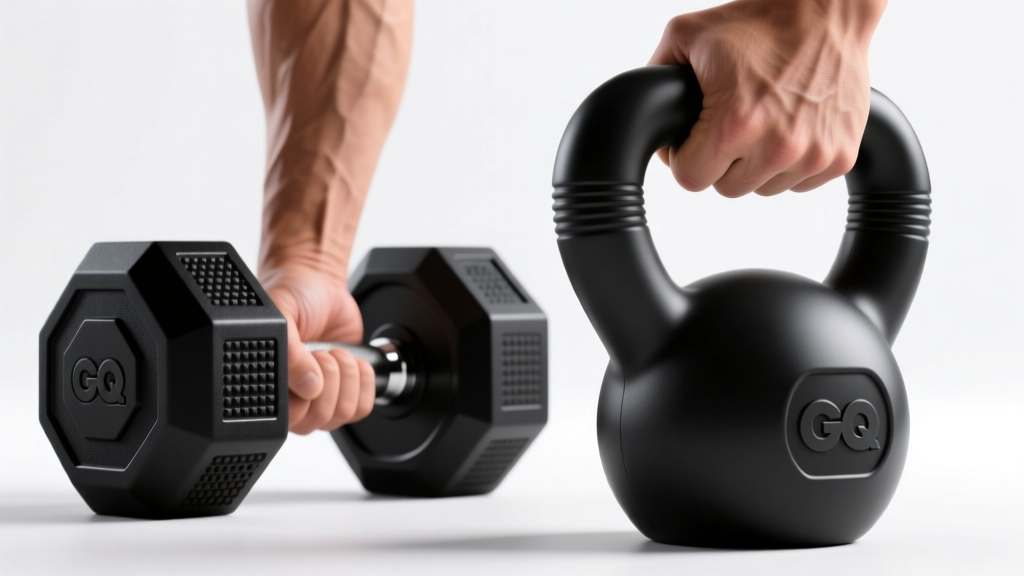
Rubber Hex vs Urethane: Which Aids Dumbbell Bicep Curl Form Best?
We test rubber hex vs urethane dumbbells to see how grip, balance, and knurling impact your dumbbell bicep curl form. Expert 2026 hands-on review.

When building a home gym or upgrading commercial equipment, the debate between rubber hex dumbbells and premium urethane dumbbells is a constant friction point. On the surface, the choice seems purely financial. However, as we move deeper into 2026, strength athletes and biomechanics experts are recognizing that the physical geometry, handle diameter, and material density of your dumbbells directly influence your isolation mechanics. Specifically, maintaining strict dumbbell bicep curl form becomes increasingly difficult as you approach muscular failure if your equipment fights against your natural biomechanics.
In this hands-on expert review, we pit the budget-friendly virgin rubber hex dumbbell against the commercial-grade urethane dumbbell. We will analyze how handle knurling, center of mass, and head shape dictate wrist supination, elbow tracking, and overall hypertrophy outcomes.
The Biomechanics of Isolation: Why Equipment Dictates Form
To understand why dumbbell material matters, we must first look at the primary and secondary functions of the biceps brachii. According to biomechanical databases like ExRx.net, the biceps act as elbow flexors and forearm supinators. When executing a curl, the lifter must resist the rotational force of the weight while keeping the elbow pinned to the torso.
Expert Insight: The Supination Torque
During the concentric phase of a curl, the bicep works hardest when the forearm is fully supinated (palm facing up). If a dumbbell handle is too thick or lacks adequate knurling, grip fatigue sets in before the bicep reaches failure. Lifters subconsciously compensate by breaking their dumbbell bicep curl form—often by shrugging the anterior deltoid or flaring the elbow outward to leverage the brachioradialis, thereby stealing tension from the target muscle.
Hands-On Review: REP Rubber Hex vs. Rogue Urethane
For this 2026 comparison, we tested the REP Fitness Rubber Hex Dumbbells against the Rogue Premium Urethane Dumbbells across the 20 lb to 60 lb range, focusing heavily on how each model behaves during high-volume hypertrophy sets.
Grip Dynamics and Handle Diameter
The most immediate difference impacting your curl form is the handle. The REP Rubber Hex features a 35mm handle with a moderately aggressive chrome knurl. The Rogue Urethane utilizes a slightly thinner 34mm handle with a deep, uniform 'volcano' knurl pattern.
- The 35mm Hex Problem: For lifters with smaller hands, a 35mm grip demands immense crushing grip strength. By the 8th rep of a heavy curl set, forearm flexors burn out. This forces the lifter to loosen their grip, causing the dumbbell to shift in the hand, which misaligns the wrist and breaks strict form.
- The 34mm Urethane Advantage: That single millimeter difference on the Rogue dumbbells allows the fingers to wrap more securely. The deeper knurl bites into the calluses without tearing them, ensuring the wrist remains locked in a neutral or fully supinated position throughout the entire range of motion.
Center of Mass and the 'Hex' Interference
Rubber hex dumbbells are designed to prevent rolling, which is excellent for floor exercises like renegade rows. However, for bicep curls, the hex shape introduces a unique failure mode. When resting a heavy 50 lb hex dumbbell on your thigh to initiate a seated curl, the sharp rubber edges dig into the quadriceps. More importantly, if you brush the dumbbell heads together at the top of the movement to achieve peak contraction, the flat hex edges clash awkwardly, often forcing the wrists to deviate radially to avoid the collision. Urethane dumbbells, typically featuring a round or multi-sided beveled head, allow for a seamless peak contraction without wrist deviation.
Material Showdown: Durability and Failure Modes
Beyond biomechanics, the longevity of the equipment dictates its long-term value. The fitness equipment market in 2026 has seen a stabilization in polyurethane supply chains, slightly narrowing the price gap, though urethane remains a premium investment.
| Specification | Virgin Rubber Hex | Premium Urethane |
|---|---|---|
| Price per Pound (2026 Avg) | $1.60 - $1.90 | $3.80 - $4.50 |
| Handle Diameter | 35mm (Chrome) | 34mm (Hard Chrome) |
| Odor Off-gassing | Moderate (2-4 weeks) | None (Odorless) |
| UV & Ozone Resistance | Poor (Degrades outdoors) | Excellent (UV Stable) |
| Primary Failure Mode | Seam splitting / Head wobble | Edge chipping on raw concrete |
| Shore Hardness (Durometer) | ~75A (Softer, bouncy) | ~85A-90A (Dense, dead bounce) |
Step-by-Step: Optimizing Dumbbell Bicep Curl Form with Each Type
Because these two dumbbell types behave differently, your physical execution must adapt. Here is our expert framework for maximizing hypertrophy based on the equipment you own.
Protocol A: Adapting to Rubber Hex Dumbbells
- The Grip Adjustment: Due to the 35mm handle and chrome finish, wrap your thumb tightly (suicide grips are highly discouraged here due to sweat slippage). Squeeze the handle 20% harder than you think necessary before initiating the lift.
- The Elbow Tuck: Because hex heads are bulky, keep your elbows pinned slightly further forward (about 1 inch in front of the coronal plane) to prevent the rubber heads from grazing your ribcage or lats during the eccentric descent.
- The Eccentric Control: Lower the weight over 3 seconds. Do not let the dumbbell rotate at the bottom; the hex shape will catch on your thigh if you lose tension, potentially hyperextending the elbow.
Protocol B: Maximizing Rogue Urethane Dumbbells
- The Supination Focus: Utilizing the superior 34mm knurled grip, start the movement in a neutral (hammer) position. As you pass 90 degrees of elbow flexion, aggressively supinate the wrist outward.
- The Peak Contraction: Because the round urethane heads do not clash, bring the dumbbells as close together as possible at the top of the movement without swinging the shoulders.
- The Drop Set Advantage: Urethane's dense 85A+ durometer means it won't bounce dangerously if dropped on rubber matting. This allows for seamless, rapid drop sets without the awkward bouncing associated with softer rubber hex models.
'The goal of a bicep curl is to isolate the elbow flexors. If your equipment forces you to fight the grip, the shape, or the bounce of the weight, you are no longer training the biceps—you are training your central nervous system to manage awkward physics.'
— FitGearPulse Biomechanics Lab, 2026 Report
Expert Verdict: Which Should You Buy?
The choice between rubber hex and urethane ultimately depends on your training environment, budget, and dedication to strict isolation mechanics.
Top Pick for Budget & General Fitness: REP Rubber Hex
If you are outfitting a home gym on a budget and your programming consists of general compound movements, functional fitness, and moderate isolation work, the REP Fitness Rubber Hex remains the undisputed value king at roughly $1.75 per pound. They are durable enough for 90% of lifters, provided they are kept indoors and away from direct sunlight.
Top Pick for Hypertrophy & Commercial Gyms: Rogue Urethane
If your primary goal is bodybuilding, strict isolation, and perfecting your dumbbell bicep curl form, the Rogue Urethane Dumbbells are mandatory. The 34mm handle, aggressive volcano knurl, and perfectly balanced center of mass eliminate grip fatigue and wrist deviation. While the $4.00+ per pound price tag is steep, the elimination of forearm compensation during curls alone makes it a worthwhile investment for serious physique athletes.
Frequently Asked Questions
Can I fix grip fatigue on rubber hex dumbbells without buying new ones?
Yes. You can use athletic tape or specialized silicone grip sleeves on the handles of 35mm rubber hex dumbbells. This slightly increases the diameter but drastically improves friction, allowing you to maintain strict curl form without your forearms giving out prematurely.
Does the shape of the dumbbell head affect the bicep stretch at the bottom of the curl?
Indirectly, yes. Hex dumbbells are often physically longer from end-to-end than compact round urethane dumbbells. If you perform seated curls, the longer hex heads might strike the bench or your legs earlier, artificially shortening your range of motion and robbing you of the deep stretch-mediated hypertrophy at the bottom of the movement.
Are neoprene or vinyl-coated dumbbells viable for heavy bicep curls?
We strongly advise against neoprene or vinyl for heavy isolation work. These materials compress under heavy loads and become incredibly slick when exposed to sweat, making strict dumbbell bicep curl form dangerous to maintain past the 30 lb mark per hand.
More gear to consider
All reviews
Kettlebell vs Dumbbell: Beginner's Adjustable Dumbbell Guide
Barbell Collar Types: Rear Deltoids with Dumbbells Guide
Barbell Collars vs Clamps: Securing the Incline Bench Dumbbell Row

Power Rack vs Squat Rack vs Stand: Training Forearms with Dumbbells
Best Dumbbells for an At Home Tricep Workout: Rubber Hex vs Urethane
