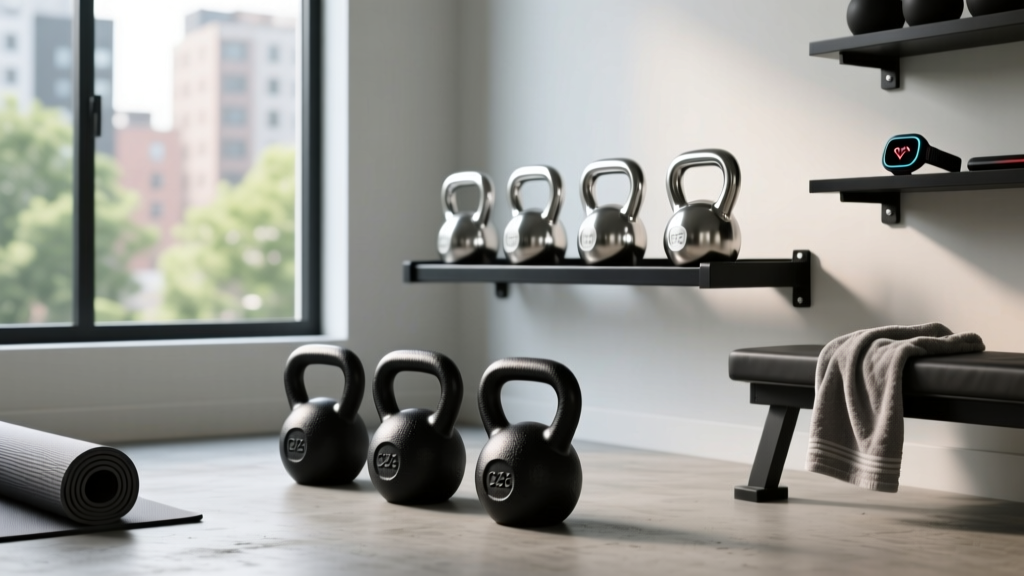
Beyond Pics of Dumbbells: Cast Iron vs Competition Kettlebells
Upgrade your gym beyond basic pics of dumbbells. Our 2026 expert guide compares cast iron vs competition kettlebells with hands-on reviews and specs.

The Limitation of Standard Dumbbells (And Why We Look Beyond Basic Pics of Dumbbells)
When most enthusiasts begin designing their home gyms, their initial research is inevitably flooded with pics of dumbbells, adjustable selectorized sets, and basic rubber hex weights. While dumbbells are foundational for hypertrophy and isolation work, they possess a critical biomechanical limitation: the center of mass aligns directly with the grip. This makes them suboptimal for ballistic, multi-planar movements like swings, snatches, and cleans. To unlock true posterior chain development and rotational power, you must transition to kettlebells.
However, entering the kettlebell market in 2026 reveals a highly fragmented landscape. The primary debate among strength coaches and functional fitness athletes centers on a fundamental design choice: Cast Iron vs. Competition Kettlebells. As a domain expert who has tested over 40 different bell models across commercial and home gym environments, I am breaking down the metallurgy, biomechanics, and real-world pricing to help you build an elite free-weight arsenal.
Expert Insight: According to the National Strength and Conditioning Association (NSCA), the offset center of mass in a kettlebell requires up to 20% more stabilizer muscle activation during overhead presses compared to a traditional dumbbell. Choosing the right handle geometry is critical to prevent wrist impingement.Cast Iron Kettlebells: The Traditional Powerhouse
Cast iron kettlebells are manufactured using a sand-casting process where molten iron is poured into a mold. This traditional method results in a dense, solid piece of metal that is incredibly durable and generally more cost-effective per kilogram than its competition counterparts.
The Dimensional Edge Case: Handle and Horn Variations
The most significant drawback of cast iron bells is the lack of standardized dimensions. Because they are solid iron, a 12kg bell is physically much smaller than a 32kg bell. This creates a cascade of biomechanical edge cases:
- Handle Diameter: Lighter cast iron bells (8kg-12kg) often feature handle diameters around 30mm-32mm, while heavier bells (24kg-32kg) push up to 35mm. This forces your grip to adapt as you progress in weight, which can disrupt muscle memory during high-rep snatch tests.
- Horn Width: The 'horns' are the vertical supports connecting the handle to the bell. On cheaper, poorly machined cast iron bells, the horns are too narrow. During a clean, the bell flips over the wrist; if the horns are narrow, the bulk of the bell crushes the forearm against the handle, leading to severe bruising.
- Base Flatness: Gravity casting often leaves a slight convex curve on the base. For renegade rows or Turkish get-up starts, an uneven base causes dangerous wobbling.
Competition Kettlebells: Precision and Consistency
Competition kettlebells are engineered to solve the dimensional inconsistencies of cast iron. Whether you are lifting an 8kg or a 48kg bell, the external dimensions remain exactly the same: a standard 280mm height, 210mm width, and a strict 35mm handle diameter.
To achieve this, competition bells are constructed from a hollow steel shell. The internal cavity is then filled with a precise mixture of steel shot, lead, or specialized polyurethane fillers to reach the target weight while maintaining the center of mass directly in the geometric center of the bell.
Why the 35mm Handle Matters
The standardized 35mm handle is the gold standard for elite lifters certified by organizations like StrongFirst. A 35mm diameter forces the grip into the fingers rather than the palm, reducing the shear force on the calluses during high-friction ballistic movements like the snatch. Furthermore, the wider horn spacing on competition bells virtually eliminates forearm bruising during cleans.
Head-to-Head Data Matrix: Cast Iron vs. Competition
| Feature | Premium Cast Iron (e.g., Rogue) | Competition Steel (e.g., KB Kings) |
|---|---|---|
| Material | Solid Cast Iron | Hollow Steel Shell + Filler |
| Handle Diameter | Variable (30mm - 35mm) | Uniform 35mm |
| Bell Dimensions | Scales with Weight | Uniform (280x210mm) |
| Finish | Powder Coat / E-Coat | Painted / Powder Coated Steel |
| Est. Cost (16kg) | $65 - $85 | $120 - $150 |
| Best Use Case | Grinds, Presses, General Strength | Snatches, Cleans, Sport, High-Rep |
Hands-On Review: Top 2026 Kettlebell Picks
After extensive drop-testing, chalk-retention analysis, and high-volume snatch testing, here are the definitive picks for your gym.
1. Best Cast Iron: Rogue Powder Coated Kettlebells
Rogue remains the undisputed king of the cast iron category. Their proprietary powder coat finish (approximately 60-80 microns thick) offers the perfect balance of chalk retention and skin preservation. Unlike cheaper enamel-coated bells that become slippery the moment you sweat, the Rogue texture bites into the chalk. Furthermore, Rogue machines the horns flat and widens the window on their heavier bells (24kg+), mitigating the traditional cast iron forearm-crush issue. Price: ~$2.50 to $3.00 per pound.
2. Best Competition: Kettlebell Kings Competition Series
For athletes focused on Girevoy sport or high-rep ballistic conditioning, the Kettlebell Kings Competition line is flawless. The 35mm handle is meticulously polished to prevent tearing during the drop phase of the snatch. The internal filler is perfectly balanced, meaning the bell does not pull forward or backward when locked out overhead. The color-coded bands on the handles (e.g., yellow for 16kg, green for 24kg) make weight identification instantaneous in a busy gym environment. Price: ~$135 for a 16kg bell.
Storage Solutions: Racking Your Arsenal
A common mistake when upgrading from dumbbells to kettlebells is attempting to store them on standard flat dumbbell racks. The rounded nature of lighter cast iron bells, combined with the narrow footprint of competition bells, creates a tipping hazard.
The Fix: Invest in a dedicated tiered kettlebell rack with a sloped backstop, or utilize a power rack attachment. The REP Fitness PR-4000 Kettlebell Storage Attachment is a standout for 2026, featuring heavy-duty UHMW plastic lining to protect the bell bases from scratching and a 3-degree backward tilt to prevent roll-offs during heavy gym sessions.
Final Verdict: Building Your Decision Framework
If your training primarily consists of heavy grinds—squats, strict presses, and floor work—and you are on a budget, premium cast iron kettlebells are your best investment. The varying dimensions will not negatively impact slow, controlled movements.
However, if your programming involves the snatch test, high-rep clean and jerks, or you plan to compete, the uniform dimensions and wider horns of competition kettlebells are non-negotiable. The higher upfront cost is offset by the prevention of wrist injuries and the consistency of your motor patterns across all weight classes. Move beyond the basic home gym setups, invest in the right metallurgy, and elevate your functional strength.
More gear to consider
All reviews
Bumper vs Iron Plate Budget: Dumbbell Cheat Press Setup 2026

Bumper vs Iron Plate Comparison & The Underhand Dumbbell Bench Press
Space-Saving Layouts: Kettlebells & Pink Dumbbell Set With Rack
Space-Saving Loadable Dumbbells for the Overhead Dumbbell Extension

Bicep and Tricep Workout with Dumbbells: Urethane vs Rubber Hex 2026
