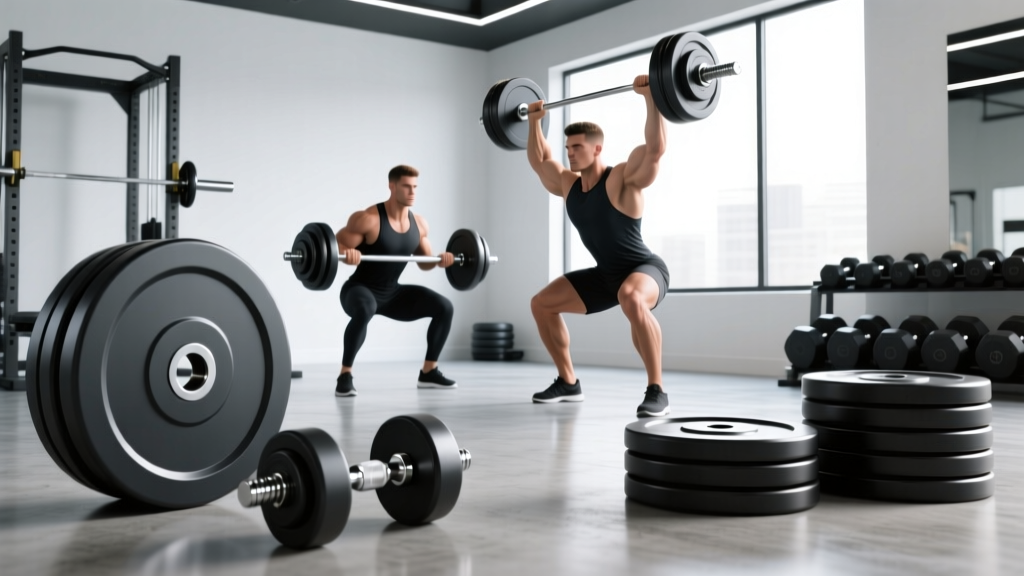
Beyond the Heaviest Dumbbell: Olympic vs Standard Plates
Maxed out the heaviest dumbbell? Step up to barbell training with our beginner guide comparing Olympic vs standard weight plates, costs, and specs.

The Next Step After Maxing Out Your Dumbbells
You have finally pressed the heaviest dumbbell in your adjustable set—maybe it is a 50lb Bowflex 552 or an 80lb Nuobell. Your chest, back, and legs are begging for more progressive overload, but buying a pair of 100lb+ fixed hex dumbbells can easily cost upwards of $400. The logical, cost-effective next step for your home gym? A barbell and weight plates.
However, stepping into the world of barbell training introduces a massive fork in the road: Olympic vs. Standard weight plates. Making the wrong choice can result in bent bars, shattered floors, or a complete dead-end for your strength progression. This step-by-step guide will break down the exact specifications, pricing, and real-world failure modes of both systems so you can build a lifetime gym setup.
Step 1: Understand the Core Difference (The 1-Inch vs. 2-Inch Rule)
The entire debate between standard and Olympic equipment boils down to one physical measurement: the diameter of the barbell sleeve (the part where the plates slide on) and the corresponding hole in the center of the weight plate.
- Standard Plates: Feature a 1-inch (25.4mm) center hole. They are designed to fit on inexpensive, lightweight barbells typically found in big-box sporting goods stores.
- Olympic Plates: Feature a 2-inch (50mm) center hole. They are engineered to fit on heavy-duty, rotating-sleeve barbells used in commercial gyms, powerlifting meets, and serious home gyms.
Step 2: Evaluating Standard Weight Plates (The Budget Starter)
Standard cast iron plates are the entry point for many casual lifters. They are compact, widely available on the secondhand market, and cheap to produce.
The Real-World Specs & Pricing
As of 2026, standard cast iron plates generally cost between $1.00 and $1.50 per pound. A 200lb set will run you about $250. However, the hidden cost lies in the barbell. Standard bars are usually made from low-grade steel or hollow tubing, with a maximum weight capacity of 200 to 300 pounds.
The 'Bend' Failure Mode
Here is a non-obvious edge case that ruins many beginner home gyms: bar deflection. If you load four 45-lb standard plates onto a $40 standard barbell, you are approaching 200 lbs. Under the stress of a heavy deadlift, a standard 1-inch bar will literally bend. Once the steel yields and bends permanently, your plates will no longer sit flush, causing severe balance issues and rattling during lifts. Standard equipment is a dead-end once you surpass the intermediate strength threshold.
Step 3: Evaluating Olympic Weight Plates (The Lifetime Investment)
Olympic plates are the gold standard for anyone serious about progressive overload. The 2-inch sleeve diameter allows for a massive, solid steel barbell shaft (typically 28mm to 29mm thick) that can hold 700 to 1,500 lbs without permanent deformation.
Why Sleeve Rotation Matters
Olympic barbells feature rotating sleeves equipped with bronze bushings or needle bearings. When you perform a clean, snatch, or even a heavy curl, the plates spin independently of the bar shaft. This rotational inertia prevents the bar from tearing the skin off your palms or torquing your wrists. Standard bars are a single solid piece of metal; the plates cannot spin, transferring all that violent torque directly into your joints.
Pricing Tiers for Olympic Plates
- Basic Cast Iron: $1.50 - $2.20 per lb. Machined for a better fit, but prone to rust if not oiled.
- Urethane-Coated Iron: $2.50 - $4.00 per lb. Odorless, rust-proof, and protects your flooring.
- Crumb Rubber Bumpers: $2.50 - $3.50 per lb. Made from recycled rubber. Thick, bouncy, and great for garage gyms where dropping weights is necessary.
- Virgin Rubber Bumpers: $4.50 - $7.00+ per lb. Dense, thin, low-bounce, and highly durable. The choice for serious Olympic weightlifters.
Step 4: The Head-to-Head Comparison Matrix
To visualize the differences, review this direct comparison matrix before making your purchase.
| Feature | Standard (1-Inch) | Olympic (2-Inch) |
|---|---|---|
| Center Hole Diameter | 1 inch (25.4mm) | 2 inches (50mm) |
| Barbell Weight Capacity | 200 - 300 lbs (Typical) | 700 - 1,500+ lbs |
| Barbell Shaft Diameter | 1 inch (Grip is too thick for some) | 28mm - 29mm (Optimal grip) |
| Sleeve Rotation | None (Solid bar) | Bushings or Bearings |
| Plate Material Options | Cast Iron, Vinyl-filled concrete | Iron, Urethane, Bumper Rubber |
| Average Cost Per Pound | $1.00 - $1.50 | $1.80 - $6.00+ |
| Resale Value | Very Low | High (Holds value well) |
Step 5: Bumper Plates vs. Iron Plates (Which Olympic Route?)
Once you commit to Olympic, you must choose between iron and bumpers. According to extensive durability and drop-testing reviewed by BarBend, your choice should depend entirely on your flooring and lifting style.
Choose Cast Iron If:
You are primarily powerlifting (squat, bench, deadlift) or doing bodybuilding. Iron plates are thinner, allowing you to load more weight onto the bar (up to eight 45-lb plates per side on a standard Olympic bar). They are also cheaper. Just ensure you have heavy-duty rubber horse stall mats to protect your concrete floor.
Choose Bumper Plates If:
You plan to do Olympic lifting (cleans, snatches) or CrossFit-style workouts where the barbell is dropped from overhead. Bumper plates all share the same 450mm (17.7-inch) diameter, regardless of weight. This means a 10-lb bumper plate hits the ground at the exact same time as a 45-lb bumper plate, distributing the impact evenly and saving your barbell from snapping.
Step 6: Your Step-by-Step Buying Blueprint
Do not buy random plates off Craigslist without a plan. Follow this acquisition strategy to build a functional 200+ lb kit.
- Buy the Bar First: The bar is the most important piece of equipment. Invest $200-$300 in a high-quality Olympic bar (like the Rogue Ohio Bar or a REP Fitness Excalibur). A great bar with cheap plates is better than a terrible bar with premium plates.
- Acquire the 'Workhorse' Plates: Buy two pairs of 45-lb plates and one pair of 25-lb plates. This gets you from 45 lbs (the empty bar) up to 235 lbs.
- Fill the Micro-Gaps: Buy one pair each of 10-lb, 5-lb, and 2.5-lb plates. Progressive overload requires small jumps; trying to add 20 lbs to a strict overhead press will stall your progress.
- Don't Forget Collars: Spring clips are for beginners. Invest $30 in a pair of lock-jaw collars or competition-style clamp collars to keep the plates from sliding off the sleeves during uneven lifts.
Final Thoughts: The Verdict for Your Home Gym
Transitioning away from the heaviest dumbbell in your rack is a major milestone in your fitness journey. While standard plates offer a tempting, low-cost entry point, their lack of durability, poor barbell integration, and strict weight limits make them a poor long-term investment. As highlighted by manufacturing tolerances for elite plates from companies like Rogue Fitness, the 2-inch Olympic standard provides the safety, precision, and longevity required for lifelong strength training.
Swallow the upfront cost of an Olympic barbell and a basic set of cast iron or crumb rubber bumper plates. Your joints, your flooring, and your future strength gains will thank you.
More gear to consider
All reviews
Bumper vs Iron Plates: Care for Your Dumbbell Weight Lifting Routine

Beyond Dumbbell Rows at Home: Olympic Barbell Weight & Knurling

Best Dumbbell Full Body Workouts: Top Neoprene Sets Compared

Olympic Barbell Guide: Knurling & Dumbbell Back Exercises Without Bench

Barbell Clamp Comparison & Dumbbell Wood Chopper Exercise Tips