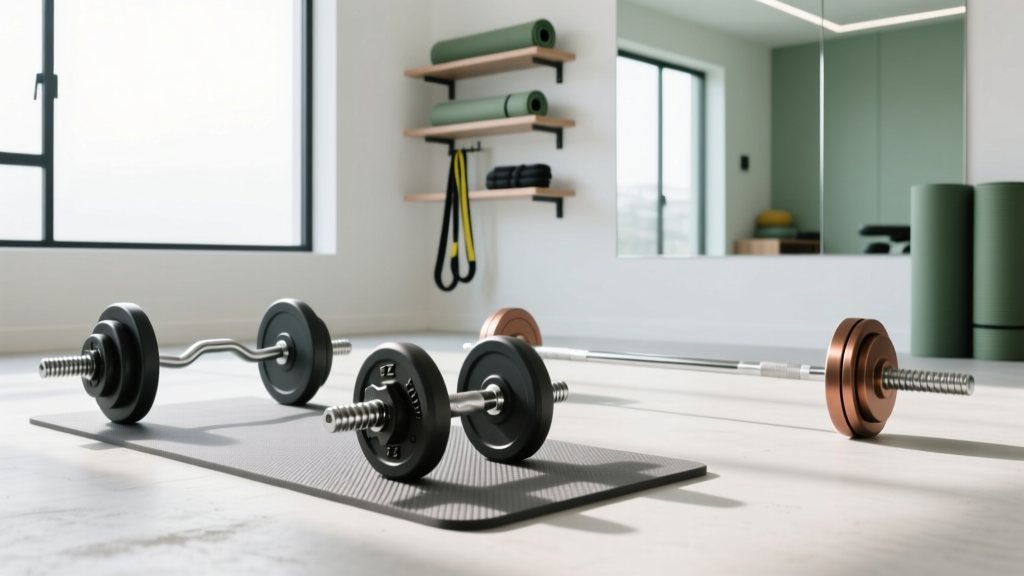
Squat Rack vs Stand: Troubleshooting Rigs and Workouts for Dumbbells
Avoid costly home gym mistakes. We troubleshoot power rack vs squat rack vs squat stand setups to optimize barbell and dumbbell workouts.

The Great Home Gym Debate: Power Rack vs. Squat Rack vs. Squat Stand
Building a home gym in 2026 requires more than just throwing money at the first piece of steel you see online. The centerpiece of any serious garage gym is the rig, but choosing between a full power rack, a half squat rack, and a minimalist squat stand is a decision fraught with spatial and mechanical pitfalls. Many lifters purchase a rig based solely on barbell squatting, only to realize months later that their equipment actively hinders their accessory movements and workouts for dumbbells. As a senior equipment reviewer for FitGearPulse, I have inspected hundreds of home gym setups. The most common point of failure is not the steel itself, but the mismatch between the lifter's chosen rig and their actual training modalities.
This troubleshooting guide dissects the most frequent mistakes lifters make when selecting and configuring power racks, squat racks, and squat stands. We will cover exact dimensional clearances, stability failure modes, and safety mechanism misconfigurations to ensure your rig supports everything from 500-pound back squats to high-volume workouts for dumbbells.
Mistake #1: Ignoring the Spatial Requirements for Dumbbell Integration
The most pervasive mistake in home gym design is measuring the physical footprint of the rack while ignoring the usable operational area. A squat stand like the Rogue SML-2C boasts a remarkably compact base of just 49 by 48 inches. However, this measurement is a spatial illusion.
The Clearance Failure Mode
If you opt for a 90-inch tall squat stand to accommodate pull-ups, you need a minimum ceiling height of 96 inches (8 feet) to allow for proper kipping clearance and overhead press lockout. Furthermore, when transitioning to workouts for dumbbells, the lack of a fully enclosed cage means you need an additional 36 inches of clearance on all sides to safely perform walking lunges, dumbbell step-ups, or heavy goblet squats without risking a collision with the uprights.
Troubleshooting Step: Before purchasing, tape out the footprint of the rack on your floor using painter's tape. Then, tape out a secondary boundary 3 feet outside the rack on all sides. Stand in the center with a pair of 50-pound dumbbells and simulate a walking lunge. If you hit the outer boundary, a squat stand will feel claustrophobic, and you should pivot to a wall-mounted folding rack like the Titan T-3 Folding Power Rack, which folds to just 4 inches deep when not in use, instantly reclaiming your floor space for dumbbell circuits.
Mistake #2: Stability Failures During Asymmetrical Loading
Squat stands are inherently less stable than 4-post power racks or 6-post half racks because they rely on a smaller base of gravity. This becomes a critical failure point when integrating heavy dumbbells into your routine.
The Storage Horn Tipping Hazard
Many lifters purchase aftermarket dumbbell storage horns to attach to their squat stand uprights, attempting to save floor space. According to independent stability testing by Garage Gym Reviews, loading 100-pound dumbbells onto high-mounted storage horns on an unanchored squat stand shifts the center of gravity dangerously forward. If you bump the upright while fatigued during a set of heavy dumbbell Romanian deadlifts, the entire rig can tip.
- The Fix: Never mount heavy dumbbell storage above 36 inches on a 2-post squat stand.
- The Alternative: If you must store heavy dumbbells on the rig, upgrade to a 4-post power rack (like the Rep Fitness PR-4000) which offers a 1000-pound capacity attachment ecosystem and a welded crossmember base that eliminates forward tipping.
Mistake #3: Misconfiguring Safety Mechanisms for Solo Lifting
The safety system you choose dictates not just your barbell safety, but your ability to fail safely during heavy dumbbell presses. The two primary safety systems are Pin-and-Pipe safeties and UHMW Plastic Strap Safeties.
| Safety Type | Best Use Case | Dumbbell Workout Compatibility | Common Mistake |
|---|---|---|---|
| Pin-and-Pipe | Heavy squats, rack pulls | Poor. Pipes are too narrow to catch a dropped 120-lb dumbbell safely without it rolling off. | Leaving pins in during dynamic movements where the barbell might bounce and dislodge the pipe. |
| Strap Safeties | Solo bench press, floor press | Excellent. The 2-inch wide nylon/UHMW strap provides a wide catching surface for dropped dumbbells. | Using straps for heavy squats; the dynamic downward force can stretch or fray the strap over time. |
| Flip-Down Spotter Arms | Squat stands, temporary setups | Moderate. Good for catching a barbell, but awkward for dumbbell floor presses due to wide arm spacing. | Forgetting to lock the detent pins, causing the arm to fold downward under load. |
When designing your rig for workouts for dumbbells, strap safeties are vastly superior for benching and floor pressing. As noted in safety guidelines published by ExRx.net, the primary danger in solo dumbbell pressing is the inability to safely dump the weight if a shoulder gives out. Strap safeties allow you to simply open your hands and let the dumbbells fall onto a wide, forgiving surface, whereas steel pipes can cause the dumbbells to shatter or bounce back toward your face.
Mistake #4: The 2x2 vs. 3x3 Tubing Ecosystem Trap
Budget constraints often lead lifters to purchase racks constructed from 2x2-inch, 14-gauge steel tubing instead of the industry-standard 3x3-inch, 11-gauge steel. While a 2x2 rack might safely hold a 400-pound barbell squat, it severely limits your accessory and dumbbell integration.
"The true cost of a budget 2x2 rack is not the steel; it is the inability to use the attachment ecosystem you will inevitably need as your training evolves." - FitGearPulse Engineering Team
Why 3x3 Tubing Matters for Dumbbell Training
- Landmine Attachments: Rotational dumbbell work (like landmine twists or anti-rotation presses) requires a rigid landmine base. 2x2 tubing flexes laterally under the torque of a heavy landmine attachment, ruining the movement pattern.
- Spotter Arms: Heavy dumbbell bench pressing (using 100+ lb dumbbells) requires extended spotter arms. Most 3x3 racks offer robust, 24-inch spotter arms that lock in with zero wobble. 2x2 spotter arms are notoriously flimsy and prone to bending.
- Weight Storage: If you plan to use the rear of your power rack for bumper plate storage to act as a counterweight, 3x3 uprights handle the sheer stress of 500+ pounds of loaded plates. 2x2 uprights can warp, causing the hole spacing to misalign.
Troubleshooting Your Specific Space: A Decision Flow
If you are currently struggling with your home gym layout, use this troubleshooting matrix to determine your next equipment move.
Scenario A: You have a low ceiling (under 84 inches) and want to do pull-ups and heavy dumbbell step-ups.
- The Mistake: Buying a standard 90-inch power rack and cutting the uprights (which voids the warranty and ruins the hole spacing).
- The Fix: Purchase a short 72-inch power rack (like the Rogue R-3 or Rep PR-1100) and mount it on a raised platform, or opt for a 6-post half rack which provides the stability of a cage without the overhead crossmembers.
Scenario B: You share a multi-use space (garage or living room) and need to hide the gym.
- The Mistake: Buying a squat stand and dragging it into a corner after every workout, scratching your floors and risking injury.
- The Fix: Invest in a wall-mounted folding rack. Ensure you bolt it directly into wall studs or a reinforced concrete wall using 3/8-inch lag screws. When folded, it leaves the entire floor open for bodyweight and workouts for dumbbells.
Frequently Asked Questions
Can I use a squat stand for heavy dumbbell bench presses?
Technically yes, but it is highly discouraged unless you have extended spotter arms and the stand is bolted to a concrete floor. The lateral movement of getting heavy dumbbells into position can easily shift an unanchored 2-post stand. For heavy dumbbell benching, a 4-post power rack with strap safeties is the only reliable choice.
What is 'Westside' hole spacing and do I need it?
Westside spacing refers to 1-inch hole spacing in the bench press zone (typically the bottom 24 inches of the upright), compared to 2-inch spacing higher up. If your workouts for dumbbells include heavy floor presses or pin presses, 1-inch spacing allows you to set the safety straps exactly where you need them, rather than being forced into a position that is either too high (limiting range of motion) or too low (failing to protect your joints).
Are urethane dumbbells safer to use around power racks than rubber?
Yes. When performing dumbbell work inside or around a steel rig, accidental drops are inevitable. Urethane dumbbells are significantly more durable and resistant to chipping than standard rubber hex dumbbells. Furthermore, urethane does not emit the strong off-gassing odors that cheap rubber does, which is a critical factor when training in an enclosed power rack in a poorly ventilated garage.
By understanding the mechanical limitations and spatial requirements of your rig, you can build a home gym that seamlessly supports both your heaviest barbell attempts and your most demanding workouts for dumbbells. Always prioritize 11-gauge steel, accurate spatial planning, and the correct safety mechanisms to ensure your training environment is as safe as it is effective.
More gear to consider
All reviews
EZ Curl Bar vs Straight Bar & Dual Dumbbell Front Squat Guide

Kettlebell vs. Dumbbell Curl and Press: Cast Iron Guide
Barbell Clamp Types Comparison: Beyond the Women's Dumbbell Workout Routine PDF

EZ Curl vs Straight Bar Comparison: Care & Leg Extension with Dumbbell

Best Loadable Dumbbells for Standing Dumbbell Twists