
Progressing Past At Home Exercises With Dumbbells: Olympic vs Standard Plates
Transitioning from at home exercises with dumbbells? Compare Olympic vs standard weight plates to build a safe, heavy-duty home gym in 2026.

Mastering at home exercises with dumbbells builds an incredible foundation of unilateral strength, joint stability, and muscular endurance. However, as your squat and deadlift numbers climb, you will inevitably hit the 'dumbbell ceiling'—the point where 100-pound dumbbells are no longer heavy enough, and balancing them becomes a safety hazard. This is the exact moment you must transition to barbell training for bilateral progressive overload.
But before you buy a barbell, you face the most critical equipment decision of your garage gym journey: choosing between Olympic and standard weight plates. Making the wrong choice in 2026 will cost you hundreds of dollars in wasted equipment and, worse, compromise your safety under heavy loads. This in-depth buying guide breaks down the biomechanics, material science, and long-term economics of weight plate types to ensure your home gym upgrade is built to last a lifetime.
The Dumbbell Ceiling: Why You Must Upgrade to Barbells
While dumbbells are unparalleled for isolation movements and correcting muscle imbalances, they fall short for compound lower-body movements. According to biomechanical analyses of the barbell back squat, stabilizing two independent heavy dumbbells limits the primary movers (quadriceps and glutes) from reaching true muscular failure before your grip or shoulder stabilizers give out. A barbell transfers the load directly to your skeletal structure, allowing for 30% to 50% greater absolute load. To support these heavier loads, you need a barbell and the plates to load it—and not all plates are created equal.
Decoding the Sleeves: 1-Inch Standard vs. 2-Inch Olympic
The fundamental difference between standard and Olympic plates lies in the center hole diameter, which dictates the barbell sleeve they can be loaded onto.
Standard Plates (1-Inch / 25.4mm)
Standard plates feature a center hole of exactly 1 inch (25.4mm). They are designed for budget-friendly, lightweight barbells typically found in big-box sporting goods stores. These bars usually have a maximum tensile strength of under 35,000 PSI and a static load limit of roughly 200 to 250 pounds before the sleeves begin to permanently bend or snap.
Olympic Plates (2-Inch / 50.4mm)
Olympic plates feature a 2-inch (50.4mm) center hole, conforming to the International Weightlifting Federation (IWF) specifications. They are designed to slide onto Olympic barbell sleeves, which are built from high-grade spring steel with a tensile strength of 190,000+ PSI and can safely support 700 to 1,500+ pounds of static and dynamic loading.
Head-to-Head Comparison Matrix
Use this matrix to understand why the fitness industry has almost entirely abandoned standard plates for serious training environments.
| Feature | Standard (1-Inch) | Olympic (2-Inch) |
|---|---|---|
| Center Hole Diameter | 25.4mm (1 Inch) | 50.4mm (2 Inches) |
| Max Barbell Load Capacity | 200 - 250 lbs | 700 - 1,500+ lbs |
| Weight Accuracy | +/- 5% to 10% | +/- 1% to 3% (Calibrated) |
| Drop Tolerance | Low (Cast iron cracks, hubs shatter) | High (Especially bumper/urethane) |
| Resale Value (2026 Market) | Poor (Difficult to sell) | Excellent (High demand) |
| Average Cost Per Pound | $1.00 - $1.50 / lb | $1.80 - $6.00 / lb |
Material Science: Cast Iron, Rubber, and Urethane
Once you commit to Olympic plates (the only logical choice for a progressive home gym), you must select the right material coating based on your flooring, noise tolerance, and budget.
- Raw / Machined Cast Iron: The gold standard for powerlifting. Iron plates are highly dense, meaning they take up less lateral space on the barbell sleeve. This is crucial when loading 400+ lbs for deadlifts. However, they are incredibly loud and will destroy concrete floors if dropped. Expect to pay around $1.80 to $2.50 per pound in 2026.
- Virgin Rubber Bumpers: Essential for Olympic weightlifting (cleans, snatches) and CrossFit-style WODs where the barbell is dropped from overhead. High-quality options like the Rogue Echo Bumper Plates feature a stainless steel hub insert and a dead-bounce rubber formula to protect your platform. They cost between $2.50 and $4.00 per pound.
- Urethane Coated: The premium choice for commercial and high-end garage gyms. Urethane is virtually odorless (unlike cheap rubber which off-gasses for months), highly resistant to UV degradation, and incredibly abrasion-resistant. Urethane plates command a premium, typically ranging from $4.50 to $6.50+ per pound.
⚠️ The 'Standard Plate' False Economy Trap
Many beginners buy 1-inch standard plates because they are slightly cheaper upfront. This is a massive financial mistake. Standard plates feature narrow center hubs that frequently crack when the barbell is set down heavily. Furthermore, if you ever decide to upgrade to a proper Olympic barbell, 100% of your standard plates become instantly obsolete. You cannot safely use 1-inch to 2-inch sleeve adapters for heavy compound lifts; the adapters introduce lateral play and shear points that can cause catastrophic sleeve failure under a 300lb squat. Always buy Olympic from day one.
Your 2026 Plate Purchasing Roadmap
Don't buy a 300-pound set all at once unless you are already advanced. Build your plate arsenal strategically to match your strength curve. According to comprehensive equipment reviews from Garage Gym Reviews, fractional plates are the secret to long-term progression.
Phase 1: The Foundation (160 lbs of plates)
Perfect for your first 6-12 months of barbell training post-dumbbells.
- Two 45 lb Olympic Cast Iron or Bumper Plates
- Two 25 lb Plates
- Two 10 lb Plates
- Four 5 lb Plates
- Total Investment: ~$300 - $450
Phase 2: The Intermediate Loader (305 lbs of plates)
Required once your deadlift passes 225 lbs and your squat passes 185 lbs.
- Four 45 lb Plates (Add two more to Phase 1)
- Two 35 lb Plates (Crucial for micro-loading when 45s are too heavy)
- Add a pair of 1.25 lb and 2.5 lb fractional plates to break through plateaus.
- Total Investment: ~$600 - $850
Frequently Asked Questions
Can I use Olympic plates on a standard 1-inch barbell?
No. The 2-inch hole of an Olympic plate will simply slide right off a 1-inch standard sleeve. While plastic adapter pegs exist, they are strictly for light accessory work and are incredibly dangerous for heavy squats or deadlifts due to the risk of the plastic shearing under lateral torque.
Are bumper plates necessary if I only do powerlifting?
If you are strictly doing low-hip squat, bench press, and controlled deadlifts on a rubber mat, machined cast iron is actually preferred. Bumper plates are wider, which limits how much weight you can fit on the sleeve, and their slight 'bounce' can be annoying during heavy barbell rows. However, if you plan to incorporate hang cleans or high-rep deadlifts where dropping the bar is necessary, bumpers are mandatory.
Why do my new rubber plates smell terrible?
Cheap rubber plates are made from recycled tires and industrial scrap that 'off-gas' volatile organic compounds (VOCs). To mitigate this, wash them with warm soapy water, leave them in direct sunlight for 48 hours, and ensure your garage gym has active cross-ventilation. If the smell persists after a week, consider upgrading to virgin rubber or urethane.
Expert Takeaway: Transitioning from at home exercises with dumbbells to a barbell setup is a milestone in your fitness journey. Do not bottleneck your physical potential by investing in obsolete 1-inch standard equipment. Invest in 2-inch Olympic plates, prioritize weight accuracy, and buy the heaviest pair of 45s your current budget allows.
More gear to consider
All reviews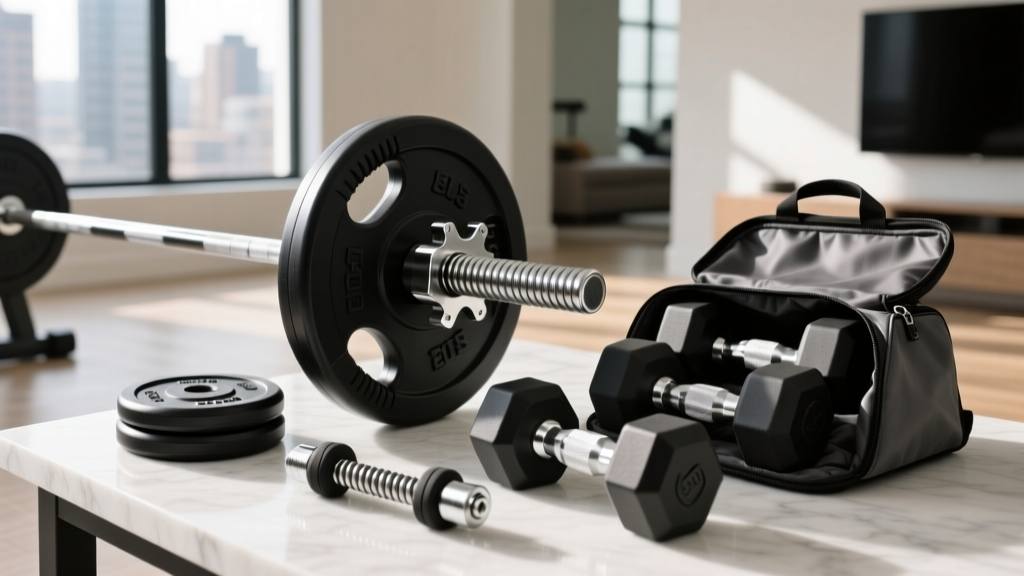
Barbell Collar and Clamp Types Comparison & Dumbbell Bag Guide

Standard vs Olympic Plates: Impact on Dumbbell Sumo Squat Form
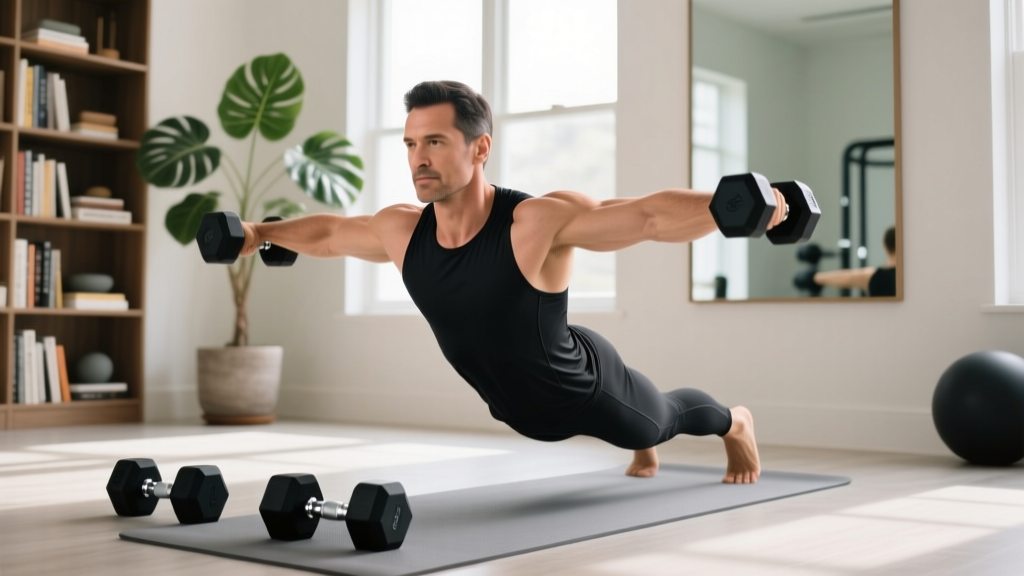
How to Do Shoulder Dumbbell Flyes with Neoprene Weights
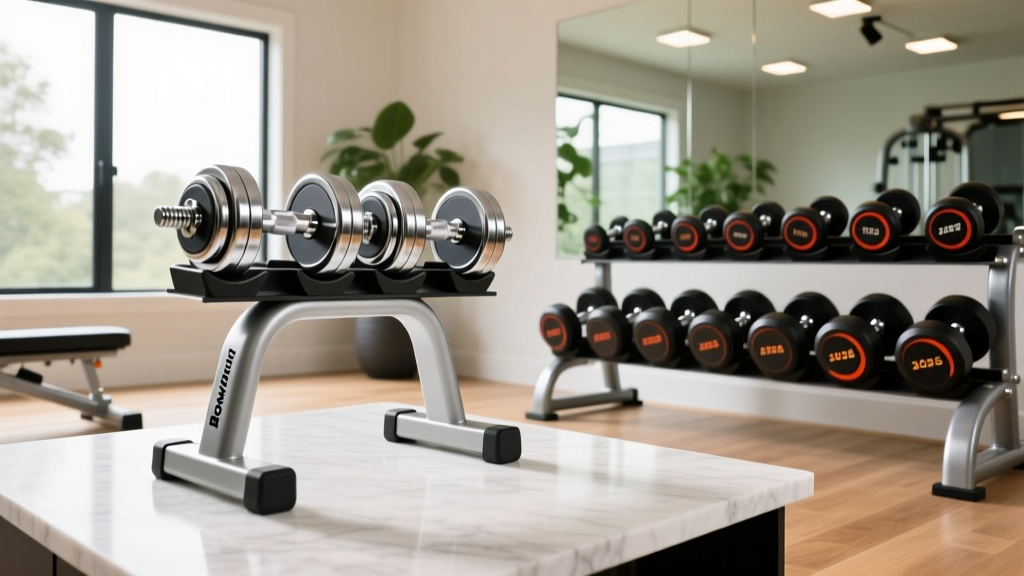
Bowflex 1090 Dumbbells With Stand vs Heavy-Duty Adjustable Picks 2026

Best Dumbbell Racks for a Bicep Workout Dumbbells Only Setup (2026)
