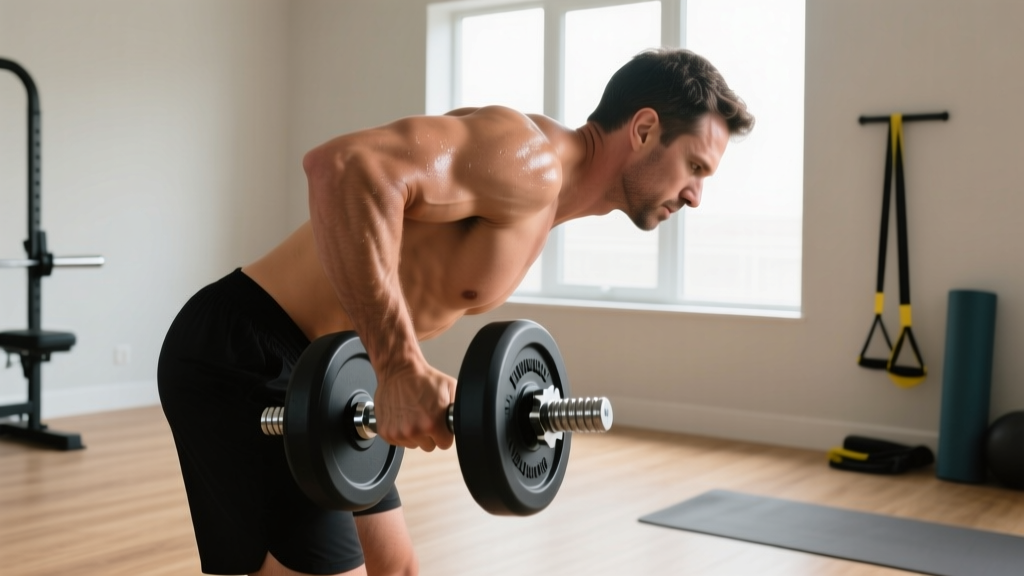
Best Dumbbell Lower Back Exercises: Adjustable Dumbbell Mistakes
Master the best dumbbell lower back exercises. We troubleshoot common form errors and compare top adjustable dumbbells for optimal posterior chain training.

The Ergonomic Clash: Adjustable Dumbbells vs. Lower Back Biomechanics
When programming the best dumbbell lower back exercises, home gym owners frequently run into a biomechanical wall. The posterior chain—comprising the erector spinae, glutes, and hamstrings—requires precise hinge mechanics to stimulate muscle growth without risking lumbar injury. However, the physical dimensions of adjustable dumbbells often sabotage these mechanics. Unlike standard 10-inch hex dumbbells, adjustable models range from 12 to nearly 16 inches in length. This extra bulk alters the moment arm, creates clearance issues during the eccentric phase of hip hinges, and forces lifters to compensate with poor form.
According to biomechanical principles outlined by the ExRx exercise directory, maintaining a vertical bar path over the mid-foot is critical during Romanian Deadlifts (RDLs) to minimize shear force on the lumbar spine. When your equipment physically collides with your thighs, you instinctively push the weights forward, shifting the load away from the hamstrings and directly onto the lower back discs. In this guide, we troubleshoot the most common form and equipment mistakes associated with adjustable dumbbells and review which models actually support heavy posterior chain training in 2026.
2026 Adjustable Dumbbell Comparison for Hinge Movements
Not all adjustable dumbbells are created equal. Following Johnson Health Tech's acquisition of the Bowflex brand, the 2026 production runs of the SelectTech 552 have stabilized in supply but seen a price bump. Meanwhile, Nuobell and PowerBlock continue to dominate the heavy-duty space. Below is a structural comparison specifically graded for lower back and hinge exercises.
| Model | Max Weight | Overall Length | Handle Type | RDL Clearance | 2026 Price Range |
|---|---|---|---|---|---|
| Bowflex SelectTech 552 | 52.5 lbs | 15.75 inches | Plastic / Smooth | Poor (Hits thighs) | $329 - $349 |
| Nuobell 80lb (REP Fitness) | 80 lbs | 14.5 inches | Steel / Knurled | Excellent | $429 - $449 |
| PowerBlock Elite EXP | 50-90 lbs | 12.0 inches | Caged / Steel | Moderate (Wrist rub) | $379 - $399 |
As highlighted in comprehensive durability testing by Garage Gym Reviews, the Nuobell's traditional dumbbell profile makes it the undisputed champion for lower body and lower back work, whereas the Bowflex's excessive length makes it better suited for upper body isolation.
Troubleshooting Form Mistakes in the Best Dumbbell Lower Back Exercises
Even with the right equipment, lifters often develop compensatory movement patterns. Here is how to troubleshoot the three most popular lower back exercises when using adjustable dumbbells.
1. Romanian Deadlifts (RDLs): The Thigh-Clearance Error
The Mistake: Using 15.75-inch Bowflex 552s, the lifter lowers the weights and the plastic ends scrape against the quadriceps. To avoid this, the lifter pushes the dumbbells forward, causing the torso to drop below parallel prematurely and rounding the lumbar spine.
The Fix: If you are stuck with longer adjustable dumbbells, you must increase your hip hinge depth. Push your hips further back toward the wall behind you rather than bending at the waist. This keeps the dumbbells close to your center of gravity while allowing the bulky ends to clear your knees. Alternatively, switch to a Nuobell or a traditional hex dumbbell to restore a natural, vertical bar path.
2. Dumbbell Good Mornings: The Rack-Hold Hazard
The Mistake: Attempting to rest adjustable dumbbells on the upper traps (as you would with a barbell or sandbag) for Good Mornings. The uneven weight distribution and protruding dials of adjustable models will dig into the cervical spine or clavicle, causing bruising and immediate form breakdown.
The Fix: Abandon the barbell-style rack hold. Instead, perform a Goblet Good Morning holding a single adjustable dumbbell vertically against your chest, or perform a Contralateral Single-Leg Good Morning holding one dumbbell in the opposite hand of the working leg. This reduces absolute spinal compression while maximizing erector spinae activation.
3. Bent-Over Rows: The Dial-Slip and Grip Failure
The Mistake: Performing heavy Pendlay rows or bent-over rows where the dumbbell is tilted at a 90-degree angle. Sweat accumulates on the handle and seeps into the dial tracks of models like the Bowflex or Core Home Fitness, causing the internal locking pins to slip mid-set.
The Fix: Wipe the handles and the dial crevices with a microfiber towel between every set. If you are using PowerBlock Elite EXP dumbbells, the caged handle can cause wrist impingement when pulling to the hip. Focus on pulling the elbow toward the ceiling rather than yanking the handle to your ribs, keeping the wrist neutral inside the cage.
⚠️ Critical Equipment Warning: Never Drop Adjustables
A common mistake among fatigued lifters is dropping the dumbbells at the top of a heavy RDL set. According to physical therapists and Mayo Clinic fitness guidelines, controlling the eccentric phase is vital for back health. Furthermore, dropping adjustable dumbbells will instantly shatter the internal plastic locking mechanisms or bend the selector pins, voiding your warranty and turning a $400 piece of equipment into scrap metal. Always squat down to place them on the floor or use a raised rack.
Mechanical Troubleshooting: When Adjustables Fail Mid-Set
Lower back exercises demand high grip strength and often result in heavy sweating. This environment is hostile to adjustable dumbbell mechanics.
- Dust and Chalk Buildup: If you use lifting chalk for heavy RDLs, the fine powder will infiltrate the Bowflex dial tracks or the Nuobell pin grooves. Solution: Use liquid chalk (magnesium carbonate suspended in alcohol) which dries on the skin and produces zero airborne dust, preserving the selector mechanisms.
- Uneven Plate Loading: When picking up the dumbbell from the floor for a deadlift or RDL, ensure the base is completely flush with the tray. If the dumbbell is slightly tilted when you turn the dial, the internal magnetic pins will only engage half the plates, leading to a catastrophic weight drop mid-hinge.
- Handle Knurling Wear: The smooth, painted handles of older adjustable models become slippery during high-rep bent-over rows. Solution: Apply a thin layer of athletic tape or use lifting straps (like Versa Gripps) to bypass grip fatigue, allowing you to focus entirely on scapular retraction and lumbar stability.
Expert Protocol: Programming for the Lower Back
Because adjustable dumbbells generally cap out between 50 and 80 lbs per hand, you cannot rely on absolute 1-rep max overload for the lower back like you would with a barbell. Instead, you must manipulate Time Under Tension (TUT) and Tempo.
For the best results, utilize a 3-1-1-0 tempo for your RDLs and Good Mornings:
- 3 Seconds Eccentric: Lower the weight slowly, feeling the hamstrings stretch and the erectors engage to stabilize the spine.
- 1 Second Pause: Hold the bottom position (just below the knee) to eliminate the stretch reflex and force the lower back to maintain isometric tension.
- 1 Second Concentric: Drive the hips forward explosively to return to the start.
- 0 Second Rest: Immediately begin the next rep without locking out and resting at the top.
This protocol maximizes muscle fiber recruitment using moderate weights (e.g., 40-50 lbs), sparing your lumbar discs from the compressive forces of maximal loading while still triggering significant hypertrophy in the posterior chain.
Final Verdict: Match the Tool to the Biomechanics
Executing the best dumbbell lower back exercises requires a synergy between flawless hinge mechanics and appropriate equipment. If your primary focus is heavy lower body and posterior chain training, the compact, knurled design of the Nuobell 80lb is a mandatory investment to prevent the clearance issues that plague longer models. However, if you already own a set of Bowflex 552s, you can still build a bulletproof lower back by increasing your hip hinge depth, utilizing tempo-based programming, and strictly maintaining your equipment to prevent mechanical failures. Train smart, respect the equipment limitations, and protect your lumbar spine at all costs.
More gear to consider
All reviews
Fitness For Beginners: A Practical, Science-Backed Roadmap to Building Strength, Stamina, and Confidence
Olympic vs Standard Plates: Full Body Circuit with Dumbbells

Barbell Knurling Guide & Bowflex Dumbbell Workout Plan PDF Setup
Dumbbell Racks: Clearing Space for Rear Delt Exercises with Dumbbells

Olympic Barbell Knurling: Rogue vs REP & Dumbbell Fly Machine Pairings
