
Olympic vs Standard Plates and Exercises with 10lb Dumbbells
Compare Olympic vs standard weight plates for your home gym. Discover cost differences, durability, and how to perform exercises with 10lb dumbbells.

The Dimensional Divide: 50.6mm vs 25.4mm
When outfitting a home gym in 2026, the foundational decision you must make is not which brand of barbell to buy, but which weight plate ecosystem to commit to. The fitness industry is split between two primary standards: Olympic plates with a 2-inch (50.6mm) center hole, and Standard plates with a 1-inch (25.4mm) center hole. While the ExRx.net biomechanics database notes that the physical resistance of a 45-pound plate remains identical regardless of the hole size, the mechanical implications for your barbell sleeves, floor impact, and accessory equipment are vastly different.
The Olympic standard, governed by the International Weightlifting Federation (IWF), was engineered for heavy, dynamic drops. The 2-inch sleeve allows for thicker, higher-tensile steel barbells that resist bending under extreme loads. Conversely, the 1-inch Standard system was popularized for budget-friendly, light-to-moderate commercial and home setups. Understanding the head-to-head differences between these two systems is critical, especially when considering how they integrate with accessory movements and isolation work.
Head-to-Head Showdown: Rogue Echo Olympic vs. CAP Barbell Standard
To provide a concrete comparison, we are pitting the industry-leading Olympic bumper plate against the most ubiquitous standard cast iron plate on the market. Below is a detailed breakdown of the Rogue Echo Bumper Plates (V2) versus the CAP Barbell Standard Cast Iron Plates.
| Feature | Rogue Echo Olympic Bumper (2-inch) | CAP Barbell Standard Cast Iron (1-inch) |
|---|---|---|
| Center Hole Diameter | 50.6mm (2 inches) - Stainless Steel Insert | 25.4mm (1 inch) - Cast Iron Core |
| Material | Virgin Rubber (85-90 Shore A Durometer) | Grey Cast Iron with Machined Edges |
| Weight Tolerance | +/- 1% (Approx. 0.45 lbs on a 45lb plate) | +/- 2% to 3% (Varies by casting batch) |
| Price Per Pound (2026 Avg) | $1.75 - $2.00 / lb | $0.90 - $1.20 / lb |
| Drop Rating | High (Designed for repeated overhead drops) | Low (Will crack floor tiles or chip iron) |
| Plate Thickness (45lb) | 3.25 inches | 1.25 inches |
As the data illustrates, the Olympic setup demands a premium investment but offers superior durability and floor protection. The Standard setup wins purely on spatial efficiency and upfront cost, allowing you to load significantly more weight onto a standard barbell sleeve before running out of physical space.
The Versatility Factor: Exercises with 10lb Dumbbells
Where the 1-inch Standard system truly shines in a home gym environment is its unparalleled versatility for accessory work. A major limitation of the Olympic ecosystem is the cost of dumbbell handles. Because Olympic barbells feature 2-inch sleeves, loading them with plates requires specialized, heavy-duty loadable dumbbell handles (such as the Rogue Loadable Dumbbell Handles, which retail for over $140 per pair). Furthermore, the thick 2-inch sleeves severely limit the number of plates you can fit, making light dumbbell work cumbersome.
In contrast, the 1-inch Standard system allows you to purchase a pair of 14-inch spinlock dumbbell handles for roughly $25 to $35. You can then use the exact same 1-inch weight plates you use on your barbell to create custom dumbbells. This is incredibly advantageous when programming exercises with 10lb dumbbells for hypertrophy and isolation movements.
Optimizing Isolation Movements with Standard Plates
When performing exercises with 10lb dumbbells, the physical profile of the weight matters. Standard 10lb cast iron plates are relatively narrow. By threading two 5lb standard plates or a single 10lb standard plate onto a spinlock handle, you create a compact, balanced dumbbell perfect for strict form. Here are three scenarios where this setup excels:
- Lateral Raises: The compact nature of 1-inch 10lb plates keeps the center of gravity close to your palm, reducing unnecessary torque on the wrist joint during strict lateral deltoid isolation.
- Tricep Kickbacks: Using 10lb standard plates on spinlock handles allows for micro-loading. If 10lbs becomes too light, you can easily slide on a 2.5lb standard plate—a level of modularity that fixed rubber hex dumbbells cannot offer.
- Goblet Squats & Pullovers: For beginners or those focusing on mobility, holding a single 10lb standard plate by its tri-grip holes (if applicable) or clamping it between your palms provides an ergonomic alternative to bulky Olympic loadable handles.
Expert Insight: 'The ability to seamlessly transition from heavy barbell deadlifts to precise exercises with 10lb dumbbells using the same pool of 1-inch weight plates makes the Standard system the undisputed king of budget-friendly, space-constrained garage gyms.' — FitGearPulse Equipment Analysis Team
Failure Modes and Long-Term Durability
While the Standard system offers incredible dumbbell versatility, it comes with a critical mechanical failure mode that buyers must understand: barbell plastic deformation. Most 1-inch standard barbells are constructed from lower-grade steel with a tensile strength below 100,000 PSI. When loaded beyond 200 to 250 pounds, the 1-inch sleeves and the central shaft are prone to permanent bending (plastic deformation). Once a standard bar bends even a few millimeters, it will no longer spin correctly in the sleeves and will wobble during lifts like the bench press or back squat.
Olympic barbells, designed to accommodate the 2-inch plates, typically feature a shaft diameter of 28mm to 29mm with tensile strengths ranging from 165,000 PSI to 215,000 PSI. An entry-level Olympic bar can safely withstand 500+ pounds of dynamic loading without bending. Therefore, if your primary goal is heavy powerlifting or Olympic weightlifting, the 1-inch Standard system will inevitably bottleneck your progress and require a complete equipment overhaul.
The Collar and Security Mechanism
Another point of comparison is how the plates are secured. Olympic plates are typically secured using spring collars or heavy-duty clamp collars (like the HG2 Aluminum Collars) that bite into the steel sleeve. Standard spinlock bars rely on threaded sleeves and star-lock nuts. While star-lock nuts are incredibly secure and will never slip off during a heavy lift, threading them on and off during a high-intensity interval training (HIIT) circuit or a rapid drop-set is frustratingly slow compared to the one-second application of an Olympic spring collar.
Final Verdict: Which System Wins in 2026?
The FitGearPulse Decision Matrix
Choose the 1-Inch Standard System If:
- Your total lifting capacity will not exceed 200-250 lbs on the barbell.
- You are on a strict budget (under $300 for your initial weight set).
- You heavily prioritize accessory work and want to cheaply perform exercises with 10lb dumbbells using spinlock handles and your existing plate inventory.
- Space is at an absolute premium, as cast iron standard plates are significantly thinner than rubber Olympic bumpers.
Choose the 2-Inch Olympic System If:
- You plan to lift heavy (300+ lbs) and require a barbell with high tensile strength and rotating sleeves.
- You practice Olympic lifts (cleans, snatches) and need to drop the weights safely onto rubber bumper plates.
- You want equipment that retains high resale value and is compatible with commercial gym standards.
- You have the budget to purchase dedicated, fixed-weight dumbbells for your isolation exercises rather than relying on loadable spinlock handles.
Ultimately, the choice between Olympic and Standard weight plates dictates the entire trajectory of your home gym. The Olympic route is a long-term investment in heavy, durable performance, while the Standard route remains a highly practical, modular solution for general fitness, rehabilitation, and targeted isolation work. Assess your current strength levels, your budget, and your spatial constraints before committing to a hole size—you will be living with that 50.6mm or 25.4mm decision for the rest of your lifting career.
More gear to consider
All reviews
Cast Iron vs Competition Kettlebells & Dumbbell T Raise Value Guide

Rack Maintenance & Storage Tips for Chest Workouts Using Dumbbells

Top Neoprene Gear for Dumbbell Exercises for Belly Fat for Female

Dumbbell Overhead Carry: Why Urethane Beats Rubber Hex Dumbbells
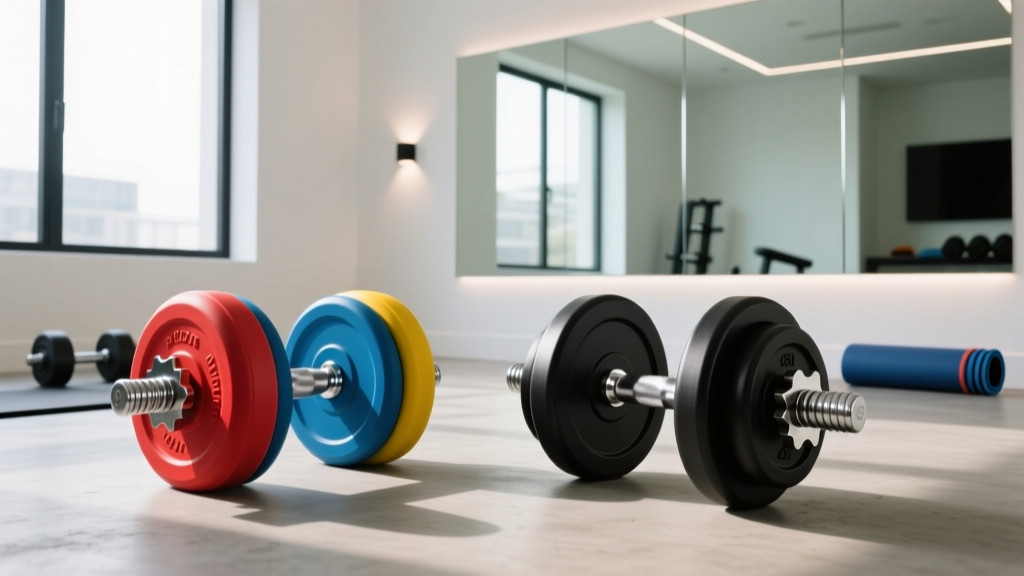
Budgeting for the Best Dumbbell Arm Workouts: Bumper vs Iron Plates
