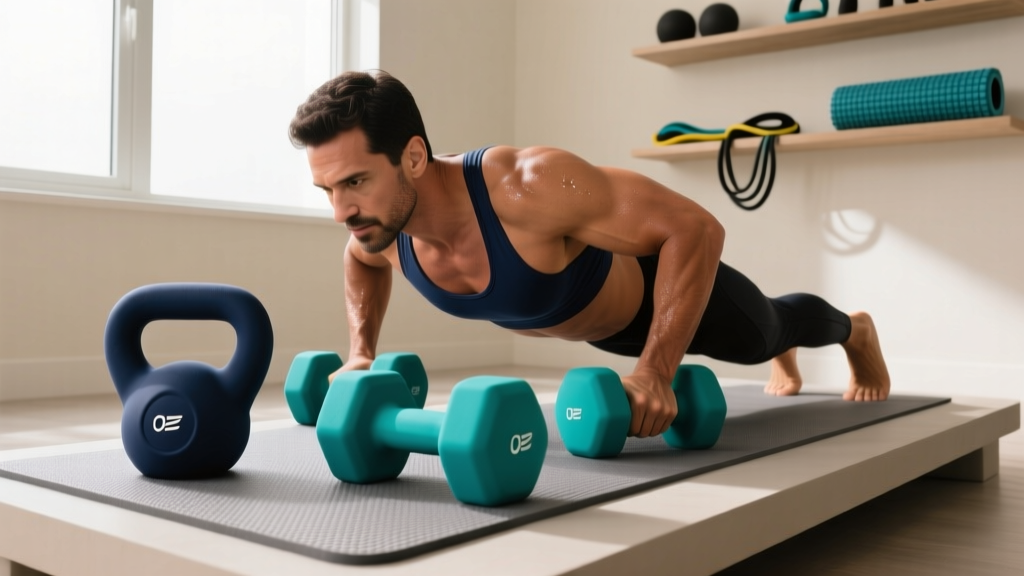
Bent Row with Dumbbells vs Barbell: Olympic vs Standard Plates
Compare Olympic vs standard weight plates for your home gym. We analyze barbell rows vs the bent row with dumbbells to help you choose the right gear.

The Back-Day Equipment Dilemma: Pulling Mechanics and Plate Selection
Building a comprehensive home gym for back development inevitably leads to a critical equipment crossroads. When programming for latissimus dorsi and rhomboid hypertrophy, lifters must choose between unilateral movements—like the bent row with dumbbells—and bilateral barbell rows. While the exercise selection dictates your muscle stimulus, it is the underlying hardware that dictates your safety, progression, and budget.
If you opt for the bent row with dumbbells, your primary investment is a high-quality adjustable dumbbell set or a full rack of hex dumbbells. However, if you lean toward barbell rows, you are immediately forced to navigate the most fundamental divide in free weight manufacturing: Olympic vs. standard weight plates. In this 2026 head-to-head comparison, we break down the metallurgy, biomechanics, and cost-per-pound realities of both plate ecosystems to help you make an informed purchasing decision.
Biomechanics of the Row: Wrist Torque and Sleeve Rotation
To understand why weight plate specifications matter, we must first look at the biomechanics of pulling. According to the American Council on Exercise (ACE) Exercise Library, rowing movements require significant stabilization from the wrist and forearm flexors.
When you perform a bent row with dumbbells, your wrists are free to rotate and self-align with your natural pulling path. The independent nature of dumbbells prevents bilateral imbalances and reduces joint strain. Conversely, a barbell locks both hands into a fixed position. If you are using a standard 1-inch solid steel barbell, the sleeves do not rotate. As you pull the barbell toward your lower chest, the natural pronation and supination of your forearms fight against the fixed bar, transferring dangerous torque directly to your distal radioulnar joints.
⚠️ Expert Warning: Never perform heavy Pendlay rows or barbell bent rows exceeding 135 lbs on a standard 1-inch barbell. The lack of rotating sleeves, combined with the lower yield strength of standard steel bars, creates a high risk of both wrist tendinitis and catastrophic bar bending.Head-to-Head Comparison: Olympic vs. Standard Weight Plates
The divide between Olympic and standard plates is not merely cosmetic; it is governed by strict dimensional tolerances and load-bearing requirements. Below is a direct comparison of the two systems as they stand in the current 2026 fitness equipment market.
| Feature | Standard Plates | Olympic Plates |
|---|---|---|
| Center Hole Diameter | 1 inch (25.4 mm) | 2 inches (50.8 mm) |
| Barbell Compatibility | Solid steel, fixed sleeves | Rotating sleeves (bushings/bearings) |
| Max Safe Load | ~150 - 200 lbs | 700 - 1,500+ lbs |
| Calibration Tolerance | +/- 5% to 10% | +/- 1% to 3% (IWF Spec) |
| Primary Materials | Cast iron, cement/vinyl | Cast iron, virgin rubber, urethane |
| Average Cost (2026) | $1.00 - $1.50 / lb | $2.50 - $7.00 / lb |
The 1-Inch Standard Illusion
Standard plates are heavily marketed toward budget-conscious beginners and are frequently bundled with hollow-core or thin solid-steel bars at big-box retailers. While the upfront cost is undeniably lower, the failure modes of standard plates become apparent quickly. Many budget standard plates are filled with cement and encased in vinyl. These plates are notoriously bulky, meaning you physically cannot fit enough 10-pound plates onto a standard barbell sleeve to reach heavy rowing weights. Furthermore, the 1-inch center holes are often poorly machined, leading to a sloppy fit on the barbell sleeve that causes loud rattling and uneven weight distribution during the concentric phase of a row.
The 2-Inch Olympic Standard
Olympic plates feature a 2-inch (50.8mm) center hole, designed to mate perfectly with Olympic barbells. The International Weightlifting Federation (IWF) strictly governs these dimensions for competition gear, but the commercial and home gym market has adopted the 2-inch standard universally for heavy lifting. Olympic bars feature rotating sleeves equipped with bronze bushings or needle bearings. This rotation is precisely what protects your wrists during heavy barbell rows, allowing the plates to spin slightly as your forearms naturally twist through the pulling motion.
Material Deep Dive: Cast Iron, Rubber, and Urethane
Once you commit to the Olympic ecosystem, you must choose your plate material. This decision heavily impacts the longevity and acoustic profile of your home gym.
- Machined Cast Iron: The traditional choice. Models like the Rogue Deep Dish Iron Plates offer a classic aesthetic and a high weight-to-volume ratio. However, dropping them during heavy deadlifts or failed rows will chip your concrete flooring and the plates themselves.
- Virgin Rubber Bumpers: Encased in high-density rubber, these plates (like the Titan Fitness Elite Bumpers) are designed to be dropped. They protect your floors but often emit a strong off-gassing odor for the first few weeks and can degrade if left in direct UV sunlight.
- Urethane: The premium tier. Urethane plates boast a durometer rating typically between 85 and 90 on the Shore A scale, making them vastly more resistant to scratching, tearing, and UV degradation than rubber. According to Rogue Fitness material specifications, high-quality urethane or virgin rubber bumpers will withstand thousands of drops from overhead without deforming the steel center insert.
Why the Bent Row with Dumbbells Often Wins for Home Gyms
If the upfront cost of an Olympic barbell, rotating-sleeve bar, and 300+ pounds of Olympic plates is prohibitive, the bent row with dumbbells remains an elite alternative for back development.
Unilateral dumbbell rows allow for a greater range of motion than barbell rows. You can pull the dumbbell past the midline of your torso, achieving a peak lat contraction that a fixed barbell simply cannot accommodate.
By investing in a pair of high-end adjustable dumbbells—such as the Nuobell 80lb set (retailing around $429 in 2026) or the Bowflex 1090 (up to 90 lbs)—you completely bypass the need for weight plates, barbell sleeves, and floor reinforcement. You gain the ability to perform the bent row with dumbbells with incremental 5lb micro-loading, which is crucial for progressive overload on smaller muscle groups like the rear delts and rhomboids.
2026 Cost Breakdown: Building Your Plate Arsenal
If you decide that barbell rows are non-negotiable for your programming, here is the realistic financial breakdown for outfitting an Olympic setup versus a standard setup in today's market:
Standard Setup (Budget)
- 1-inch Solid Bar: $45
- 200 lbs CAP Barbell Cast Iron: $220
- Total: $265
- Verdict: Maxes out quickly; high wrist torque.
Olympic Setup (Mid-Tier)
- Rogue Ohio Bar (Bushings): $295
- 260 lbs Rogue Echo Bumpers: $550
- Total: $845
- Verdict: Lifetime durability; safe for heavy rows.
Final Verdict: Which System Should You Buy?
The choice between focusing on the bent row with dumbbells and investing in a barbell plate system comes down to your budget, space, and strength goals.
Choose Standard Plates ONLY if: You are strictly on a sub-$300 budget, you are only performing isolation movements or light accessory work, and you have no intention of lifting more than 135 lbs on a barbell.
Choose Olympic Plates if: You plan to barbell row, deadlift, or squat. The 2-inch sleeve rotation is a biomechanical necessity for joint health, and the structural integrity of Olympic steel is required to prevent catastrophic equipment failure under heavy loads.
Choose the Dumbbell Route if: You want to prioritize the bent row with dumbbells for superior unilateral lat isolation, you lack the floor space for a 7-foot Olympic barbell, and you prefer the space-saving efficiency of adjustable dumbbells over a massive plate tree.
Frequently Asked Questions
Can I use Olympic plates on a standard barbell?
No. Olympic plates have a 2-inch center hole, while standard barbells have 1-inch sleeves. The plates will simply slide off the bar, creating a severe safety hazard. You would need a specialized sleeve adapter, which is not recommended for heavy lifting due to added sleeve length and reduced load capacity.
Are urethane plates worth the extra cost over rubber?
For commercial gyms or premium home setups, yes. Urethane does not degrade, flake, or emit the harsh chemical odors associated with cheap recycled rubber bumpers. They maintain their aesthetic and structural integrity for decades, justifying the $5 to $7 per pound price tag.
What is the best weight increment for dumbbell rows?
When performing the bent row with dumbbells, 5-pound jumps are ideal. Moving from a 50 lb to a 55 lb dumbbell represents a 10% increase in load, which is the upper limit of what most lifters can adapt to without breaking down their rowing form or relying on momentum.
More gear to consider
All reviews
All in Motion Dumbbells: Neoprene Coating Mistakes and Fixes
Power Rack vs Squat Rack vs Squat Stand: Incline Dumbbell Raises

Best Neoprene Coated & Neutral Grip Dumbbell Guide 2026
Kettlebell Care: Cast Iron vs Competition & Dumbbell Squat Exercises

EZ vs Straight Bar Maintenance: Caring for Captain America Dumbbells