Beginner Dumbbell Workout Routine: Rubber Hex vs Urethane Budget
Compare rubber hex vs urethane dumbbells for your beginner dumbbell workout routine. We break down 2026 costs, durability, and long-term value.

The Home Gym Capital Allocation Problem
When outfitting a home gym for a beginner dumbbell workout routine, the first major financial hurdle is selecting your primary implements. While adjustable dumbbells have their place, fixed-weight pairs remain the gold standard for durability, drop-safety, and seamless transition between supersets. However, new lifters quickly face a material crossroads: do you invest in budget-friendly rubber hex dumbbells, or stretch your capital for premium urethane?
This is not merely an aesthetic choice. The material you choose dictates the air quality of your gym, the longevity of your flooring, and the long-term financial return on your equipment. In this 2026 value analysis, we break down the exact cost-per-pound, failure modes, and hidden economics of rubber hex versus urethane dumbbells to help you budget effectively.
💡 The Core Dilemma: Rubber hex dumbbells offer immediate upfront savings (averaging $1.50/lb), making them highly accessible for beginners. Urethane dumbbells demand a premium (averaging $3.50 to $5.00+/lb) but offer commercial-grade longevity, zero off-gassing, and superior resale value. Your choice depends on your 5-year fitness horizon and gym environment.Material Science: What You Are Actually Paying For
To understand the price gap, we must look at the chemical composition and manufacturing processes of both materials. According to strength training guidelines from the Cleveland Clinic, consistency in resistance training is vital for beginner progress, and your equipment should facilitate—not hinder—that consistency through ergonomics and safety.
Rubber Hex: The Budget Workhorse
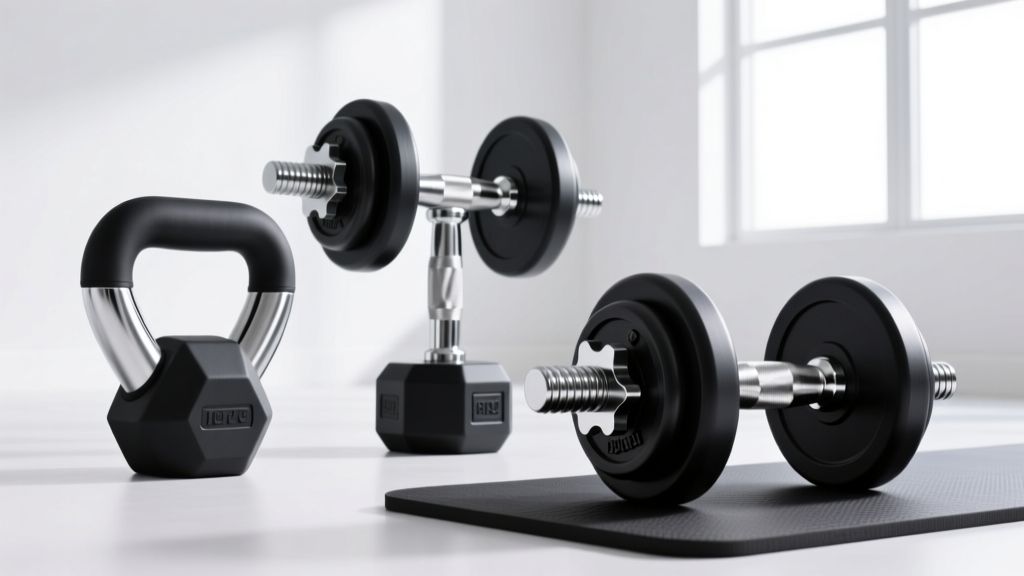
Rubber hex dumbbells, like the widely popular REP Fitness Rubber Hex Dumbbells, consist of a solid steel core encased in a thick layer of natural or recycled rubber. The hexagonal head prevents rolling, a crucial safety feature when performing exercises like renegade rows or floor presses during a beginner dumbbell workout routine.
- The Good: Excellent shock absorption; protects subfloors from minor drops; highly affordable entry point.
- The Bad: Lower-tier brands often use recycled tire rubber, which releases volatile organic compounds (VOCs), resulting in a persistent, noxious odor. Furthermore, rubber degrades under UV light and extreme temperature fluctuations, eventually drying out, cracking, or becoming sticky.
- Handle Specs: Typically feature a 35mm diameter handle with hard chrome plating and medium knurling. Over time, the chrome can chip or rust if exposed to high humidity without regular maintenance.
Urethane: The Premium Polymer
Urethane is a high-density, synthetic elastomer that represents the top tier of free weight manufacturing. Models like the Rogue Fitness Urethane Dumbbells are standard in commercial facilities for a reason. Urethane is cast directly onto the steel core under high pressure, creating an impenetrable bond.
- The Good: Completely odorless and non-toxic. It is UV-stable (will not fade or chalk in a sunlit garage gym), highly resistant to extreme temperatures, and impervious to sweat and moisture. It also boasts a higher durometer (hardness) rating, meaning it resists scratching and edge-chipping far better than rubber.
- The Bad: The upfront cost is substantially higher. Because urethane is harder than rubber, it transmits more kinetic energy upon impact, requiring proper rubber horse-stall mats to protect your concrete slab.
- Handle Specs: Usually feature stainless steel or premium chrome shafts (often 34mm for better grip ergonomics) with deep, aggressive knurling that won't degrade.
2026 Cost-Per-Pound & Specification Matrix
Below is a comparative matrix reflecting average market pricing and specifications for 2026. Note that prices fluctuate based on raw steel and polymer supply chains, but the ratio between the two materials remains remarkably consistent.
| Feature | Rubber Hex (e.g., REP / Titan) | Urethane (e.g., Rogue / Fringe) |
|---|---|---|
| Avg. Cost Per Pound | $1.40 - $1.80 | $3.50 - $5.20 |
| Odor / Off-Gassing | Moderate to High (VOCs) | None (Odorless) |
| UV & Temp Stability | Low (Cracks in cold, melts in heat) | High (Garage & Outdoor safe) |
| Head Shape | Hex (Sharp edges) | Hex or Round (Beveled edges) |
| Drop Tolerance | Medium (Edges can tear) | High (Bounces slightly, resists tearing) |
| Estimated Lifespan | 3 - 7 Years (Home use) | Lifetime (20+ Years) |
Building the Rack: A 3-Pair Starter Kit Budget Breakdown
To execute a comprehensive beginner dumbbell workout routine, you do not need an entire 50-pair rack. You need a strategic 3-pair starter kit that accommodates compound lower-body movements, heavy upper-body pulls, and lighter isolation work. The standard beginner trio is: 15 lbs, 25 lbs, and 40 lbs (Total: 160 lbs of iron).
Tier 1: The Strict Budget (Rubber Hex)
Outfitting a 160 lb starter kit with high-quality rubber hex dumbbells will cost approximately $240 to $288 in 2026, excluding shipping. This is the undisputed champion for college students, apartment dwellers, or those testing the waters of strength training without committing a mortgage payment to their garage.
Tier 2: The Lifetime Investment (Urethane)
Purchasing the exact same 160 lb spread in premium urethane will set you back between $560 and $832. While this induces sticker shock, it is vital to view this through the lens of "Cost-Per-Use." If you train three times a week for ten years, that $800 investment breaks down to roughly $1.50 per workout—a negligible cost for commercial-grade ergonomics and zero maintenance.
Hidden Economics: Resale Value & Environmental Degradation
One of the most overlooked aspects of fitness equipment budgeting is the secondary market. Life happens; routines change, and equipment gets sold.
"Urethane dumbbells are the only free weights that function like a depreciating asset with a hard floor. Because they do not degrade cosmetically and carry brand prestige (like Rogue or Eleiko), used urethane dumbbells routinely sell for 60% to 75% of their retail value on local marketplaces. Rubber hex dumbbells, plagued by cosmetic scuffs, edge tearing, and lingering odors, often fetch less than 30% of their original cost."
Temperature and UV Sensitivity
If your home gym is an uninsulated garage or a shed, rubber hex dumbbells are a financial liability. In freezing winter temperatures, cheap rubber becomes brittle. Dropping a 40 lb rubber hex dumbbell on concrete at 30°F (-1°C) is a primary failure mode that results in shattered heads and exposed steel cores. Urethane remains entirely stable and pliable from -20°F to 120°F, protecting your capital from environmental destruction.
Flooring Synergy and Edge Case Failures
Your dumbbell material must be matched to your flooring. If you are lifting over luxury vinyl plank (LVP) or hardwood in a spare bedroom, avoid both without a dedicated mat, but rubber hex will at least offer a slight cushion. However, the sharp 90-degree corners of rubber hex heads act like chisels if dropped from shoulder height, easily tearing through 1/2-inch EVA foam tiles. Urethane hex heads are typically beveled (rounded at the corners). While the material is harder, the beveled edge distributes impact force more evenly across heavy-duty 3/4-inch horse stall mats, drastically reducing the risk of floor punctures during heavy goblet squats or Romanian deadlifts.
Frequently Asked Questions
Can I just buy cheap rubber hex dumbbells from Amazon?
You can, but it is highly discouraged for indoor use. Unbranded, ultra-cheap rubber dumbbells are often made from unrefined recycled tires. The VOC off-gassing can cause headaches and will permanently embed a toxic "burning tire" smell into your drywall and upholstery. Always buy branded, natural-rubber hex dumbbells from reputable fitness manufacturers.
Are adjustable dumbbells better for a beginner budget?
Adjustable dumbbells (like PowerBlock or Nuobell) offer excellent space-saving utility and a lower cost-per-pound than fixed urethane. However, they are fragile; dropping an adjustable dumbbell from waist height will likely break the internal selector mechanism, voiding the warranty and ruining your workout. Fixed rubber hex or urethane dumbbells are virtually indestructible by comparison, making them superior for dynamic movements.
Final Verdict: Where to Allocate Your Capital
If your primary goal is simply to initiate a beginner dumbbell workout routine and you are constrained by an immediate budget of under $300, purchase a 3-pair set of branded rubber hex dumbbells. Keep them indoors, away from direct sunlight, and accept that they are a depreciating, temporary tool.
However, if you are building a dedicated garage gym, suffer from chemical sensitivities, or plan to train consistently for the next decade, bypass the rubber entirely. Financing or saving for a urethane starter kit is the superior long-term value play. The elimination of odors, the guarantee of structural integrity in extreme temperatures, and the high resale value make urethane the undisputed champion of home gym economics.
More gear to consider
All reviews
Best Loadable Dumbbells for the Incline Dumbbell Pullover (2026)

EZ Curl Bar vs Straight Bar: Good Upper Body Workouts with Dumbbells
Power Rack vs Squat Rack vs Stand: Reverse Lunge Single Dumbbell

Mastering the Back Fly with Dumbbells & Barbell Knurling Guide

Weight Lifting at Home With Dumbbells & Plates: Olympic vs Standard