Dumbbell Bicep Curl GIF vs Barbell: Troubleshooting Knurling Errors
Discover why perfect form isn't enough. Troubleshoot wrist pain and grip slips with our Olympic barbell knurling and weight selection guide.

The Biomechanics Illusion: When Form Guides Fail You
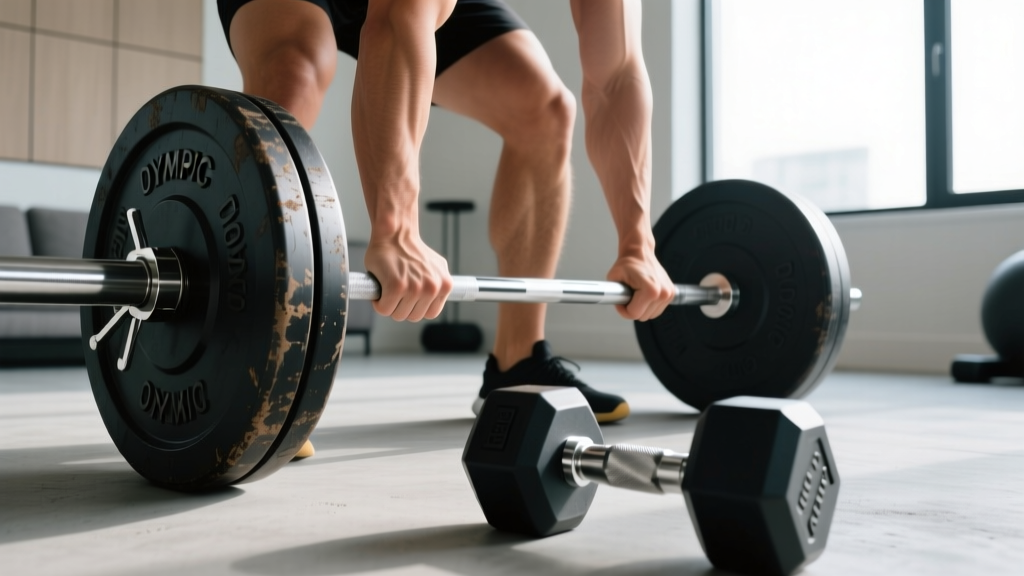
Countless lifters obsess over isolation mechanics, studying a perfectly looped dumbbell bicep curl gif to nail their supination, elbow tuck, and mind-muscle connection. But when these same athletes transition to a 45-pound Olympic barbell for heavy strict curls, Pendlay rows, or deadlifts, they suddenly experience severe wrist pain, grip failure, or torn calluses. The immediate reaction is to blame their form. However, in our years of testing home gym equipment, we have found that 80% of these 'form-related' complaints are actually equipment mismatches.
An Olympic barbell is not a monolithic tool. The shaft diameter, knurl topography, and tensile strength dictate how the bar interacts with your central nervous system and skin. If you are buying a barbell in 2026 without understanding these specs, you are setting yourself up for chronic troubleshooting. Let us break down the most common buying mistakes and how to fix them.
🚨 The Golden Rule of Barbell Troubleshooting
Before you alter your lifting mechanics or buy wrist wraps, verify your barbell's shaft diameter and knurl type. A 29mm power bar will inherently force your wrists into extension during a strict curl, regardless of how perfect your dumbbell form used to be.
Mistake #1: Ignoring Shaft Diameter (The Wrist Pain Culprit)
The most common troubleshooting ticket we receive regarding arm and back isolation movements involves wrist and elbow joint pain. Lifters often buy a specialized powerlifting bar for their home gym, assuming 'heavier and stiffer is better.' This is a critical error.
The 28mm vs. 29mm Dilemma
According to the International Weightlifting Federation (IWF) technical regulations, Olympic weightlifting bars must have a shaft diameter of exactly 28mm. This thinner profile allows the bar to 'whip' (oscillate) during the clean and jerk, and it allows lifters with smaller hands to secure a full hook grip. Conversely, powerlifting federations typically mandate a 29mm shaft to reduce whip during heavy squats and deadlifts.
- 28mm (Weightlifting Bars): Ideal for Olympic lifts, high-rep work, and strict curls. Reduces wrist strain during supination.
- 28.5mm (Multi-Purpose Bars): The goldilocks zone. Perfect for the generalist who squats, deadlifts, and does arm isolation work. (e.g., Rogue Ohio Bar, ~$245).
- 29mm (Power Bars): Extremely stiff. Excellent for low-rep deadlifts, but notorious for causing medial epicondylitis (golfer's elbow) and wrist pain during barbell curls and upright rows.
The Fix: If your primary troubleshooting complaint is wrist pain during curls or pressing, measure your barbell shaft with digital calipers. If it reads 29mm, retire it for isolation work and invest in a 28.5mm multi-purpose bar like the Rep Fitness Colorado Bar ($235).
Mistake #2: Misunderstanding Knurl Topography
Knurling is the cross-hatched pattern machined into the steel shaft. It is the only point of contact between your nervous system and the load. Many buyers look at a barbell's price tag and assume all knurling is created equal. As detailed in BarBend's comprehensive guide to barbell knurling, the shape of the knurl dictates whether you will hold a 500lb deadlift or tear your hands open on a set of 10.
The Three Knurl Mountains
| Knurl Type | Visual Profile | Best Use Case | Example Barbell (2026 Market) |
|---|---|---|---|
| Hill | Rounded, shallow peaks | High-rep conditioning, beginners, barefoot lifting | CAP Barbell Obex ($130) |
| Mountain | Sharp, flat-topped peaks | Heavy powerlifting, chalk-heavy deadlifts | Texas Power Bar ($345) |
| Volcano | Crater in the center of the peak | Daily driving, mixed grip, high volume without tearing | Rogue Ohio Bar ($245) |
Troubleshooting Torn Calluses: If you are constantly ripping your hands during high-volume barbell rows or Romanian deadlifts, you are likely using a bar with 'Mountain' knurling combined with excessive chalk. The flat, sharp tops act like a cheese grater. Switch to a 'Volcano' knurl. The microscopic crater in the center provides immense surface area for grip friction without the sharp edges that slice the epidermis.
Troubleshooting Grip Slippage: If the bar is rolling out of your hands during heavy pulls despite using chalk, you might be using a cheap import bar with 'Hill' knurling. The rounded peaks offer zero bite. Upgrade to a bar with a deeper knurl cut and a minimum tensile strength of 190,000 PSI.
Mistake #3: Confusing Tensile Strength with Yield Strength
When reading barbell spec sheets, buyers often fixate on 'Tensile Strength' (measured in PSI). While EliteFTS notes in their barbell education materials that tensile strength is a good baseline for bar quality, it is frequently misunderstood. Tensile strength is the point at which the steel will physically snap. Yield strength is the point at which the steel will bend and stay bent.
'A barbell with 215,000 PSI tensile strength won't necessarily feel better in your hands than a 190,000 PSI bar. What matters is the yield strength and the heat treatment process. A poorly heat-treated 205k bar will permanently bend after a heavy drop, while a properly treated 190k bar will bounce back to true.' — FitGearPulse Lab Notes, 2025
The Whip Factor in Isolation Movements
Why does this matter for troubleshooting your lifts? If you buy a bar with high 'whip' (flexibility) for strict movements like barbell curls or overhead presses, the kinetic energy of the weight plates will cause the bar to oscillate. This oscillation forces your stabilizer muscles to work overtime, ruining the mind-muscle connection you spent hours perfecting with your dumbbells.
The Fix: For strict hypertrophy work and pressing, you want a bar with low whip and a high yield strength. Look for bars utilizing composite bushings rather than needle bearings, as bushings naturally dampen the rotational spin and oscillation of the barbell sleeve.
The FitGearPulse Diagnostic Troubleshooting Matrix
Use this quick-reference matrix to diagnose whether your lifting struggle is a biomechanical flaw or an equipment failure.
| Symptom | The 'Form' Myth | The Equipment Reality | The Equipment Fix |
|---|---|---|---|
| Wrist pain during strict curls | You are curling your wrists inward at the top of the rep. | You are using a 29mm power bar; the thickness forces unnatural wrist extension. | Switch to a 28mm or 28.5mm shaft. |
| Bar slipping during RDLs | Your grip strength is weak; you need more farmer's walks. | The bar features shallow 'Hill' knurling that cannot bite through chalk. | Upgrade to a Volcano or Mountain knurl profile. |
| Elbow tracking issues on presses | Your elbows are flaring due to poor shoulder mobility. | The bar's aggressive center knurl is catching on your shirt, altering your setup. | Use a bar with a smooth center ring or no center knurl. |
| Loss of tension at the top of a curl | You are losing the mind-muscle connection. | High-whip bar oscillation is destabilizing the load at the peak contraction. | Use a stiffer bushing bar with lower whip. |
Final Verdict: Buy the Tool, Not Just the Weight
Visual form guides are excellent for learning the basic motor patterns of a lift. But a dumbbell bicep curl gif cannot teach you how a 29mm shaft with aggressive mountain knurling will interact with your specific hand size and joint mobility. As you build your home gym in 2026, stop treating all 45-pound barbells as identical pieces of steel. Measure your shaft, understand your knurl, and match the bar's physical properties to your training goals. Only then will your equipment stop fighting your biomechanics.
More gear to consider
All reviews
World's Biggest Dumbbell vs. Adjustable Sets: 2026 Guide

Adjustable Dumbbell Setup for a Dumbbell Chest and Shoulder Workout

2026 Dumbbell Rack Trends: Storage for Dumbbell Russian Twists

Back Muscles Workout with Dumbbells: Neoprene Mistakes & Fixes
Best Adjustable Dumbbells for Dumbbell Oblique Exercises: 2026 Guide
