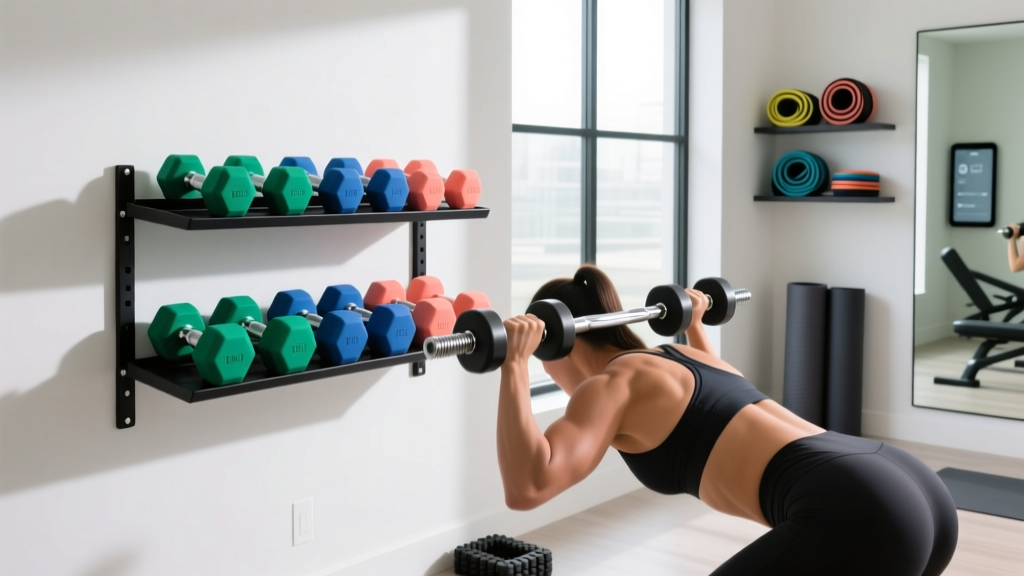
Barbell Knurling & Weight: What Size Dumbbell Should I Use First?
Master your Olympic barbell upgrade. We decode barbell knurling, tensile strength, and answer what size dumbbell you should use before transitioning.

Building a comprehensive home gym is a journey that almost always begins with adjustable dumbbells. They are versatile, space-efficient, and perfect for building foundational muscle. However, as your strength progresses, you will inevitably hit a ceiling where transitioning to an Olympic barbell becomes necessary for progressive overload. But before you drop $300 on a high-end barbell, you need to ensure your baseline strength and stabilizer muscles are prepared for the shift in biomechanics.
In this 2026 in-depth buying guide, we will first address the critical transition threshold—answering the common question of what size dumbbell you should use before moving to a barbell. Then, we will dive deep into the engineering of Olympic barbells, decoding tensile strength, sleeve construction, and the crucial differences in knurling patterns to help you choose the perfect bar for your rack.
The Baseline: What Size Dumbbell Should I Use Before Barbell Training?
Many lifters rush to buy a barbell before their connective tissue and stabilizer muscles are ready for the bilateral, fixed-path nature of barbell training. An empty standard Olympic barbell weighs 20kg (44.09 lbs). If you cannot stabilize this weight safely, you risk injury and poor motor patterning.
The Dumbbell-to-Barbell Strength Matrix
To safely transition to an empty 45lb Olympic barbell for your primary compound lifts, you should be able to perform the following dumbbell movements with strict form:
- Overhead Press: You should be able to strictly press 35lb to 40lb dumbbells per hand for 8 repetitions. This ensures your rotator cuffs and core can stabilize the 45lb barbell overhead.
- Bench Press: You should be controlling 50lb to 60lb dumbbells per hand for 10 reps. Dumbbells require more stabilization; mastering this weight translates to roughly 135lbs on the barbell.
- Squats (Goblet/Dual KB): You should be comfortably goblet squatting a 70lb+ dumbbell or kettlebell with full depth and an upright torso before loading a barbell on your spine.
Once you have conquered these dumbbell milestones, you are physically primed to invest in a high-quality Olympic barbell. This is where the real engineering specifications come into play.
Olympic Barbell Weight and Dimension Standards
When shopping for a barbell, 'Olympic' simply refers to the 2-inch (50mm) diameter of the rotating sleeves that hold the weight plates. However, the shaft dimensions vary based on the intended use case.
- Men's Standard (20kg / 44lbs): 2200mm total length with a 28mm to 29mm shaft diameter. This is the standard for powerlifting and general fitness.
- Women's Standard (15kg / 33lbs): 2010mm total length with a 25mm shaft diameter. The thinner shaft is designed for smaller hands, particularly for the hook grip required in Olympic weightlifting.
- Multi-Purpose (20kg / 44lbs): Usually features a 28.5mm shaft, striking a balance between the rigidness needed for heavy squats and the whip needed for Olympic cleans.
Metallurgy: Tensile vs. Yield Strength
The most misunderstood metric in barbell buying is tensile strength, measured in Pounds per Square Inch (PSI). This number dictates how much load the bar can take before it physically snaps. However, yield strength—the point at which the bar bends and does not return to its original straightness—is far more important for the consumer.
In 2026, the market has largely standardized around high-grade spring steel. Here is how PSI ratings translate to real-world performance:
- Under 165,000 PSI: Avoid these. They are typically found in sub-$150 department store bars and will permanently bend if you drop a heavy deadlift or leave them loaded on a rack.
- 190,000 PSI (The Sweet Spot): The gold standard for multi-purpose home gyms. Bars like the legendary Rogue Ohio Bar utilize 190k PSI steel, offering enough 'whip' for dynamic movements while resisting permanent deformation under loads up to 500 lbs.
- 215,000+ PSI (Powerlifting Specific): Ultra-stiff bars designed for heavy squats and bench presses. They exhibit almost zero whip, which is preferred by powerlifters who want maximum force transfer without the bar oscillating on their back.
The Knurling Matrix: Hill, Mountain, and Volcano
Knurling is the cross-hatched pattern machined into the steel shaft to provide grip. The aggressiveness of the knurl is determined by the depth of the cuts and the shape of the peaks. Choosing the wrong knurl can result in torn calluses or a slipped grip during a heavy deadlift.
1. Hill Knurling (Passive)
Hill knurling features shallow, rounded peaks. It feels smooth in the hands and is excellent for high-repetition CrossFit workouts or bare-handed lifting. However, it lacks the bite required for heavy 1-rep max deadlifts, especially when your hands are sweaty.
2. Mountain Knurling (Aggressive)
Mountain knurling consists of sharp, prominent peaks that dig deeply into the skin. Bars like the classic Texas Power Bar use this style. While it provides an unbreakable grip for heavy powerlifting, it is notorious for tearing calluses and is generally uncomfortable for high-volume pressing movements.
3. Volcano Knurling (The 2026 Gold Standard)
Volcano knurling is the result of modern CNC machining advancements. Instead of sharp peaks, the machine cuts deep valleys with a wide, flat rim around the top. This creates a massive surface area for friction without the sharp points that tear skin. If you are buying a single, do-it-all barbell for your home gym in 2026, volcano knurling is non-negotiable.
2026 Olympic Barbell Comparison Matrix
To help you make an informed purchasing decision, we have compared three of the most highly regarded multi-purpose and power barbells currently on the market, focusing on their knurl profiles, metallurgy, and pricing.
| Model | Knurl Type | Tensile Strength | Shaft Diameter | Est. Price (2026) |
|---|---|---|---|---|
| Rogue Ohio Bar | Volcano (Medium) | 190,000 PSI | 28.5mm | $325.00 |
| REP Fitness EX-2900 | Volcano (Deep) | 190,000 PSI | 29mm | $249.99 |
| Eleiko Sport Training | Hill/Medium | 215,000+ PSI | 28mm | $895.00 |
Note: The REP Fitness EX-2900 has become a massive disruptor in the 2026 market, offering premium volcano knurling and Cerakote shaft options at a price point that undercuts legacy brands by nearly $100.
Sleeve Construction: Bushings vs. Bearings
The final critical component of your barbell is the sleeve rotation mechanism. When you drop a barbell from the top of a power clean, the sleeves need to spin independently of the shaft to prevent the bar from spinning in your hands and tearing your wrists.
- Bronze Bushings: These are solid rings of bronze that provide a slow, controlled spin. They are highly durable, require zero maintenance, and are the preferred choice for powerlifting and general strength training where the bar is rarely dropped from overhead.
- Needle Bearings: These utilize dozens of tiny steel needles to allow for a lightning-fast, frictionless spin. They are mandatory for Olympic weightlifters performing snatches and cleans. However, they are more expensive and can be damaged if repeatedly dropped without proper bumper plates.
Final Verdict: Making the Upgrade
Transitioning from dumbbells to an Olympic barbell is a milestone in any lifter's journey. By ensuring you can strictly press 40lb dumbbells and squat with a 70lb goblet, you guarantee your body is prepared for the bilateral load of a barbell.
When making your purchase, prioritize a 190k PSI tensile strength rating and a volcano knurl pattern. This combination will provide a lifetime of durability and a grip that secures heavy deadlifts without destroying your hands during high-volume bench press sessions. Avoid the temptation of cheap, low-PSI bars; a high-quality Olympic barbell is a one-time investment that will easily outlast the rack it rests on.
More gear to consider
All reviews
How to Work Out Biceps Without Dumbbells: Urethane vs Hex 2026

Olympic vs Standard Plates: Setup and Dumbbell Row Guide for Women
Troubleshooting Dumbbell Laterals with Neoprene Home Weights

Budget Storage Racks for Single Dumbbell Workouts: 2026 Value Guide

Bumper vs Iron Plates: Budgeting for Lean Away Dumbbell Lateral Raise