
Barbell Collars, Clamps & Locks for Standing Dumbbell Exercises
Compare barbell collars and clamps. Learn to secure Olympic bars and loadable handles for safe standing dumbbell exercises in this beginner guide.

The Hidden Danger of Loose Weight Plates
When building a home gym or stepping into a commercial weight room, beginners often obsess over the barbell or the plates themselves, completely overlooking the hardware that keeps them together. A loose weight plate is not just an annoyance; it is a severe kinetic hazard. According to safety guidelines emphasized by strength and conditioning professionals, lateral plate shift during a lift alters your center of gravity in milliseconds, leading to compromised form or catastrophic joint injury.
This risk is exponentially magnified when you transition to standing dumbbell exercises using loadable Olympic dumbbell handles. Unlike a barbell resting on your back, a loadable dumbbell is subjected to extreme multi-directional momentum during movements like walking lunges, dumbbell snatches, or goblet squats. In this comprehensive, step-by-step guide, we will break down the exact differences between barbell collars, clamps, and locks, and show you precisely how to secure your weights for maximum safety in 2026.
Step 1: Decoding Collar, Clamp, and Lock Terminology
Before purchasing any locking mechanism, you must understand the industry terminology. While often used interchangeably by beginners, these three terms refer to entirely different mechanical designs.
- Spring Collars: The traditional, low-cost metal clips that rely on spring tension. They are lightweight but offer the lowest clamping force.
- Lever Clamps: Typically made of high-density nylon or aluminum, these use a mechanical lever to create a vice-like grip on the barbell sleeve.
- Locking Collars (Lock-Jaw): These utilize a dual-locking mechanism (a lever combined with a secondary safety latch) and an internal rubberized grip to prevent any micro-movements.
Step 2: The 2026 Barbell Collar & Clamp Comparison Matrix
To help you make an informed decision, we have synthesized data from extensive equipment testing, including insights from BarBend's comprehensive barbell collar reviews and Garage Gym Reviews. Below is a direct comparison of the three primary securing methods available on the market today.
| Feature | Spring Collars | Lever Clamps | Lock-Jaw Collars |
|---|---|---|---|
| Clamping Force | Low (~20-40 lbs) | High (~100-120 lbs) | Extreme (~150+ lbs) |
| Weight per Pair | ~0.5 lbs | ~1.2 lbs | ~1.6 lbs |
| Sleeve Space Used | ~1 inch | ~1.5 inches | ~2.2 inches |
| Avg. Price (2026) | $10 - $15 | $16 - $25 | $28 - $35 |
| Best Application | Light accessory work | Heavy squats, bench, deadlifts | Olympic lifts, drop sets, loadable dumbbells |
Step 3: Securing Loadable Handles for Standing Dumbbell Exercises
Why dedicate a whole section to loadable dumbbells? Because the physics of a dumbbell differ vastly from a barbell. When you perform standing dumbbell exercises—such as Bulgarian split squats, farmer's walks, or dumbbell thrusters—the weight is subjected to abrupt stops, starts, and rotational forces.
The Sleeve Space Dilemma
Most Olympic loadable dumbbell handles (like the popular Rogue Loadable Dumbbell Handle or the Titan Fitness 20-Inch Olympic Dumbbell) feature sleeves that are only 6.5 to 8 inches long. If you are loading 45-pound bumper plates (which are roughly 3.5 inches thick each), you only have room for one or two plates per side.
If you use a bulky Lock-Jaw collar that consumes 2.2 inches of sleeve space, you might physically run out of room to add that second 45-pound plate. Therefore, for standing dumbbell exercises, low-profile lever clamps (like the Rogue Monster 2.0 Clamps or Iron Bull Strength Lever Clamps) are often the superior choice. They provide immense clamping force while only sacrificing about 1.5 inches of sleeve real estate.
Warning: Never use standard spring collars for dynamic standing dumbbell exercises like dumbbell snatches or swings. The sudden deceleration at the top of the movement can easily overcome the weak spring tension, causing the plates to slide outward and the handle to slip from your grip.Step 4: A Beginner's Step-by-Step Locking Protocol
Even the best clamp in the world will fail if applied incorrectly. Follow this exact protocol every time you load your barbell or loadable dumbbells.
- Clean the Sleeve: Use a nylon brush and a light application of 3-in-One oil or barbell cleaner to remove chalk dust and rust. A gritty sleeve prevents clamps from seating flush, reducing clamping force by up to 30%.
- Load Plates Tightly: Push your weight plates completely flush against the inner sleeve shoulder. Do not leave gaps between the plates.
- Position the Collar: Slide the collar onto the sleeve until it is flush against the outermost plate. For lever clamps, ensure the rubberized inner lining is making full contact with the steel sleeve.
- Engage the Lock: Pull the lever down firmly. You should feel a distinct 'snap' or high-resistance lock at the end of the lever's travel path. If using a Lock-Jaw, engage the secondary safety clip.
- The Shake Test: Lift the barbell or dumbbell off the ground by one side and give it a sharp, controlled shake. If you hear metallic clicking or see the plates shift, unlock the collar, push it tighter against the plates, and re-engage.
Real-World Gear Recommendations & Pricing
Based on current 2026 market availability and durability testing, here are the top recommendations for your gym bag:
1. Rogue Fitness Monster 2.0 Clamps
Price: ~$18.00 / pair
Best For: Loadable dumbbells and heavy barbell lifting. These are constructed from glass-reinforced nylon and feature a low-profile design that saves crucial sleeve space for your standing dumbbell exercises.
2. Lock-Jaw Collar Pro
Price: ~$32.00 / pair
Best For: Olympic weightlifting and drop-sets. The dual-locking mechanism and internal resin grip make these virtually immovable, even during high-impact drops from overhead.
3. Titan Fitness Spring Collars (Heavy Duty)
Price: ~$12.00 / pair
Best For: Light isolation work, warm-ups, and beginners on a strict budget. While not recommended for explosive standing dumbbell exercises, they are perfectly adequate for controlled barbell curls or floor presses.
Frequently Asked Questions
Do I need different collars for my barbell and my loadable dumbbells?
Not necessarily, as long as both feature standard 2-inch (50mm) Olympic sleeves. However, because loadable dumbbells have much shorter sleeves, you will likely prefer a slimmer lever clamp for the dumbbells to maximize plate-loading space, while using a heavier Lock-Jaw collar for your main barbell.
Can I use barbell collars on 1-inch standard dumbbell handles?
No. Olympic collars are designed specifically for 50mm sleeves. If you are using traditional 1-inch (25mm) standard dumbbell handles with spin-lock nuts, you must rely on the threaded star-nuts provided with the set. For 1-inch handles, upgrading to a modern adjustable dumbbell system (like Nuobell or PowerBlock) is highly recommended over dealing with standard spin-locks.
How often should I replace my lever clamps?
High-quality nylon and aluminum lever clamps can last a decade or more. However, if you notice the internal rubber grip tearing, or if the lever no longer requires significant force to close (indicating the internal spring or hinge has stretched), it is time to replace them immediately to prevent a plate-slip accident.
More gear to consider
All reviews
Power Rack vs Squat Rack vs Stand: Dumbbell Total Body Setup
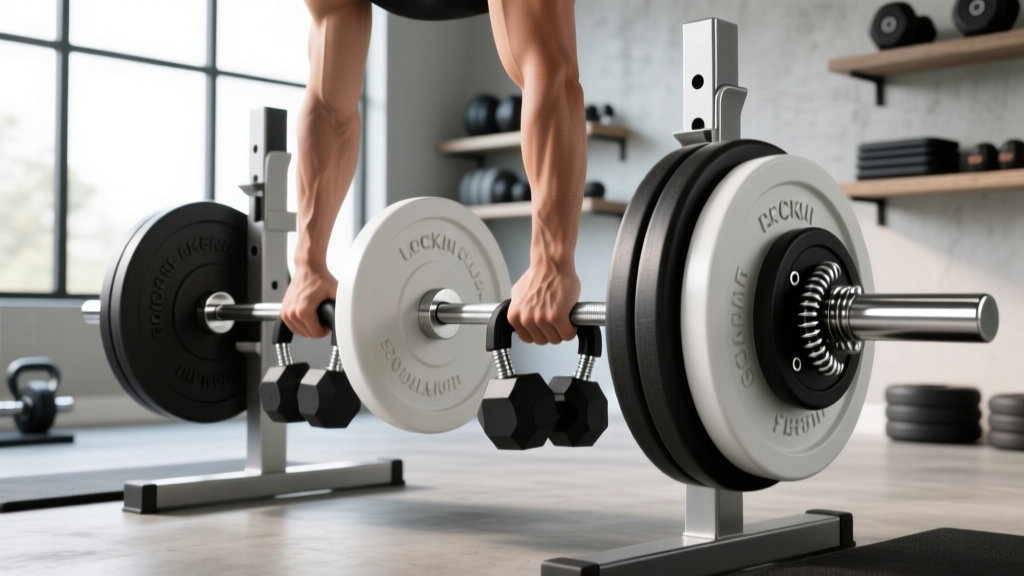
Collar Comparison: Fixing Dumbbell Farmers Carry & Squat Mistakes
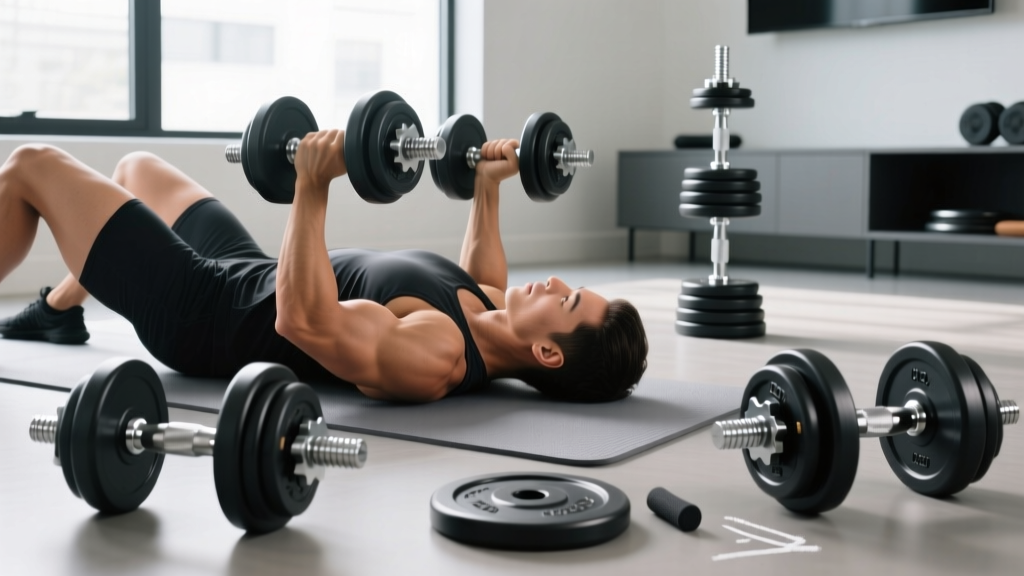
Best Loadable Dumbbells for Supine Dumbbell Chest Press

Loadable Dumbbells & The Leg Curl With Dumbbell: 2026 Trends

Dumbbell Flyes Muscles Worked: Bumper vs Iron Plate Care
