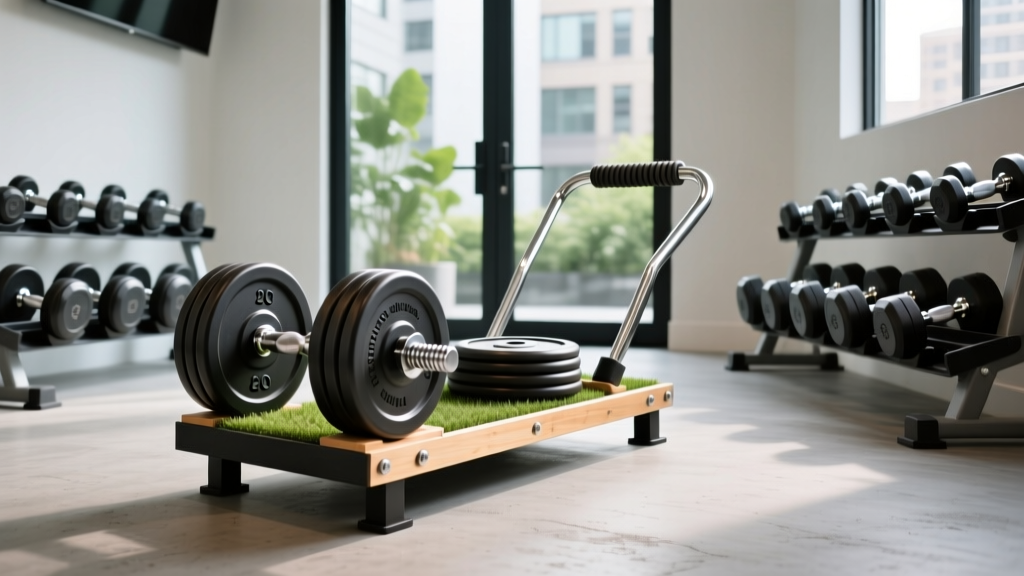
Barbell Collar & Clamp Types for Seated Dumbbell Power Cleans
Compare barbell collar and clamp types for explosive lifts. Learn which clamps secure loadable handles safely during seated dumbbell power cleans.

Why Collar Selection Dictates Safety in Explosive Dumbbell Work
When outfitting a home gym or commercial facility in 2026, most lifters treat barbell collars as an afterthought—a cheap accessory to keep plates from sliding off during a standard bench press. However, the rise of loadable dumbbell handles (such as the Rogue 10-inch and 15-inch Loadable Dumbbell Handles) has fundamentally changed how athletes train unilateral and bilateral explosive movements. If you are programming seated dumbbell power cleans to isolate the upper-body pulling mechanics without leg drive, the lateral shear and deceleration forces placed on your collars are immense. Using the wrong clamp type doesn't just result in annoying plate rattle; it creates a severe projectile hazard. This guide breaks down the engineering, materials, and real-world failure modes of modern barbell collar and clamp types, specifically evaluated for the extreme demands of explosive dumbbell work.
The Biomechanics of Seated Dumbbell Power Cleans
To understand why collar integrity is non-negotiable, we must look at the physics of the lift. According to biomechanical analyses of Olympic weightlifting variations, the catch phase of a power clean requires rapid deceleration of the implement ExRx.net Weightlifting Kinetics. When performing seated dumbbell power cleans, the athlete removes the lower body's ability to absorb force through hip and knee flexion. The traps, lats, and rear deltoids must violently accelerate the load upward and then instantly arrest its momentum to 'catch' it at the shoulders.
Consider a 50 lb loadable dumbbell. During the explosive second pull, the dumbbell reaches a peak vertical velocity. When the lifter pulls themselves under and arrests the weight in the catch position, the deceleration can easily exceed 3 to 4 Gs. This translates to 150 to 200 lbs of instantaneous lateral shear force pushing the weight plates outward against the collar. Standard friction-based collars simply cannot withstand this kinetic transfer, leading to sleeve migration and catastrophic collar ejection.
Expert Insight: The rotational torque generated when a lifter slightly mismatches their grip during a seated dumbbell power clean adds a twisting force to the lateral shear. Collars that rely solely on radial compression without a mechanical locking mechanism will spiral off the sleeve under this combined load vector.
Barbell Collar & Clamp Types: 2026 Technical Comparison
The market has evolved significantly, moving away from cheap plastic spring clips toward engineered polymers and precision-machined aluminum. Below is a technical comparison matrix of the primary collar types available today, rated specifically for their viability during high-velocity dumbbell movements.
| Collar Type | Primary Material | Clamping Force | Avg. Price (Pair) | Viability for Seated Cleans |
|---|---|---|---|---|
| Heavy-Duty Nylon Clamp (e.g., Lockjaw) | 30% Glass-Filled Nylon 6 | ~250 lbs radial | $25 - $30 | Excellent (Highly Recommended) |
| Precision Lever Clamp (e.g., Eleiko) | Anodized Aluminum / Steel | ~400+ lbs radial | $85 - $110 | Superior (Competition Grade) |
| Aluminum Screw Clamp (e.g., OSO Pro) | CNC Machined Aluminum | ~300 lbs radial | $40 - $50 | Good (Slow to adjust) |
| Traditional Spring Clip | Spring Steel / Plastic Coat | ~40 lbs radial | $8 - $15 | Dangerous (Do Not Use) |
| Spinlock Nut | Cast Iron / Chrome | Thread-dependent | $15 - $25 | Poor (Threads strip under shear) |
Deep Dive: Top Clamp Categories and Real-World Performance
1. Glass-Filled Nylon Clamps (The Workhorse Standard)
The Rogue Lockjaw Barbell Clamps have dominated the market for years, and their 2026 iterations remain the gold standard for garage gyms. Injection-molded from 30% glass-filled nylon, these clamps utilize a dual-roller cam mechanism. When you snap the lever shut, the inner resin teeth bite into the steel sleeve.
Performance on Loadable Dumbbells: Because loadable dumbbell sleeves are often slightly shorter than standard barbell sleeves, the Lockjaw's low-profile design is ideal. It leaves enough room for 45lb fractional plates without hanging off the edge. However, the nylon teeth can wear down after 2-3 years of heavy abrasive use on uncoated steel sleeves, requiring replacement.
2. Precision Lever-Action Clamps (The Elite Tier)
For athletes who demand zero sleeve migration, the Eleiko Barbell Clamps represent the pinnacle of clamping engineering. Machined from aerospace-grade aluminum with an integrated steel cam and magnetic release mechanism, these collars apply uniform, crushing radial force.
Performance on Loadable Dumbbells: During seated dumbbell power cleans, the Eleiko clamp completely eliminates the micro-vibrations that cause plates to rattle. The magnetic latch ensures that even if the dumbbell is dropped from the catch position onto a high-density crash mat, the lever will not accidentally flip open. The primary drawback is the cost and the wider footprint, which can crowd a 10-inch dumbbell sleeve.
3. Traditional Spring Clips (The Hazard)
Springs rely on tension, which degrades over time due to metal fatigue and the stretching of the plastic protective coating. Under the 3G deceleration forces of a seated dumbbell power clean, the spring compresses just enough to allow the plate to shift a millimeter. Once that gap opens, the kinetic energy compounds, and the spring clip is violently ejected. Never use spring clips for explosive Olympic lift variations.
Catastrophic Failure Modes During High-G Deceleration
Understanding how and why collars fail allows you to inspect your gear proactively. Here are the most common edge-case failure modes we observe in the field:
- Nylon Creep and Thermal Softening: Leaving glass-filled nylon clamps locked on a barbell in a hot garage (above 95°F) for weeks can cause the polymer to 'creep' and permanently deform to the sleeve's scratches. When moved to a dumbbell handle, they lose up to 40% of their clamping force.
- Aluminum Cam Slippage: Cheaper, knock-off aluminum clamps use soft pot-metal cams. The immense lateral shear of a heavy seated clean will strip the cam teeth, rendering the clamp useless.
- Sleeve Tolerance Mismatch: Standard Olympic sleeves are exactly 1.96 inches (50mm). Some budget loadable dumbbell handles machine their sleeves to 1.92 inches. Standard collars will feel loose and fail to engage properly. Always measure your dumbbell sleeve diameter with digital calipers before purchasing clamps.
Step-by-Step: Securing Loadable Handles for Seated Cleans
To maximize safety and equipment lifespan when performing seated dumbbell power cleans, follow this exact mounting protocol:
- Wipe the Sleeve: Use a microfiber cloth to remove chalk and oil from the dumbbell handle sleeve. Friction is your first line of defense.
- Load the Plates Tightly: Push the bumper or steel plates together so there is zero daylight between them. Use a machined aluminum spacer if your plate combination leaves a gap.
- Position the Clamp: Slide the collar onto the sleeve. Leave exactly a 1/8th-inch gap between the collar and the outer plate. Do not push it flush. This gap allows the collar's internal resin or rubber pads to flex and bite into the steel when the cam is engaged.
- Engage and Test: Snap the lever shut. Grip the outer plate and attempt to violently twist and pull it outward. If there is any rotational play, unlock the cam, adjust the tension screw (if applicable), and re-engage.
⚠️ Safety Warning: The Drop Test
While seated dumbbell power cleans are typically performed with control, missed reps happen. If you must bail on a lift and drop the loadable dumbbells from shoulder height, the impact shockwave travels down the sleeve. Lever-action and heavy-duty nylon clamps will survive this; screw-down and spinlock collars may shatter or permanently warp. Always inspect the cam mechanism for micro-fractures after a heavy drop.
Final Verdict for the Explosive Athlete
If your training programming includes seated dumbbell power cleans, you are subjecting your equipment to forces that mimic a car crash on a micro-scale. Invest in high-quality, glass-filled nylon clamps for everyday training, or step up to precision aluminum lever clamps if you are pushing maximum loads and require absolute zero-plate-migration. Treat your collars as critical safety equipment, not mere accessories, and your training will remain both explosive and secure.
More gear to consider
All reviews
Tripod Dumbbell Row Setup: Olympic vs Standard Plates

Barbell Collar Types Compared: Moving Beyond 70 lbs Dumbbells

Cast Iron vs Competition Kettlebells & Single Hand Tricep Dumbbell

Olympic vs Standard Plates for Overhead Dumbbell Triceps Extensions

Dumbbell Pinwheel Curl Form Guide & Neoprene Weight Tips