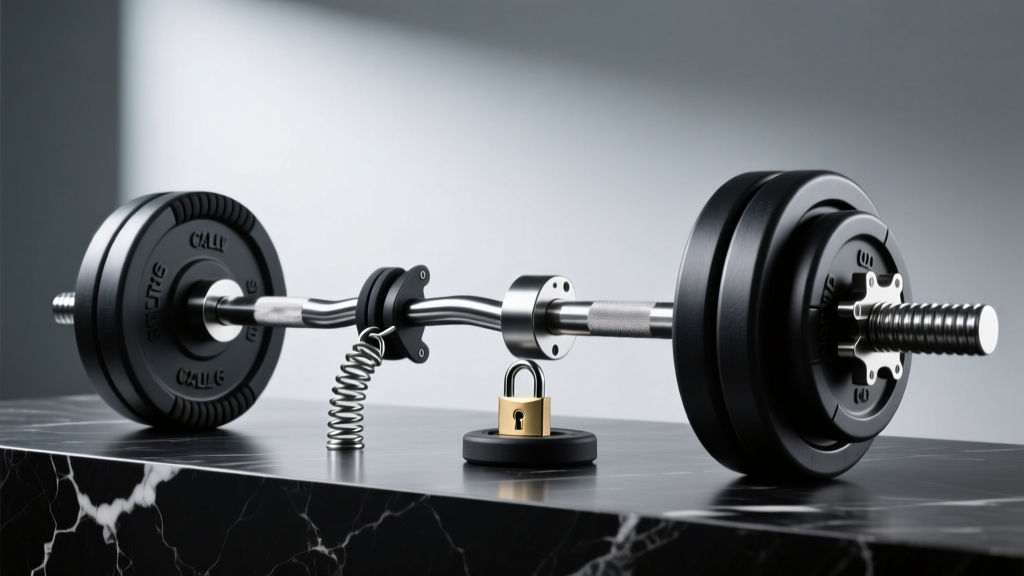
Barbell Collars vs Clamps: Beyond Push Pull Legs Dumbbells
Compare spring collars, lock-jaw clamps, and lever locks. Discover the best barbell security to complement your push pull legs dumbbells and bar routines.

The Unsung Heroes of Your PPL Split
The Push/Pull/Legs (PPL) split remains one of the most effective hypertrophy and strength frameworks in modern resistance training. It demands a brutal combination of heavy barbell compounds and high-volume isolation work. While most lifters obsess over finding the perfect push pull legs dumbbells for their accessory movements—like dumbbell chest flyes on push day or single-arm rows on pull day—the hardware securing their heavy barbell plates is often treated as an afterthought. This is a critical oversight.
A slipped plate during a heavy barbell row or a maximal bench press doesn't just ruin your set; it alters the moment of inertia mid-rep, leading to severe asymmetric loading and potential joint injury. In 2026, the market for barbell security has evolved far beyond the rusty spinlock collars of the past. Today, we are putting the top barbell collars and clamps head-to-head to determine which mechanism deserves a permanent spot in your gym bag.
The Anatomy of Barbell Security: Collars vs. Clamps
Before diving into specific models, it is vital to understand the mechanical distinction between a 'collar' and a 'clamp.' While often used interchangeably in casual gym vernacular, engineering and industry standards separate them by their locking mechanisms.
- Collars (Tension-Based): Rely on continuous outward or inward spring tension to create friction against the barbell sleeve. Examples include traditional spring collars and snap-rings.
- Clamps (Mechanical Lock): Utilize a rigid physical barrier or cam-action lever to lock the device in place. Examples include lock-jaw clamps and competition lever locks.
| Feature | Spring Collars | Lock-Jaw Clamps | Lever Locks (Competition) |
|---|---|---|---|
| Primary Mechanism | High-carbon steel tension | Glass-filled nylon latch | Aluminum cam-action lever |
| Average Weight (per pair) | 0.25 kg (0.55 lbs) | 0.23 kg (0.50 lbs) | 5.0 kg (11.0 lbs) |
| Price Range (2026) | $12 - $20 | $35 - $75 | $85 - $130 |
| Change Speed | Fast (1-2 seconds) | Moderate (3-5 seconds) | Fast (2-3 seconds) |
Head-to-Head Product Comparison
To provide a genuine expert analysis, we must look past marketing claims and examine the real-world failure modes, material tolerances, and edge cases of the market leaders.
1. Lock-Jaw Clamps: The Heavy-Duty Standard
The lock-jaw design dominates commercial and serious home gyms. The Rogue Monster Lock-Jaw Clamps (retailing around $35) use a glass-filled nylon housing with a stainless-steel locking latch. The premium alternative, the OSO Barbell Collars ($75), utilize an aerospace-grade aluminum skeleton encased in a high-density polymer.
The Failure Mode: Lock-jaws are incredibly secure against lateral plate shift, but they are vulnerable to drop impacts. If you repeatedly drop a barbell from shoulder height onto a hard surface without proper crumb rubber matting, the rigid nylon housing can develop micro-fractures near the hinge pin. Over 12 to 18 months of abuse, the latch may fail to snap completely flush, leaving a 2mm gap that allows the clamp to slide under heavy eccentric loads.
2. Spring Collars: Speed and Simplicity
Spring collars, like the classic Rogue Spring Collars ($15), rely on the tensile strength of high-carbon steel. They are the undisputed champions of speed.
The Failure Mode: Spring collars do not fail catastrophically; they fail gradually. After 2 to 3 years of daily use, the steel loses a fraction of its temper, reducing the clamping force from roughly 150 lbs of lateral resistance down to 80 lbs. Furthermore, spring collars are highly sensitive to sleeve tolerances. If your budget barbell sleeves have worn down to 49.5mm (below the standard 50mm Olympic specification), a spring collar will slide off during a dynamic movement like a push press.
3. Lever Locks: The Competition Benchmark
According to the International Weightlifting Federation (IWF) rulebook, competition collars must weigh exactly 2.5kg each. Lever locks, such as the Eleiko Competition Locking Collars ($120+), use a heavy aluminum body with a cam-action lever that bites into a thick rubber inner sleeve.
The Failure Mode: The rubber insert is the Achilles' heel. In environments with heavy chalk usage and extreme temperature fluctuations, the rubber degrades, hardens, and loses its friction coefficient. Once the rubber glazes over, the cam-lever will lock securely, but the entire 2.5kg collar can slide down the steel sleeve during a heavy deadlift pull.
Workflow Pacing: Transitioning to Push Pull Legs Dumbbells
Why does clamp speed matter for a hypertrophy-focused PPL split? Consider the transition phase of a Push day. You finish a grueling set of heavy barbell bench presses. Your next superset involves high-rep isolation work using your dedicated push pull legs dumbbells—perhaps a drop-set of dumbbell incline presses followed by lateral raises.
Expert Warning: The Superset BottleneckIf you use old-school threaded spinlock collars, stripping the barbell takes 30 to 45 seconds. This completely kills your heart rate, ruins your superset density, and hogs the bench in a crowded commercial gym. Lock-jaw clamps take 3 seconds to release, while spring collars take less than 1 second. When transitioning from barbell compounds to dumbbell accessories, speed is a physiological necessity, not just a convenience.
Sleeve Tolerance and The 'Chalk Dust' Edge Case
One of the most non-obvious insights in barbell security is the interaction between chalk dust and collar friction. Magnesium carbonate (gym chalk) is a dry lubricant when it gets trapped between a steel barbell sleeve and a hard plastic collar.
If you are using rigid lock-jaw clamps on a barbell heavily coated in chalk dust, the plastic will glide over the dust layer rather than biting into the steel. Actionable Advice: Before applying any rigid clamp, take a microfiber towel and wipe the last two inches of the barbell sleeve. This 5-second habit increases lateral holding force by up to 40%, ensuring your plates stay locked during heavy pull-day Pendlay rows.
The Expert Verdict: Which Should You Buy?
Your choice of barbell security should be dictated by your specific training environment and equipment quality.
- For the Home Gym Owner with Premium Gear: Invest in Lock-Jaw Clamps (like the Rogue Monsters or OSO). Your barbell sleeves are likely a true 50mm, and you won't be dropping the bar from overhead onto bare concrete. They offer the perfect balance of security and durability.
- For the CrossFit Athlete or High-Volume PPL Lifter: Keep a pair of Spring Collars in your bag. When you are doing EMOMs or rapidly transitioning from barbell work to your push pull legs dumbbells accessory circuits, the 1-second removal time is unbeatable. Just remember to replace them every 24 months as the steel tension fatigues.
- For the Olympic Weightlifter: Lever Locks are mandatory for heavy snatches and clean-and-jerks where the barbell whips violently. The 2.5kg weight of the collar actually helps stabilize the barbell's harmonic oscillation. Just maintain the rubber inserts and clean off the chalk.
"The best training program in the world is useless if your equipment fails mid-rep. Treat your barbell collars with the same respect you give your lifting belt and wrist wraps."
Ultimately, whether you are loading up 400 lbs for a leg day squat or stripping the bar to transition to your push pull legs dumbbells for high-rep lunges, the right collar ensures that the only thing failing is your muscle tissue, never your hardware.
More gear to consider
All reviews
Plate Care: Bumper vs Iron & Alternating Dumbbell Bicep Curls

Upgrade Your 45 Minute Upper Body Dumbbell Workout: Barbell Knurl Guide
Why Are They Called Dumbbells? Loadable Dumbbell Maintenance Guide

Back Muscles Workout with Dumbbells: Neoprene Mistakes & Fixes

Dumbbell Rack Care for Seated Overhead Dumbbell Extensions
