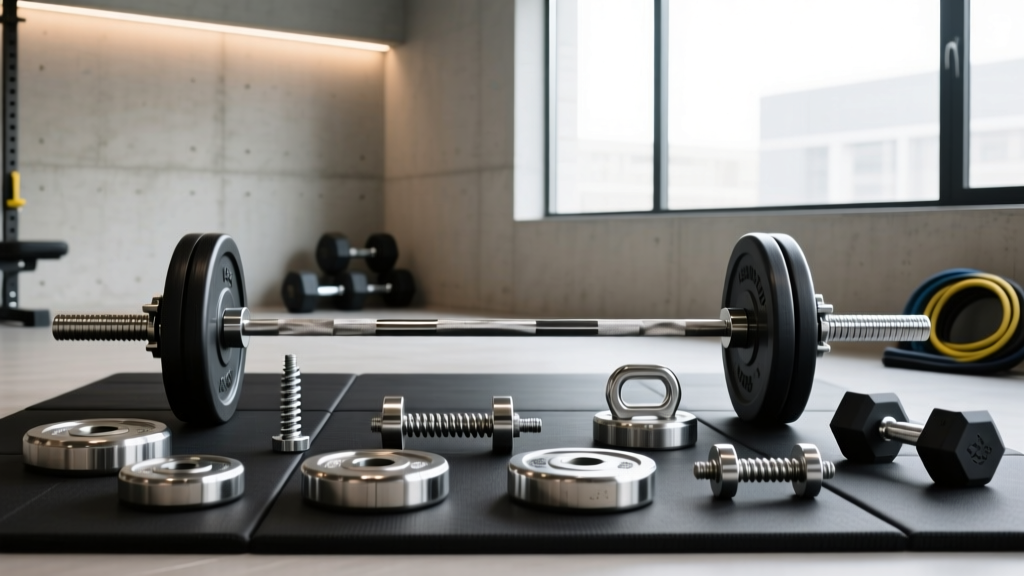
Barbell Collar Types Compared: Beyond Dumbbell Back Exercises
Master heavy lifts beyond dumbbell back exercises. Our beginner step-by-step guide compares barbell collar and clamp types for safety and performance.

Introduction: Why Barbell Collars Matter for Heavy Back Days
When you first start building a home gym, mastering dumbbell back exercises like single-arm rows and reverse flyes is a fantastic way to build foundational muscle and stability. However, as your strength progresses into 2026, you will inevitably transition to heavy bilateral barbell movements like Pendlay rows, deadlifts, and barbell shrugs. This is where a critical, often overlooked piece of equipment becomes vital: the barbell collar.
A loose weight plate on a barbell doesn't just ruin your lift's mechanics; it creates a severe safety hazard. If plates shift outward during a heavy row, the barbell's center of gravity changes instantly, potentially leading to wrist tears or lower back injuries. This beginner-friendly, step-by-step guide will walk you through the exact types of barbell collars and clamps available, helping you secure your loads with confidence.
Step 1: Understand Your Barbell Sleeve Diameter
Before purchasing any collars, you must verify the sleeve diameter of your barbell. Buying the wrong size is the most common beginner mistake.
- Olympic Barbells (50mm / 2-inch sleeves): The gold standard for commercial and serious home gyms. Almost all premium collars (clamps, lockjaws, competition) are designed for 50mm sleeves.
- Standard Barbells (25mm / 1-inch sleeves): Common in budget, entry-level home gym sets. You will need specific 'standard' spring clips or screw-on adapters, as 50mm collars will slide right off.
Step 2: Compare the 4 Main Barbell Collar Types
Not all collars are created equal. Below is a comparison matrix of the most common types you will encounter, updated with current 2026 market pricing and performance metrics.
| Collar Type | Model Example | Price Range (Pair) | Clamping Force | Best For |
|---|---|---|---|---|
| Spring Clips | Generic Chrome Clips | $8 - $15 | Low | Light accessories, lunges |
| Clamp Collars | Proloc 1.0 / HG Clamps | $35 - $55 | Very High | Heavy rows, drop sets |
| Polymer Lockjaws | Rogue Lockjaw / OSO | $25 - $40 | High | CrossFit, bumper plates |
| Competition | Eleiko IWF Collar | $85 - $120 | Maximum | Olympic weightlifting |
Step 3: Match the Collar to Your Training Style
Choosing the right collar depends entirely on how you train. Let's break down the real-world applications and failure modes of each type.
1. Clamp Collars (The Heavy Lifter's Choice)
Clamp collars utilize a lever-action cam mechanism lined with high-density rubber or TPU. When you snap the lever shut, it pulls the collar tightly against the outer face of the weight plate.
- The Edge Case: If you use bare cast-iron plates with rough, uneven edges, clamp collars can sometimes struggle to create a flush seal. They perform best with machined steel plates or urethane-coated bumpers.
- Real-World Insight: According to BarBend's expert equipment reviews, premium aluminum clamps like the Proloc 1.0 offer virtually zero lateral plate shift, even during aggressive Pendlay rows where the barbell stops dead on the floor.
2. Polymer Lockjaws (The Bumper Plate Specialist)
Lockjaw collars feature a rigid polymer ring with an internal locking tab. You slide them onto the sleeve and snap the tab into the groove.
- Failure Mode: Over time, the internal plastic teeth can wear down, especially if you frequently slide them on and off without pressing the release tab. Once stripped, they lose clamping tension and must be replaced.
- Best Use: High-rep Olympic lifts and WODs where you need to change weights in under 5 seconds.
3. Spring Clips (The Budget Option)
Made from coiled spring steel, these are squeezed to open and released onto the sleeve.
Warning: Never use spring clips for heavy deadlifts or bent-over rows. The vibration from dropping the bar or the momentum of a heavy row will easily cause the spring tension to fail, resulting in plates sliding off the sleeve mid-set.4. Competition Collars (The Professional Standard)
As mandated by the International Weightlifting Federation (IWF) Technical Rules, competition collars must weigh exactly 2.5 kilograms each. They lock onto the sleeve via a heavy-duty clamping mechanism and a secondary safety latch.
- Why it matters: The 2.5kg weight is factored into the total load of the barbell. For a beginner, these are overkill and unnecessarily heavy to handle, but they are mandatory if you plan to compete in sanctioned meets.
Step 4: Proper Installation and Safety Checks
Even the best clamp will fail if installed incorrectly. Follow this step-by-step flow every time you load your barbell:
- Load Plates Flush: Push all weight plates tightly against the inner sleeve shoulder. Ensure no gaps exist between the plates themselves.
- Clear the Debris: Wipe the outer edge of the last plate and the barbell sleeve. Chalk dust and sweat can act as a lubricant, reducing the friction of the collar's rubber lining.
- Seat the Collar: Slide the collar onto the sleeve until the inner rubber pad makes firm contact with the outer face of the weight plate.
- Engage the Lock: For clamps, pull the lever over center. You should feel a distinct 'snap' and see the lever sit flush or slightly past the 180-degree mark. For lockjaws, ensure the tab clicks audibly into the sleeve groove.
- The Shake Test: Grab the collar and try to twist and pull it. If it rotates freely or slides without resistance, reseat it.
Common Failure Modes & Edge Cases
As you advance your training, you will encounter specific scenarios where collars behave unexpectedly:
- Chrome vs. Coated Sleeves: Bare stainless steel or chrome sleeves are incredibly slippery. If you are using basic polymer lockjaws on a chrome sleeve, plates may still inch outward during heavy eccentric rows. Upgrade to rubber-lined aluminum clamps for bare steel bars.
- Bumper Plate 'Walking': When dropping bumper plates from overhead, the kinetic energy transfers through the steel hub, often pushing plates outward. The National Strength and Conditioning Association (NSCA) emphasizes that securing collars is a non-negotiable safety standard when dropping loads to prevent asymmetric barbell tipping.
Frequently Asked Questions (FAQ)
Are heavy barbell rows better than dumbbell back excersises?
Both serve distinct purposes. While 'dumbbell back excersises' (and properly spelled dumbbell back exercises) are superior for isolating unilateral imbalances and increasing the range of motion, heavy barbell rows allow for greater absolute load and central nervous system overload. You should incorporate both into a well-rounded 2026 training program.
Do I need collars if my plates have rubber grips?
Yes. Rubber grips on the inside of the plates help them stack flush against each other, but they do nothing to secure the entire stack to the barbell sleeve. You always need an external collar on the outer edge to prevent lateral movement.
How often should I replace my barbell clamps?
Premium aluminum clamps (like Proloc or HG) can last a decade or more. The only part that may need replacing is the internal rubber pad, which can compress or tear after 3-4 years of heavy daily use. Polymer lockjaws typically need full replacement every 1-2 years if used in a busy commercial or CrossFit gym environment.
Final Thoughts
Transitioning from dumbbells to heavy barbell work is a major milestone in your fitness journey. By investing $40 to $50 in a high-quality pair of lever-action clamp collars, you protect your equipment, your body, and your focus. Secure your sleeves, respect the load, and enjoy the gains.
More gear to consider
All reviews
Maximizing Benefits of Dumbbell Squats: Best Storage Racks 2026
Barbell Collar Types Compared: Safety for 44kg Dumbbells & Bars

Single Arm Dumbbell Bench Care: Rubber Hex vs Urethane

Dumbbell Workout for Belly Fat: Fixing Neoprene Mistakes

Optimizing Dumbbell Rack Storage for Tricep Pushdowns with Dumbbells
