Are Dumbbells FSA Eligible? Loadable Plates Budget
Discover if dumbbells are FSA eligible and how to build a cost-effective loadable dumbbell set with interchangeable plates for your 2026 home gym.

The FSA/HSA Question: Are Dumbbells FSA Eligible?
When optimizing a home gym budget in 2026, leveraging tax-advantaged accounts like a Flexible Spending Account (FSA) or Health Savings Account (HSA) can significantly offset upfront costs. But are dumbbells FSA eligible? The short answer is: not automatically. According to IRS Publication 502, fitness equipment is generally excluded from tax-free reimbursement if it is used merely to improve general health or wellness.
The LMN Loophole: To make dumbbells FSA/HSA eligible, you must obtain a Letter of Medical Necessity (LMN) from a licensed physician. The LMN must explicitly state that the equipment is prescribed to treat a specific, diagnosed medical condition (e.g., physical therapy for a rotator cuff injury, or a prescribed weight-loss program for clinical obesity). General fitness or 'preventative health' will be rejected by FSA administrators.If you secure an LMN, loadable dumbbells with interchangeable plates represent one of the most financially efficient ways to utilize your FSA funds, offering a vastly superior long-term return on investment compared to fixed hex dumbbells or proprietary adjustable sets.
The Economics of Loadable Dumbbells vs. Proprietary Adjustables
The market is saturated with adjustable dumbbells like the Nuobell or PowerBlock Elite, which typically cost between $350 and $450 for a 50 lb to 80 lb pair. While space-efficient, these proprietary systems suffer from a high cost-per-pound and contain fragile internal mechanisms (dial selectors, plastic retention pins) that frequently fail if dropped.
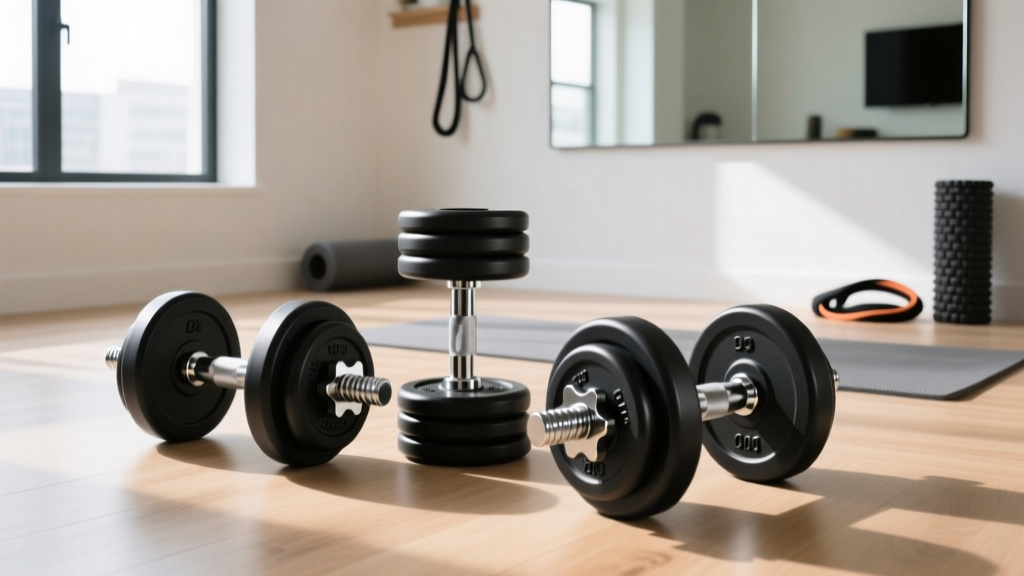
Conversely, loadable dumbbell handles utilize standard 2-inch Olympic interchangeable plates. This modularity means you are never locked into a single brand's ecosystem. If you outgrow your 60 lb set, you simply buy more plates. The cost-per-pound drops dramatically as you scale, making it the undisputed champion of budget-focused strength training.
Real-World 2026 Budget Breakdown: Building a 120 lb Set
Let us break down the exact capital required to build a pair of 60 lb loadable dumbbells (120 lbs total lifting capacity) using a mix of budget and premium components.
- The Handles: Titan Fitness Loadable Dumbbell Handles ($129.99/pair) or Bells of Steel Olympic Loadable Handles ($149.99/pair). Both feature 8-inch sleeves and moderate knurling.
- The Collars: Lock-Jawz Olympic Dumbbell Collars ($24.95/pair). Essential for safety; standard barbell spring clips slip on short dumbbell sleeves during lateral raises.
- The Plates: 140 lbs of standard cast iron Olympic plates (approx. $1.50/lb delivered from a local supplier = $210.00).
Total System Cost: ~$365.00 (Yielding two 70 lb dumbbells, plus 10 lbs of handle weight). Compare this to a pair of fixed 70 lb urethane hex dumbbells, which currently retail for upwards of $420, excluding the cost of a storage rack.
Interchangeable Plate Value Matrix
Not all interchangeable plates are created equal. When loading a dumbbell, sleeve real estate is your primary constraint. A standard loadable handle has a 7.5 to 8-inch sleeve. Thick bumper plates will max out the physical space before you reach the weight limit. Here is how the plate materials compare for loadable dumbbell applications:
| Plate Type | Avg Cost / lb | Thickness Profile | Best Use Case |
|---|---|---|---|
| Cast Iron | $1.20 - $1.80 | Ultra-Thin | Maximizing weight on short sleeves (up to 80+ lbs per hand). |
| Urethane | $2.50 - $3.50 | Thin & Dense | Commercial feel, low odor, floor-safe for home gyms. |
| Crumb Bumper | $1.80 - $2.20 | Very Thick | Lighter sets (under 40 lbs); limits sleeve space heavily. |
| Fractional (Micro) | $8.00+ | Variable | Progressive overload for rehab or strict isolation work. |
Hidden Costs and Mechanical Failure Modes
When conducting a value analysis on loadable dumbbells, novices often overlook the mechanical failure modes inherent to plate-loaded implements. Addressing these edge cases upfront will save you from wasted capital and potential injury.
1. Sleeve Bending and Bushing Wear
Cheap, unbranded loadable handles often use 1-inch standard sleeves. Under heavy loads (50+ lbs), these thin steel sleeves will permanently bend, rendering the plates unable to slide on or off. Furthermore, 1-inch plates are frequently coated in brittle plastic that cracks upon impact. Always invest in 2-inch Olympic sleeves with internal bronze bushings to ensure smooth rotation and structural integrity.
2. The Collar Slippage Hazard
Unlike a 7-foot barbell where the sleeves are horizontal and stable, dumbbells are frequently tilted, pressed, and dropped. Standard spring collars are entirely inadequate for loadable dumbbells. During a walking lunge or a Romanian deadlift, the plates will shift, altering the center of gravity and risking a wrist sprain. Budget $25 to $40 for high-tension clamp collars (like the Rogue HG 2.0 or Lock-Jawz) that physically lock onto the sleeve grooves.
Expert Insight: If your primary lifts are dumbbell floor presses or heavy goblet squats, consider buying 'grip plates' (plates with integrated handles). They are slightly thicker but make changing weights between sets significantly faster, bridging the gap between loadable and adjustable dumbbells.
Step-by-Step: Purchasing Your Set with FSA/HSA Funds
If your physician has provided an LMN validating your medical need for resistance training equipment, follow this exact protocol to ensure your loadable dumbbell purchase is successfully reimbursed.
- Secure the LMN: Ensure your doctor's letter includes their letterhead, your diagnosis (with ICD-10 code), a statement that the loadable dumbbells are medically necessary to treat the condition, and a defined timeframe for the treatment.
- Choose an FSA-Friendly Retailer: While you can buy directly from manufacturers like Rogue Fitness or Titan Fitness, some specialized medical FSA portals allow you to order fitness equipment directly using your FSA card if you upload the LMN at checkout.
- Out-of-Pocket & Reimburse: More commonly, you will purchase the handles and interchangeable plates with your personal credit card. Save the itemized receipt (showing the exact SKUs for the handles, collars, and plates).
- Submit the Claim: Log into your FSA/HSA administrator portal (e.g., HealthEquity, Optum). Upload the itemized receipt alongside your LMN. Reimbursement is typically deposited into your checking account within 7 to 14 business days.
Final Verdict: Is the Investment Worth It?
From a pure budget and value analysis perspective, loadable dumbbells with interchangeable plates are the most economical, durable, and scalable free weight solution available in 2026. While they require manual weight changes and a bit more floor space than a dial-adjustable set, their cost-per-pound is unmatched. When combined with a valid Letter of Medical Necessity to unlock FSA/HSA funding, the out-of-pocket expense drops to near zero, making this an absolute no-brainer for the financially savvy home gym owner.
More gear to consider
All reviews
Loadable Dumbbells & The Sitting Dumbbell Curl: 2026 Cost Analysis

EZ Curl Bar vs Straight Bar for Your Dumbbell Home Exercise Program

Best Adjustable Dumbbells for a Full Shoulder Dumbbell Workout (2026)

Bumper vs Iron Plates: Gym Layouts & the Front Dumbbell Raise
Cast Iron vs Competition Kettlebells: Dumbbell Lateral Squats Guide
