
Beyond the Dumbbell Outline: Cast Iron vs Competition Kettlebells
Compare cast iron vs competition kettlebells with our 2026 budget breakdown. Discover pricing, handle specs, and why the dumbbell outline falls short.

The Biomechanical Shift: Moving Past the Dumbbell Outline
When athletes first transition from traditional barbell and dumbbell training to kettlebell ballistics, the most immediate shock to the neuromuscular system is the shift in the center of mass. In standard strength training, you are accustomed to the symmetrical dumbbell outline, where the load is distributed evenly on either side of the handle, aligning the center of gravity directly with the mid-palm. This symmetrical dumbbell outline makes pressing and curling highly stable, but it limits the offset leverage required for dynamic, multi-planar movements.
A kettlebell completely disrupts this paradigm. The center of mass extends inches past the handle, resting against the forearm during the rack position and pulling away from the wrist during swings and snatches. This offset loading demands immense grip endurance, wrist stabilization, and lat engagement. Once you commit to this unique training modality, the next critical hurdle is navigating the market. In 2026, the kettlebell market is heavily bifurcated into two primary categories: traditional Cast Iron and standardized Competition bells. Understanding the budget breakdown, manufacturing nuances, and long-term value of each is essential for outfitting your home gym or commercial facility without wasting capital.
Expert Insight: Never base your kettlebell purchase solely on the sticker price. The cost per pound is a deceptive metric if the handle geometry causes micro-tears in your forearms or the coating chips and rusts within six months. Value is measured in cost-per-use and biomechanical safety.Cast Iron Kettlebells: The Budget Lifter's Workhorse
Cast iron kettlebells are manufactured using sand-casting molds, resulting in a solid piece of iron that is subsequently ground, polished, and coated. Because the mold size scales with the weight of the bell, a 16kg cast iron bell will be physically smaller than a 24kg bell, and the handle thickness will increase accordingly.
Pricing Breakdown and Value Metrics
As of 2026, the market average for premium cast iron kettlebells ranges from $1.60 to $2.40 per pound. Brands like Rogue Fitness and Rep Fitness dominate this space by offering high-quality powder-coated options. A standard 16kg (35lb) bell will typically cost between $65 and $85. For the budget-conscious lifter building a foundational set (e.g., 16kg, 20kg, 24kg), the total investment remains highly accessible, usually hovering around $250 to $300 for a three-bell starter kit.
Handle Geometry and Real-World Failure Modes
The primary drawback of cast iron is the variable geometry. Handle diameters can range from 28mm on lighter bells to over 35mm on heavier models. Furthermore, the 'horns' (the vertical pillars connecting the handle to the bell) widen as the bell gets heavier. This means your grip positioning and forearm clearance will change with every weight jump, which can severely disrupt muscle memory during high-repetition snatch tests.
Failure Modes: The most common failure point for budget cast iron bells is the coating. Cheap enamel-painted bells will chip upon impact, exposing raw iron to humidity, leading to rapid oxidation (rust). Always opt for bells finished with a baked polyester powder coat or a specialized e-coat, which bonds at a molecular level and withstands the abrasive friction of chalk and repeated drops onto rubber matting.
Competition Kettlebells: The Premium Investment
Competition kettlebells are engineered to exacting international standards, as recognized by organizations like StrongFirst and the World Kettlebell Club. Regardless of whether the bell weighs 8kg or 32kg, the physical dimensions of the bell and the handle remain 100% identical. The weight is adjusted internally by altering the size of the hollow cavity and filling the remaining space with materials like lead or steel shot.
Why Uniform Dimensions Dictate Price
The standardized dimensions mean an 8kg competition bell requires significantly more material and complex internal engineering to reach its target weight without increasing its physical size. The shell is typically constructed from high-grade steel rather than raw cast iron, and the handle is strictly regulated at 33mm in diameter with a horn width of 108mm. This manufacturing complexity pushes the price to between $4.50 and $7.00 per pound. A single 16kg competition bell from a premium manufacturer like Kettlebell Kings or Eleiko will easily cost $140 to $180.
Cost Analysis and Longevity
While the upfront cost is steep, competition bells offer unparalleled longevity for specific use cases. Because the handle diameter never changes, an athlete can transition from a 16kg to a 24kg snatch set without altering their grip mechanics or risking forearm bruising from a thicker handle. The steel shells are also painted with high-visibility, chip-resistant industrial coatings that are color-coded by weight (e.g., yellow for 16kg, green for 24kg), making them ideal for commercial gym environments where quick identification is necessary.
Spec & Cost Matrix: Cast Iron vs. Competition
| Feature | Premium Cast Iron | Competition (Steel Shell) |
|---|---|---|
| Average Cost per lb (2026) | $1.60 - $2.40 | $4.50 - $7.00 |
| Handle Diameter | Variable (28mm - 35mm+) | Strictly 33mm |
| Horn Width | Widens with weight | Standard 108mm |
| Material | Solid Cast Iron | Steel Shell / Iron & Lead Core |
| Primary Failure Mode | Coating chips, handle rusts | Steel shell dents on concrete |
| Best Use Case | Grinds, general fitness, outdoors | High-rep ballistics, sport, technique |
The 5-Year Cost of Ownership Framework
To accurately assess value, we must look beyond the initial purchase price and evaluate the 5-year cost of ownership. If you purchase a set of budget, enamel-coated cast iron bells for $150, but drop them on a concrete garage floor, the enamel will fracture. Within a year, the handles will pit with rust, requiring you to sand them down and apply cold galvanizing compound—a labor-intensive process that degrades the handle's smoothness, ultimately ruining the bell for high-repetition snatches. You will likely replace them by year three, doubling your cost.
Conversely, a $400 investment in powder-coated cast iron or a $600 investment in a starter set of competition bells will easily survive a decade of heavy use. However, competition bells have their own edge case: dropping a 32kg steel-shelled competition bell directly onto bare concrete can cause the steel shell to dent inward or crack the internal welds holding the core. Therefore, competition bells require proper drop-zone matting (at least 3/4-inch thick horse stall mats), adding a hidden $150 infrastructure cost to your budget.
'The transition away from the traditional dumbbell outline requires a tool that respects the wrist. If you are pursuing kettlebell sport or high-volume snatch and jerk cycles, the 33mm handle of a competition bell is not a luxury; it is a medical necessity to prevent forearm contusions and tendonitis.'
Final Verdict: Matching the Bell to Your Budget
If your training primarily consists of heavy, low-repetition grinds (like Turkish get-ups, strict presses, and heavy goblet squats), the variable handle geometry of cast iron is irrelevant. In this scenario, premium powder-coated cast iron offers the highest return on investment, allowing you to allocate more of your budget toward heavier weights rather than paying the 'uniformity tax' of competition bells.
However, if your programming involves high-repetition ballistic chains, double-kettlebell front squats, or you are actively studying the biomechanical nuances that separate kettlebell training from the standard dumbbell outline, competition bells are the superior choice. The standardized 33mm handle and uniform window size ensure that your technique remains flawless regardless of the load, making the premium price tag a justifiable investment in your long-term athletic development and joint health.
More gear to consider
All reviews
Loadable Plates for Side Lateral Raises With Dumbbells: Space Guide

Best Dumbbells for Dumbbell Suitcase Carry: Rubber Hex vs Urethane

Hex vs Urethane Dumbbell Care & Decline Dumbbell Press Muscles Worked
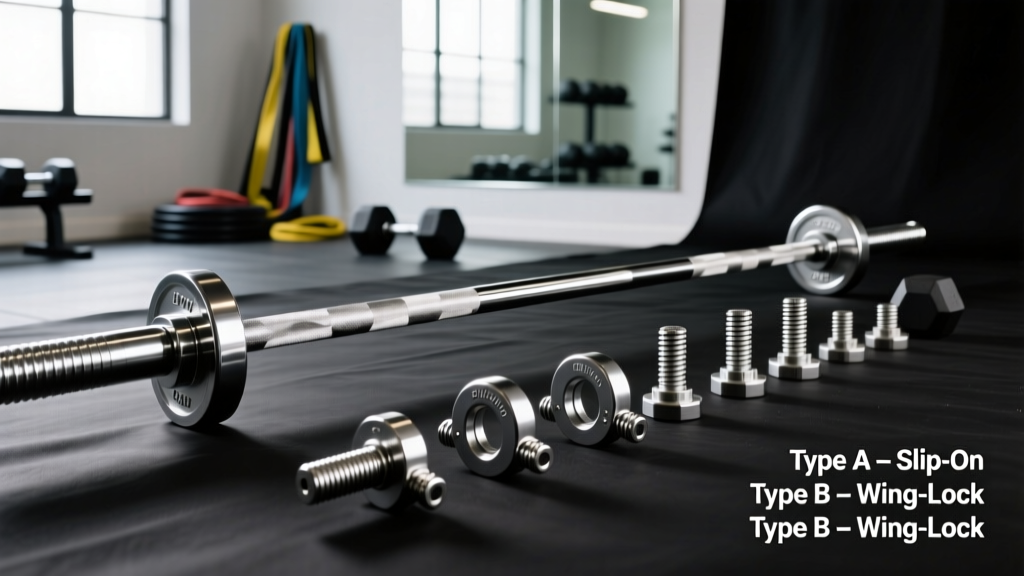
Barbell Collar Setup & Clamp Comparison: What to Watch For

Beyond the Top 5 Dumbbell Leg Exercises: EZ Curl Bar vs Straight Bar Trends
