
Loadable Dumbbells: Are Dumbbell Shrugs Good in Small Home Gyms?
Discover if loadable dumbbells optimize small gym layouts for heavy shrugs. We compare space-saving handles, layout blueprints, and trap-building biomechanics.

The Spatial Dilemma: Fixed Racks vs. Loadable Handles
When designing a home gym in 2026, square footage is the ultimate premium. Urban housing trends and multi-use room conversions mean that the traditional 10-tier fixed rubber hex dumbbell set is becoming a relic of the past. A standard 5 to 50-pound fixed dumbbell set requires a 4-foot wide, two-tier rack, consuming roughly 8 to 10 square feet of valuable floor space and costing anywhere from $450 to $700. More importantly, it imposes a hard ceiling on your progressive overload; once you can shrug 50-pound dumbbells for reps, you are forced to buy an entirely new, heavier set.
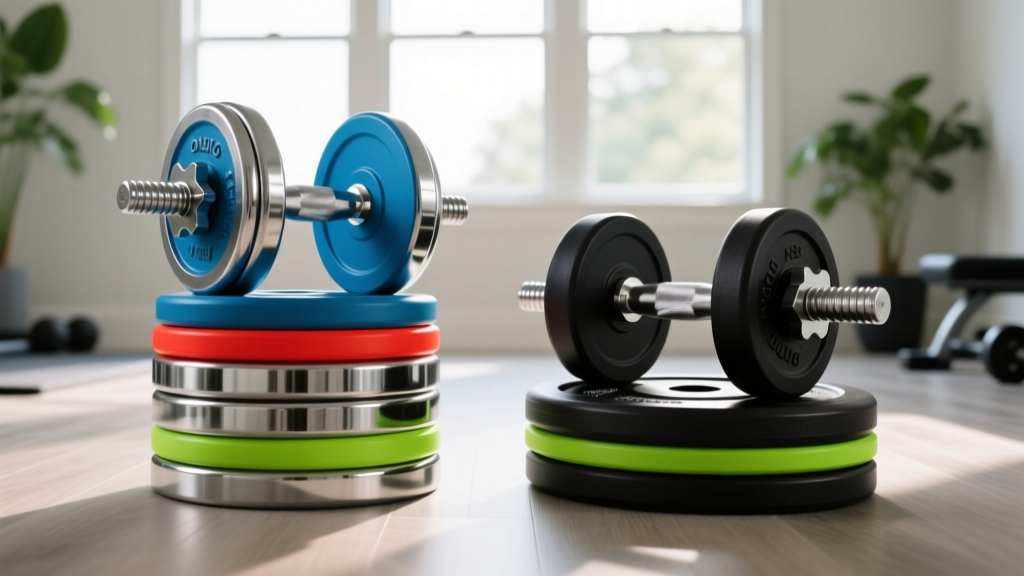
Enter the loadable dumbbell with interchangeable plates. By utilizing a pair of Olympic loadable dumbbell handles and a compact set of 2-inch diameter plates, you can replicate the exact weight spectrum of a massive fixed rack while occupying less than 2 square feet of floor space. But when it comes to specific isolation movements, many lifters transitioning to compact setups ask: are dumbbell shrugs good for trap development when using unconventional, space-saving gear? The short answer is yes—but only if you navigate the unique biomechanical and spatial edge cases inherent to loadable handles.
Biomechanics and Space: Are Dumbbell Shrugs Good with Loadable Plates?
According to biomechanical analyses cataloged by EXRX (Exercise Prescription on the Internet), the dumbbell shrug is a premier isolation exercise for the upper trapezius and levator scapulae. Unlike barbell shrugs, dumbbells allow for a neutral grip and a more natural, slightly lateral pulling path that aligns perfectly with the upper trap's muscle fibers. Furthermore, unilateral dumbbell work corrects left-to-right strength imbalances that heavy barbell shrugs often mask.
However, the trapezius is a remarkably dense, load-tolerant muscle group. Hypertrophy in the traps generally requires heavy mechanical tension—often in the 70 to 120-pound range per hand for intermediate lifters. Fixed home gym dumbbells rarely exceed 50 or 60 pounds, making them obsolete for advanced shrug variations. Loadable dumbbell handles solve this spatial and financial bottleneck. You can easily slide two 45-pound plates and a 10-pound plate onto a heavy-duty loadable handle to hit 100+ pounds per hand, all while storing the plates vertically on a wall-mounted pegboard when not in use.
The 'Heavy Shrug' Clearance Warning
A critical failure mode in small gym layouts is plate geometry. Standard Olympic bumper plates—even the 10 lb and 15 lb variants—share a uniform 17.5-inch diameter. When loaded onto a 16-inch loadable dumbbell sleeve for heavy shrugs, the outer edges of the plates will physically collide with your quadriceps and hips during the concentric phase. This alters the bar path and limits your range of motion. For loadable dumbbell shrugs, you must source slim-profile cast iron or machined steel plates, which scale in diameter based on weight, ensuring thigh clearance.
Top Loadable Dumbbell Handles for Compact Gyms
Not all loadable handles are created equal. When space is at a premium, sleeve length, knurling depth, and rotation mechanics dictate the viability of the tool for heavy shrugs. Below is a 2026 market comparison of the top contenders for space-optimized home gyms.
| Brand & Model | Approx. Price (Pair) | Sleeve Length | Rotation System | Max Load Capacity |
|---|---|---|---|---|
| Rogue Fitness Loadable Handles | $115.00 | 16.0 inches | Bronze Bushings | ~120 lbs |
| Titan Fitness Loadable Handles | $89.99 | 16.0 inches | Brass Bushings | ~100 lbs |
| Yes4All Olympic Loadable | $55.99 | 12.5 inches | Solid / No Spin | ~80 lbs |
Why Bushings Beat Bearings for Shrugs
In the realm of Olympic weightlifting, needle bearings are prized for allowing the barbell sleeve to spin rapidly during cleans and snatches. However, for heavy shrugs, high-speed rotation is unnecessary and can actually introduce unwanted wobble during the static hold at the top of the movement. Bronze or brass bushings provide a smooth, controlled rotation that is more than sufficient for the slow, deliberate tempo of trap work, while offering superior durability under massive axial loads. Furthermore, bushing-based handles are generally cheaper and require less maintenance in a humid garage gym environment.
Layout Blueprint: Designing a 50-Square-Foot Shrug & Trap Zone
Integrating loadable dumbbells into a small room requires a deliberate approach to spatial flow. The act of loading and unloading plates, combined with the physical execution of heavy shrugs, demands a specific micro-layout to prevent damage to your flooring and walls.
1. Vertical Plate Storage Integration
To maximize floor space, abandon horizontal plate trees. Instead, mount a vertical A-Frame plate storage unit or a wall-mounted 9-peg rack directly adjacent to your lifting zone. This reduces the storage footprint to roughly 1.5 square feet. Position the storage rack exactly 24 inches from your primary lifting area—close enough to safely slide 45-pound plates onto the dumbbell sleeves without carrying them across the room, but far enough to avoid tripping hazards during walking lunges or farmer's carries.
2. The Shrug Swing Radius
When performing heavy dumbbell shrugs, fatigue often leads to a slight forward lean or lateral sway. If you are using loadable handles equipped with 10-pound cast iron plates (which measure roughly 9 inches in diameter), your total lateral clearance requirement is minimal. However, if you are utilizing 25lb or 35lb iron plates (13 to 15 inches in diameter), you must ensure you are standing at least 18 inches away from any walls, mirrors, or fragile equipment racks to prevent the plates from striking the surroundings during the eccentric descent.
3. Flooring and Drop Zones
Loadable dumbbells feature steel or chrome sleeves. Dropping them onto standard 3/4-inch horse stall mats will eventually cause the mats to compress, crack, or degrade, while the impact can bend the dumbbell sleeve or chip your concrete subfloor. Dedicate a 3x3 foot 'drop zone' layered with high-density crumb rubber drop pads (at least 1.5 inches thick) specifically for your heavy shrug and deadlift movements.
Troubleshooting Edge Cases and Grip Fatigue
One of the most common complaints regarding loadable dumbbell shrugs is premature grip failure. The knurling on loadable handles is often designed to be aggressive to compensate for the lack of a contoured, ergonomic dumbbell head. When holding 90+ pounds per hand, this aggressive 'volcano' knurling can tear calluses rapidly.
- The Chalk Mitigation: Use liquid chalk rather than loose powder chalk in small, enclosed home gyms to keep the air quality clean and prevent dust from settling into the bushings of your loadable handles, which can cause grinding and premature wear.
- Strap Utilization: For pure trapezius hypertrophy, grip strength should not be the limiting factor. Utilizing heavy-duty lifting straps (like Harbinger BioFit or Rogue Ohio Lifting Straps) allows you to overload the traps safely without the handle's aggressive knurling dictating the end of your set.
- Collar Security: Never use cheap wire spring clips for heavy shrugs. The downward force and slight rotation of the plates during the shrug can compress weak springs, causing plates to slide outward. Invest in machined aluminum Pro-Lock collars or heavy-duty clamp collars to ensure the plates remain tightly packed against the handle's inner flange.
Final Verdict on Space Optimization
So, are dumbbell shrugs good when executed with loadable, interchangeable plates? From a biomechanical standpoint, they offer superior unilateral trap development compared to barbells. From a spatial and financial perspective, they are the undisputed champions of the compact home gym. By investing $100 to $120 in a high-quality pair of bushing-based loadable handles and pairing them with slim-profile iron plates, you entirely eliminate the need for a massive, space-hogging fixed dumbbell rack. You gain the ability to progressively overload your traps well into the 100+ pound range per hand, all while keeping your gym layout open, breathable, and highly functional for 2026 and beyond.
More gear to consider
All reviews
Olympic vs Standard Plates vs Centr Dumbbell Set: Home Gym Guide

1-Arm Dumbbell Row Setup: Barbell Collar and Clamp Types Compared
Olympic vs Standard Plates for Heavy Delts Dumbbell Workouts

Dumbbell Rack Storage & Value: Does Setup Impact Skull Crusher Form?

Best Racks for Hip Thrusts with Dumbbells: 2026 Budget Guide
