
Alternating Dumbbell Curl Mistakes: Olympic vs Standard Plates
Fix your alternating dumbbell curl. Troubleshoot wrist pain by understanding the critical equipment differences between Olympic and standard weight plates.

The Biomechanical Demand of the Alternating Dumbbell Curl
The alternating dumbbell curl is a foundational hypertrophy movement designed to isolate the biceps brachii, brachialis, and brachioradialis while demanding strict unilateral stabilization. Unlike a fixed barbell curl, the alternating nature of this lift exposes not only strength asymmetries but also equipment imbalances. According to the ExRx.net Kinesiology Database, the supination phase of the curl—rotating the palm upward against resistance—places immense torque on the wrist flexors and the supinator muscle in the forearm.
When lifters experience medial epicondylitis (golfer's elbow), wrist strain, or uneven bicep fatigue, they almost exclusively blame their lifting form. However, as a senior equipment reviewer, I see a pervasive hardware failure in home gyms: the misuse of mismatched weight plate types on adjustable dumbbell handles. Understanding the mechanical differences between Standard (1-inch) and Olympic (2-inch) plates is critical to troubleshooting your lift and protecting your joints.
The Core Equipment Mistake: Standard vs. Olympic Plates
The most common mistake home gym owners make is purchasing cheap, 14-inch adjustable dumbbell handles with 1-inch Standard sleeves and attempting to load them for heavy, progressive overload. This creates a cascade of biomechanical failures during the alternating dumbbell curl.
The Center of Mass Shift and Rotational Inertia
Standard 1-inch dumbbell handles typically offer only 6 to 7 inches of loadable sleeve space. If you are curling 45 pounds per hand, you cannot fit four 10-pound cast iron plates on the sleeve. You are forced to use a single 25-pound plate on one side and a combination of smaller plates on the other, or stack plates unevenly. This immediately shifts the dumbbell's center of mass away from the geometric center of the handle.
During the alternating dumbbell curl, as you supinate your wrist at the 90-degree flexion point, the offset center of gravity creates unintended rotational inertia. Your wrist must fight the dumbbell's natural desire to twist out of your grip. Over a 4-set, 12-rep protocol, this micro-trauma accumulates in the triangular fibrocartilage complex (TFCC) of the wrist and the medial epicondyle of the elbow.
⚠️ Equipment Warning: The Adapter TrapNever use cheap plastic or aluminum 1-inch to 2-inch adapter sleeves on standard dumbbell handles. These adapters add 0.5 inches of lateral play and wobble. When executing a strict alternating curl, this wobble forces the brachioradialis to overcompensate for the instability, robbing the biceps of targeted tension and drastically increasing the risk of a dropped weight.
Troubleshooting Matrix: Form vs. Equipment Failures
Use the diagnostic table below to determine if your curl mechanics are failing due to poor technique or a Standard/Olympic plate mismatch.
| Symptom During Curl | Common Form Mistake | Hidden Equipment Failure (Plate Mismatch) |
|---|---|---|
| Wrist pain during supination (palm-up phase) | Curling the wrist inward (flexion) instead of keeping it neutral. | Standard plates are poorly cast and uneven; center of mass is offset, forcing wrist stabilizers to fight rotational torque. |
| Asymmetric fatigue (one arm fails before the other) | Favoring the dominant side; uneven elbow tracking. | Vinyl-encased cement Standard plates have up to an 8% weight variance. Your '30 lb' dumbbell might actually be 27 lbs on one side and 32 lbs on the other. |
| Grip slippage at the top of the movement | Squeezing too hard; lacking forearm endurance. | Standard 1-inch chrome handles are too thin for heavy loads, and standard collars fail to secure wide Olympic-style rubber plates properly. |
| Inability to progress past 35 lbs per hand | Mental block; lack of mind-muscle connection. | Standard 1-inch sleeves physically run out of space. You cannot safely load more than three 10-lb Standard plates per side. |
2026 Market Breakdown: Standard vs. Olympic Weight Plates
To fix your alternating dumbbell curl, you must audit your plate inventory. Here is how the two primary weight plate categories compare in the current fitness equipment market.
Standard 1-Inch Plates (The Budget Trap)
- Hub Size: 1-inch diameter (fits cheap, generic adjustable handles).
- Materials: Cast iron, or vinyl-encased cement/sand mixtures.
- Weight Tolerance: Uncalibrated. Cement plates often feature a +/- 5% to 8% variance. A 10 lb plate can legally weigh 9.2 lbs or 10.8 lbs.
- 2026 Pricing: Cast iron averages $1.50/lb; Vinyl cement averages $0.80/lb.
- Verdict for Curls: Poor. The physical width of standard plates limits loadable weight, and the poor weight tolerance destroys the neurological symmetry required for alternating unilateral movements.
Olympic 2-Inch Plates (The Biomechanical Standard)
- Hub Size: 2-inch diameter (requires Olympic loadable dumbbell handles or fixed barbells).
- Materials: Calibrated steel, high-density urethane, or virgin rubber bumpers.
- Weight Tolerance: High-precision. Reputable brands like Rogue Fitness LB Training Plates guarantee a +/- 1% tolerance or better.
- 2026 Pricing: Urethane and calibrated steel range from $3.00 to $5.50/lb.
- Verdict for Curls: Excellent. When paired with a 2-inch Olympic loadable dumbbell handle (such as the Titan Fitness 20-inch Loadable Handle), the weight is distributed evenly, the grip thickness mimics commercial gym dumbbells, and the rotational axis remains perfectly centered during supination.
Step-by-Step Protocol to Fix Your Curl and Rack Setup
If you are suffering from joint pain or stalled progress on your alternating dumbbell curls, follow this equipment recalibration protocol:
- Audit Your Current Plates: Take your standard plates to a digital bathroom scale. Weigh each plate individually. If your 10-pound plates vary by more than 0.5 pounds from one another, retire them to doorstops. The variance is sabotaging your unilateral lifts.
- Invest in Olympic Loadable Handles: Discard the 1-inch adjustable handles. Purchase a pair of 2-inch Olympic loadable dumbbell handles. Look for handles with machined steel sleeves and snap-ring collars or high-quality Pro-Loc clamps to eliminate lateral plate wobble.
- Upgrade to Urethane or Calibrated Iron: Purchase Olympic grip plates or urethane-coated plates. Urethane is highly recommended for home gyms as it deadens sound and protects flooring if you fail a heavy curl set and need to drop the weights.
- Recalibrate Your Form: With a perfectly balanced Olympic dumbbell, reset your curl mechanics. Keep your elbow pinned to your ribcage. Initiate the lift with elbow flexion, and begin the supination (twisting) phase only when the dumbbell passes the 90-degree mark. The balanced center of mass will immediately relieve strain on your TFCC and medial epicondyle.
'The alternating dumbbell curl is as much a test of equipment symmetry as it is a test of muscular isolation. You cannot expect symmetrical hypertrophy from asymmetrical hardware.'
— Biomechanics & Equipment Analysis Desk, FitGearPulse
Final Thoughts on Equipment Selection
Troubleshooting the alternating dumbbell curl requires looking beyond the mirror and examining the iron in your hands. While Standard 1-inch plates have a place in budget-friendly beginner starter kits, they are fundamentally incompatible with the biomechanical demands of heavy, supinating unilateral curls. By transitioning to calibrated Olympic plates and proper loadable handles, you will eliminate rotational joint stress, ensure accurate progressive overload, and finally unlock the bicep growth you have been missing.
More gear to consider
All reviews
Dumbbell Rack Storage & Value: Does Setup Impact Skull Crusher Form?

How To Start Equip Recovery: A Practical, Evidence-Based Starter Guide
Cast Iron vs Competition Kettlebells: Dumbbell Core Workout Men
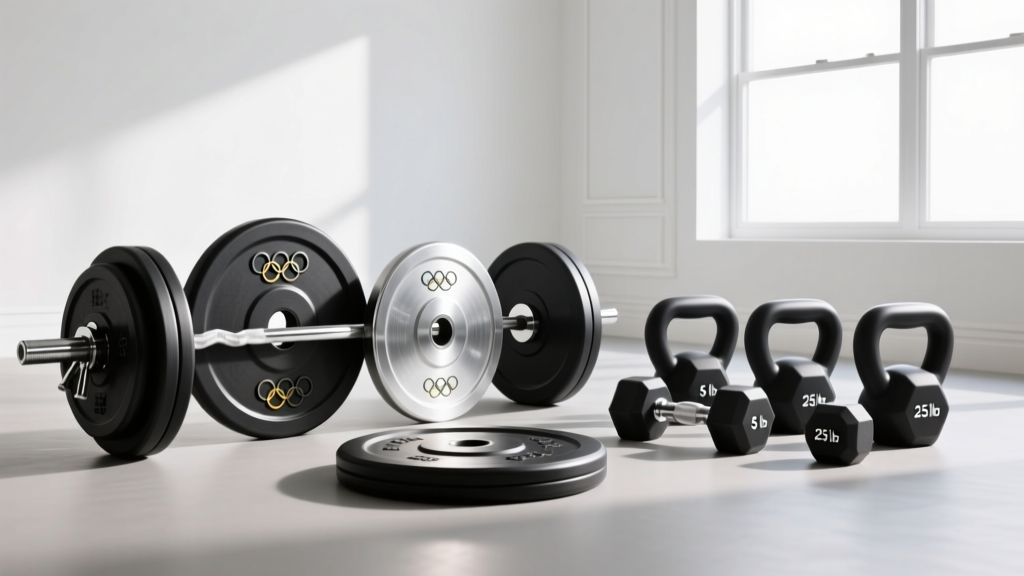
Olympic vs Standard Plates: Plus, What Weight Dumbbells Should I Use?

Olympic vs Standard Plates for Your At Home Dumbbell Arm Workout
