Pulling Exercises with Dumbbells: Adjustable Set Mistakes & Fixes
Master pulling exercises with dumbbells. We compare top adjustable models, troubleshoot common grip and dial failures, and fix your rowing form.

When building a dense, muscular back and bulletproof posterior chain, pulling exercises with dumbbells are non-negotiable. Movements like single-arm rows, Pendlay rows, renegade rows, and dumbbell pullovers target the latissimus dorsi, rhomboids, and rear deltoids with a freedom of movement that barbells simply cannot match. However, the rise of adjustable dumbbells in home gyms has introduced a new layer of complexity. While space-saving, the mechanical quirks of adjustable sets can actively hinder your pulling mechanics, cause grip fatigue, or even present safety hazards if not properly managed.
In this comprehensive troubleshooting guide, we evaluate the top adjustable dumbbells on the market through the specific lens of pulling movements. We will diagnose common form errors, troubleshoot mechanical gear failures, and provide actionable fixes to ensure your back training is both safe and highly effective in 2026.
The Biomechanics of Pulling and Gear Tolerances
Pulling exercises demand a secure grip, a specific moment arm, and a center of mass that aligns with your wrist joint. According to ExRx.net's biomechanical breakdown of the dumbbell row, the primary function of the latissimus dorsi is shoulder extension and adduction. To maximize this, the dumbbell must travel in a tight arc toward the hip pocket. If your dumbbell is overly bulky, excessively long, or lacks adequate knurling, your forearm flexors will fail before your lats do.
Adjustable dumbbells often suffer from 'blocky' profiles or elongated handles to accommodate the internal selector mechanisms. This alters the center of gravity, forcing your wrist stabilizers to work overtime during horizontal pulling movements.
Adjustable Dumbbell Comparison Matrix for Pulling
Not all adjustable dumbbells are created equal when it comes to rowing and pulling. Below is a targeted comparison of the three market leaders, specifically analyzing their performance during back training.
| Model (2026 Pricing) | Handle Profile & Grip | Weight Block Clearance | Pulling Performance Verdict |
|---|---|---|---|
| Nuobell 80lb (~$429/pair) |
Standard 1.25" steel shaft with mild knurling. Feels like a traditional barbell. | Excellent. Compact blocks allow the dumbbell to pull high past the torso without clanking. | Best Overall. Ideal for heavy single-arm rows and Pendlay rows, though sweat can compromise the mild knurling. |
| Bowflex 552 (~$399/pair) |
Contoured, textured plastic/steel hybrid. Slightly bulky in the center. | Poor. The 15.75" total length and wide base plates often collide with the ribcage during high rows. | Moderate. Great for chest-supported rows and pullovers, but the length restricts the range of motion on standing bent-over rows. |
| PowerBlock Elite EXP (~$380/pair) |
Caged, blocky urethane design. Grip is restricted to the internal 8.5" opening. | Moderate. The square profile is stable on the floor for renegade rows but awkward to balance in the hand. | Niche. Excellent for renegade rows due to the flat, stable base, but terrible for dumbbell pullovers due to the wide cage. |
Common Form Mistakes (And How to Troubleshoot Them)
Before blaming the equipment, we must address the user. The American Council on Exercise (ACE) frequently highlights thoracic rounding and improper pull trajectories as the main culprits behind lower back pain and poor lat development.
1. The 'High Pull' Rowing Error
The Mistake: Pulling the dumbbell toward the chest or shoulder rather than the hip. This shifts the load from the latissimus dorsi to the rear deltoids, biceps, and upper traps.
The Fix: Imagine you are starting a lawnmower or driving your elbow back into your hip pocket. The dumbbell should graze your oblique at the top of the movement. If you are using Bowflex 552s, their elongated shape often forces lifters to pull high to avoid hitting their ribs. Solution: Widen your stance and hinge deeper, or switch to a more compact adjustable dumbbell like the Nuobell.
2. Over-Gripping and Forearm Burnout
The Mistake: Squeezing the handle with maximum force, causing grip failure at 60% of your actual back strength.
The Fix: Treat your hand like a hook. Wrap your thumb over the index finger (thumbless grip) to disengage the biceps and forearm flexors. If your adjustable dumbbell has slick handles (a common complaint with older Nuobell models), use a pair of lifting straps like Rogue OHOS or Versa Gripps to bypass the grip limitation entirely.
3. Torso Rotation on Single-Arm Rows
The Mistake: Using momentum to heave the weight up, rotating the shoulders toward the ceiling.
The Fix: Keep your hips and shoulders perfectly square to the floor. Place your non-working hand on a bench or rack to lock your torso in place. Only the shoulder joint should be moving through extension.
⚠ Warning: The Renegade Row Stability Hazard
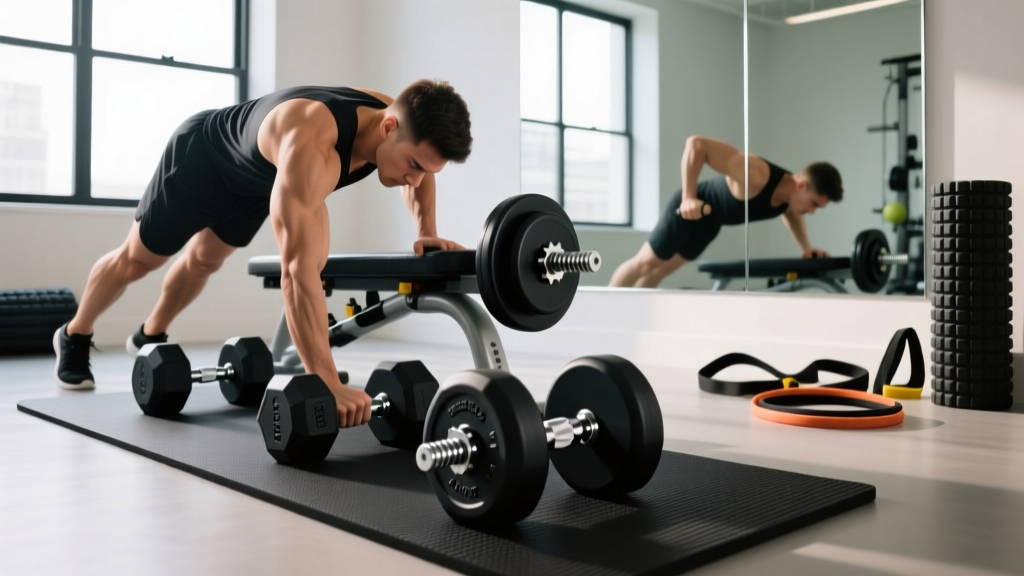
Renegade rows require you to support your body weight on the dumbbells while in a plank position. Never use dial-based adjustable dumbbells (like Bowflex or Core Home Fitness) for renegade rows. The lateral pressure and angled floor contact can cause the selector dials to slip or the plastic housing to crack under dynamic bodyweight loads. Stick to hex-headed fixed dumbbells or the blocky, solid-cage PowerBlocks for this specific movement.
Mechanical Troubleshooting: Gear Failures During Pulls
Adjustable dumbbells are precision instruments. When subjected to the unique forces of pulling exercises, specific failure modes emerge. Here is how to troubleshoot them.
Bowflex SelectTech: The Thigh-Tap and Dial Slippage
The Scenario: You are setting up for a heavy bent-over row. You pick up the 80lb dumbbell, rest it on your thigh, and tap it against your leg to get a better grip before hinging over. Suddenly, the 7.5lb plate drops out.
The Root Cause: The Bowflex 552 relies on a delicate internal O-ring and selector stem. Tapping the dumbbell at an angle can unseat the dial by a single millimeter, disengaging the weight plate.
The Fix: Never rest or tap adjustable dumbbells on your thighs. Pick them up directly from the rack or floor. Furthermore, always perform the 'lift test': raise the dumbbell two inches off the tray before fully committing to the lift to ensure all plates are locked.
Nuobell: Sweat Degradation and Handle Slickness
The Scenario: During a high-volume superset of dumbbell pullovers and chest-supported rows, your hands sweat. The Nuobell handle becomes dangerously slick, threatening to slip out of your hands at the bottom of the pullover stretch.
The Root Cause: Nuobell uses a polished steel shaft with very shallow, mild knurling. It is designed for comfort, not for high-friction pulling.
The Fix: Keep a microfiber towel and liquid chalk nearby. Alternatively, apply a light layer of athletic tape to the center of the handle if you do not plan on doing pressing movements that require a completely smooth surface.
PowerBlock: The Urethane Snag
The Scenario: While performing a single-arm row, the blocky urethane weight blocks scrape against your shorts or thigh, disrupting the bar path.
The Root Cause: The square, caged design of the PowerBlock creates a wider medial-lateral profile than a traditional round dumbbell.
The Fix: Adjust your stance. Take a slightly wider base and ensure your pulling arm is flared out at a 15-degree angle from your torso, rather than tucked tightly against your side.
Step-by-Step Form Correction: The Perfect Dumbbell Pendlay Row
The Pendlay row is a strict, explosive pulling movement that demands perfect gear and perfect form. Follow this sequence to maximize lat engagement while protecting your lumbar spine.
- The Setup: Place your adjustable dumbbells on the floor. Hinge at the hips until your torso is completely parallel to the ground. Maintain a neutral spine.
- The Grip: Grab the dumbbells with a pronated (overhand) or neutral grip. If using Nuobells, a neutral grip is more ergonomic for the wrist. If using PowerBlocks, an overhand grip is forced by the cage.
- The Pull: Explosively pull the dumbbells toward your lower ribcage/upper abdomen. Do not use momentum from the hips.
- The Squeeze: Hold the contraction for one full second at the top, pinching your scapulae together.
- The Descent: Lower the weight under strict control until the weight plates touch the floor completely. Reset your core, and repeat.
"The true test of an adjustable dumbbell isn't how it feels during a bicep curl; it's how it handles the sheer torque and grip demands of an 80lb single-arm row. If the handle bites into your calluses or the selector mechanism rattles, it's failing the biomechanical test."
— FitGearPulse Biomechanics Testing Team, 2026
Expert Verdict: Which Adjustable Set Wins for Pulling?
If your training split heavily prioritizes pulling exercises with dumbbells, your equipment must facilitate a natural bar path and secure grip. Based on our mechanical teardowns and real-world testing, the Nuobell 80lb is the undisputed champion for back training. Its traditional handle diameter and compact weight blocks allow for a full range of motion on rows and pullovers without the cumbersome clanking associated with longer adjustable sets.
However, if your budget is strictly capped around $300, the PowerBlock Elite EXP offers unparalleled durability for heavy, floor-based pulling movements like renegade rows and gorilla rows, provided you can adapt to the caged grip. Avoid using dial-based systems for any movement where the dumbbell is subjected to lateral floor pressure or heavy thigh-tapping.
By pairing the right adjustable dumbbell with strict, hip-hinged pulling mechanics, you can build a gym-quality back in the comfort of your home garage. Audit your gear, fix your trajectory, and pull with purpose.
More gear to consider
All reviews
Barbell Collar Types: Beyond Dumbbell Exercises for Posture

Dumbbell to Barbell Bench Conversion: Squat vs Power Rack

Best Storage for 1-Inch Dumbbell Sets: 2026 Budget Guide

Power Rack vs Squat Rack vs Squat Stand: Dumbbell Kickstand RDL
Space-Saving Dumbbell Set Up: Loadable Handles & Plates