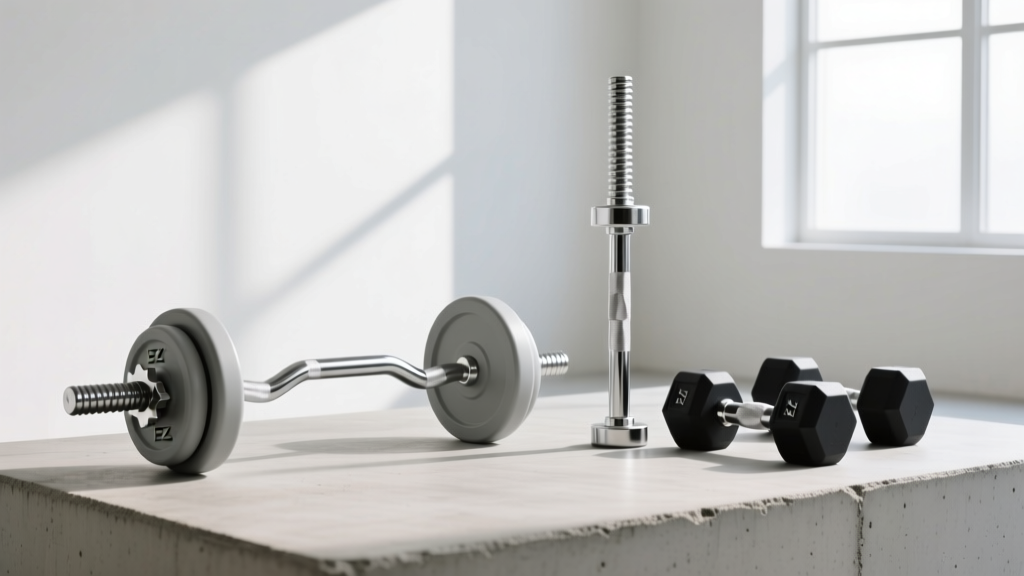
EZ Bar vs Straight Bar: Arms After Great Back Exercises with Dumbbells
Compare EZ curl bar vs straight bar costs, biomechanics, and ROI. Find the ideal arm finisher after great back exercises with dumbbells in your home gym.

The Pull-Day Dilemma: Transitioning from Back to Biceps
When designing the ultimate pull day, most experienced lifters prioritize heavy, unilateral movements. Executing great back exercises with dumbbells—such as chest-supported rows, single-arm Kroc rows, and dumbbell pullovers—builds a thick, wide latissimus dorsi while actively correcting left-to-right strength imbalances. Dumbbells demand immense stabilization, heavily recruiting the rhomboids and rear deltoids. However, once the back is thoroughly pre-exhausted, the biceps brachii require targeted, bilateral isolation to reach true muscular failure safely.
This brings us to a classic home gym equipment dilemma: should you invest your budget in an EZ curl bar or a dedicated short straight bar? In this 2026 budget breakdown and value analysis, we move beyond generic fitness advice to evaluate the true return on investment (ROI) of both implements. We will analyze tensile steel strength, biomechanical joint health, space efficiency, and cost-per-pound to help you decide which barbell deserves a permanent spot on your rack.
The Biomechanical ROI: Wrist Health vs. Peak Contraction
The fundamental difference between the two bars lies in the grip angle and its downstream effect on the elbow and wrist joints. According to biomechanics data cataloged by ExRx, the straight barbell curl forces the forearms into full supination (palms facing directly up). This position maximizes the mechanical tension on the biceps brachii, specifically the short head, yielding a superior 'peak' contraction.
Conversely, the EZ curl bar features angled shafts that place the wrists in a semi-supinated (valgus) position. This slight inward rotation shifts a portion of the load to the brachialis and brachioradialis muscles while significantly reducing torque on the distal radioulnar joint and the medial epicondyle.
⚠️ Ergonomic Warning: If you suffer from golfer's elbow (medial epicondylitis) or possess a high carrying angle (cubitus valgus), the straight bar's forced supination can cause micro-tears in the distal biceps tendon over time. The EZ bar is not just a comfort preference; it is a joint-preservation tool that allows for higher weekly training volume without connective tissue burnout.2026 Budget Breakdown: Cost, Steel Quality, and Value
The home fitness equipment market in 2026 has seen a distinct bifurcation in pricing. Due to ongoing steel tariffs and international shipping surcharges, ultra-cheap imported bars have seen their prices creep up, narrowing the gap with high-quality, direct-to-consumer brands. When evaluating value, we must look past the initial price tag and consider tensile strength (measured in PSI), knurling depth, and sleeve construction. As noted in comprehensive testing by Garage Gym Reviews, a bar with low tensile strength will permanently bend if you start curling heavy loads (80+ lbs) or dropping it onto J-cups.
| Model / Type | 2026 Avg. Price | Tensile Strength | Sleeve / Bushing | Value Rating |
|---|---|---|---|---|
| Titan Fitness Olympic EZ Bar | $99.99 | 190,000 PSI | Bronze Bushings | ⭐⭐⭐⭐⭐ |
| Rogue Fitness Curl Bar | $245.00 | 190,000 PSI | Composite Bushings | ⭐⭐⭐⭐ |
| Titan Short Bar (Straight, 47') | $65.00 | 165,000 PSI | Bronze Bushings | ⭐⭐⭐⭐ |
| CAP Barbell Standard EZ (1-inch) | $35.00 | Unrated / Low | Solid Pin / No Spin | ⭐ |
The Value Takeaway: The Titan Olympic EZ bar offers the highest ROI in 2026. At $99.99, it provides near-elite tensile strength and smooth bronze bushings, outperforming standard 1-inch bars that pose a severe bending risk under heavy loads. The Rogue bar is exceptional but carries a 145% price premium that is difficult to justify strictly for isolation work.
Space, Storage, and Plate Compatibility
When outfitting a home gym, square footage is a hidden cost. A standard 7-foot Olympic straight barbell requires massive lateral clearance and is cumbersome to store on a small apartment balcony or compact garage rack.
- Dedicated Short Straight Bars (47 inches): These fit perfectly inside standard power racks and wall-mounted hangers. They accept standard 2-inch Olympic plates, allowing you to use the same bumper or cast-iron plates you use for your heavy dumbbell back exercises and squats.
- Olympic EZ Curl Bars (typically 47-50 inches): Similar footprint to the short bar, but the angled shafts can sometimes catch on closely spaced J-hooks if you attempt to use them for front squats or landmine presses (a common secondary use for straight short bars).
- Standard 1-Inch Bars: While cheap and lightweight, they require a separate set of 1-inch hole plates. Buying duplicate plate sets destroys any initial budget savings and clutters your weight storage tree.
Real-World Failure Modes and Edge Cases
Budgeting for a bar isn't just about the steel; it's about the hardware that holds the plates. Based on NSCA equipment safety guidelines and long-term user reports, here are the failure modes you must avoid:
1. Spinlock Collars vs. Spring Clips
Many budget EZ bars utilize threaded ends with spinlock collars. During high-rep drop sets or strict preacher curls, the rotational torque of the weight plates can cause spinlocks to loosen mid-set, resulting in a plate sliding off the sleeve—a major safety hazard. Solution: Only buy bars with standard 2-inch Olympic sleeves that accept modern spring clips or lock-jaw collars.
2. Sleeve Spin and Bushing Wear
When curling heavy, the plates naturally want to rotate around the sleeve. If the bar uses cheap plastic bushings or lacks bushings entirely (solid pin), the rotational friction transfers directly to your wrists, exacerbating joint strain. Bronze or composite bushings absorb this rotational force, ensuring the bar moves smoothly through the curl's concentric and eccentric phases.
3. Aggressive vs. Passive Knurling
Because your grip is already taxed from heavy dumbbell rows, a bar with overly aggressive 'volcano' knurling will tear your calluses during high-rep bicep work. Look for a bar with moderate, passive knurling specifically designed for high-rep arm isolation.
Programming Synergy: The Dumbbell-to-Barbell Pipeline
To maximize the value of your equipment, structure your pull days to leverage the unique strengths of both implements. Here is a highly effective 2026 hypertrophy protocol:
- Primary Back Overload (Dumbbells): Heavy Single-Arm Dumbbell Rows (4 sets of 6-8 reps). Dumbbells allow for a deep stretch at the bottom and a natural arc that a barbell cannot replicate, maximizing lat engagement.
- Secondary Back/Posterior Chain (Dumbbells): Chest-Supported Dumbbell Rear Delt Flyes (3 sets of 12-15 reps).
- Bicep Pre-Exhaust (EZ Bar): Strict EZ Bar Curls (3 sets of 10-12 reps). The semi-supinated grip saves your wrists after they have spent 40 minutes stabilizing heavy dumbbells.
- Bicep Peak Finisher (Short Straight Bar or Dumbbells): Cross-Body Hammer Curls or Straight Bar Preacher Curls to absolute failure, utilizing rest-pause techniques.
Final Verdict: Which Offers Better Long-Term Value?
If your budget is strictly capped and you can only purchase one dedicated arm bar to complement your dumbbell back workouts, the Olympic EZ Curl Bar is the undisputed value champion in 2026.
While the straight bar offers a marginally higher biceps peak contraction, the long-term risk of medial epicondyle strain and wrist impingement makes it a poor investment for the average home gym lifter who trains without a physical therapist on standby. A high-quality 190k PSI Olympic EZ bar (like the Titan or Bells of Steel models) costs roughly $100, uses your existing Olympic plates, saves rack space, and ensures your joints remain healthy enough to continue executing those heavy, muscle-building dumbbell back exercises for decades to come.
More gear to consider
All reviews
Budget Racks to Store Gear for Full Back Workouts With Dumbbells

Cast Iron vs Competition Kettlebells & Bicep Dumbbell Value
Space-Saving Dumbbell Racks for a Dumbbell Stability Ball Workout
Best Dumbbells for an At Home Tricep Workout: Rubber Hex vs Urethane
Complete Home Gym Setup for Dumbbell Leg Exercises