150kg Dumbbell Set Storage: Bumper vs Iron Plates
Optimize your home gym layout. We compare bumper vs iron plates and 150kg dumbbell set storage to maximize floor space and rack efficiency.

The Spatial Dilemma: Heavy Dumbbells and Plate Selection
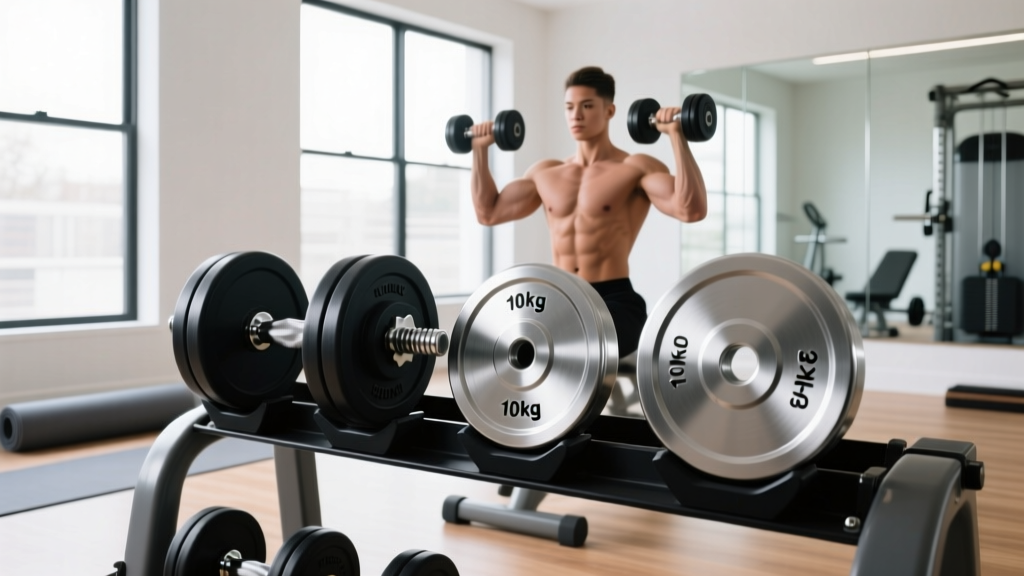
When outfitting a high-capacity home gym or commercial garage facility, space is the ultimate bottleneck. Integrating a massive 150kg dumbbell setup—whether that refers to a paired 75kg adjustable system like the Nuobell 80kg sets or a specialized 150kg strongman implement—alongside a traditional Olympic barbell forces a critical reevaluation of your floor plan. You are no longer just buying equipment; you are buying geometry. The decision between stocking your racks with bumper plates or traditional cast iron plates fundamentally alters your storage footprint, your barbell sleeve capacity, and your required drop zones.
In this comprehensive layout guide, we analyze the exact spatial dimensions, storage requirements, and failure modes associated with heavy dumbbell cradles and plate selection. By understanding the physical tolerances of your gear, you can design a highly optimized layout that maximizes usable square footage without compromising safety or training efficacy.
Quick Space Metric Summary:• Standard Olympic Sleeve: 415mm usable length.
• Iron 20kg Plate Thickness: ~25.4mm (Allows ~14 plates per side).
• Bumper 20kg Plate Thickness: ~55mm (Allows ~7 plates per side).
• 150kg Dumbbell Cradle Footprint: ~65cm x 35cm per unit.
Footprint Analysis: 150kg Dumbbell Cradles vs. Plate Trees
Before addressing the barbell plates, we must account for the anchor points of your heavy free weights. A standard adjustable dumbbell set topping out at 40kg requires a relatively compact cradle. However, when you scale up to a 150kg dumbbell pair (75kg per hand), the physical dimensions of the storage cradle expand dramatically to accommodate the wider, denser internal mechanisms and heavier outer casings.
The 150kg Dumbbell Factor
Heavy-duty adjustable dumbbell cradle typically demand a floor footprint of roughly 65cm long by 35cm wide per unit. If placed side-by-side on a shared bench or rack shelf, you are looking at a continuous rectangular dead-zone of approximately 130cm x 35cm. According to equipment layout analyses by Garage Gym Reviews, failing to account for the lateral clearance needed to physically grip and lift a 75kg adjustable dumbbell out of its cradle often results in knuckle-scraping against adjacent racks or walls. You must allocate a minimum of 20cm of lateral 'air space' on either side of the cradle for safe extraction.
Bumper Plates vs. Iron Plates: The Spatial Showdown
Once the dumbbell zone is mapped, the barbell storage becomes the next spatial puzzle. The choice between bumper plates and iron plates is rarely just about noise or dropping weight; it is a strict mathematical equation regarding horizontal volume.
1. Thickness and Sleeve Real Estate
Cast iron plates are incredibly dense. A premium machined iron 20kg plate, such as those detailed in Rogue Fitness specifications, measures roughly 25.4mm (1 inch) thick. This allows you to load upwards of 280kg onto a standard barbell sleeve while still leaving room for a collar. Conversely, a standard 20kg rubber bumper plate measures approximately 55mm thick. If you are chasing heavy barbell rows or squats that overlap with your 150kg dumbbell work, bumpers will consume your sleeve space more than twice as fast, forcing you to buy specialized longer-sleeve bars or limiting your max load.
2. Storage Tree Horn Lengths
This is where most home gym owners experience a critical spatial failure. Standard weight trees feature 16-inch (406mm) storage horns. Because iron plates are thin, a 16-inch horn can easily hold 300kg of iron. Bumper plates, however, are thick and feature wide steel hub inserts. If you slide 200kg of bumpers onto a 16-inch horn, the plates will extend past the metal, causing the horn to dig into the rubber matrix of the outermost plate, eventually destroying the plate hub. Bumper plates require 20-inch to 24-inch horns, which increases the overall depth of your weight tree by up to 8 inches, pushing it further into your walking pathways.
| Feature | Machined Iron Plates | Standard Bumper Plates |
|---|---|---|
| 20kg Plate Thickness | ~25.4mm (1.0") | ~55.0mm (2.16") |
| Min. Storage Horn Length | 16 inches (406mm) | 20+ inches (508mm) |
| Max Load per Sleeve | ~320kg | ~150kg |
| Vertical A-Frame Compatibility | Poor (Too thin, slip off) | Excellent (Uniform diameter) |
| Drop Zone Requirement | Strictly on platform (High impact) | Forgiving (Can roll off platform) |
Layout Framework: Designing the 3m x 3m Gym Zone
When integrating a 150kg dumbbell set and a barbell station into a standard 3m x 3m (approx. 10x10 feet) room, every centimeter matters. The International Weightlifting Federation (IWF) mandates strict diameter tolerances for competition plates, as noted in Eleiko's technical manuals, meaning all bumpers share a 450mm diameter regardless of weight. This uniform geometry allows for vertical A-frame storage, which is a massive spatial hack for tight rooms.
Step-by-Step Zone Mapping
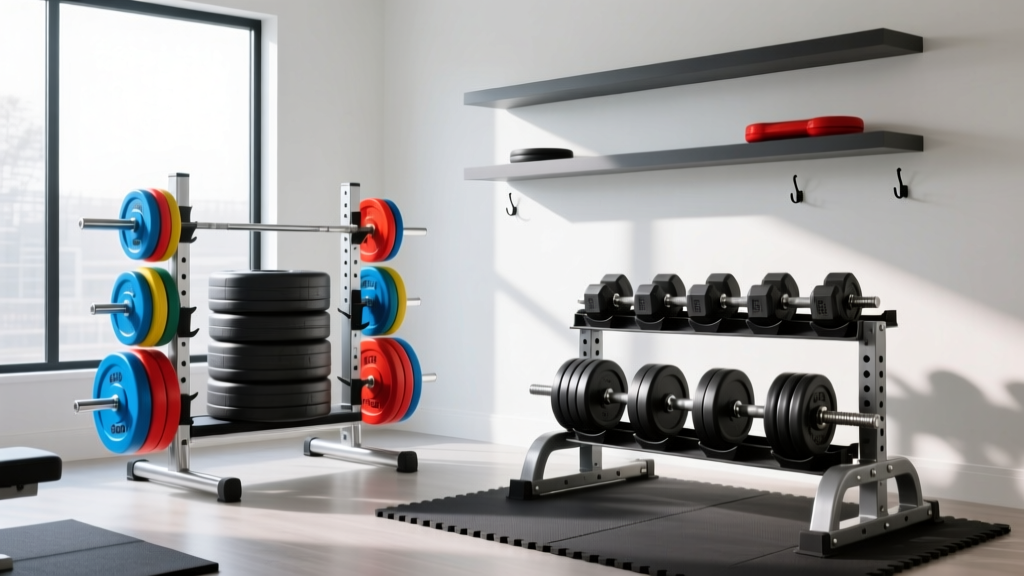
- Zone 1: The Vertical A-Frame (Corner Placement): Instead of a traditional horizontal weight tree that juts out 3 feet into the room, use a vertical A-frame bumper plate rack placed flush in a corner. This reduces the storage footprint from 9 square feet to just 4 square feet.
- Zone 2: The Dumbbell Cradle Shelf: Mount your 150kg dumbbell cradles on the uprights of your power rack at knee height (approx. 45cm off the floor). This eliminates the need for a freestanding dumbbell bench, instantly freeing up 130cm x 35cm of floor space in the center of the room.
- Zone 3: The Barbell Drop Corridor: If using iron plates, your barbell must remain strictly over a reinforced dropping platform to prevent concrete spalling. Bumpers allow the bar to drift slightly off the platform during heavy deadlift fatigue, meaning you can reduce your platform width from the standard 2.4m down to 1.8m, giving you an extra 60cm of lateral walking space.
Edge Cases and Failure Modes in Tight Spaces
Space optimization is not just about making things fit; it is about preventing catastrophic failure modes that occur when equipment is crammed too tightly together.
The Weight Tree Tipping Hazard
Because bumper plates are significantly thicker, they sit further away from the central spine of a weight tree when loaded heavily. This shifts the center of gravity outward. If you are storing a full set of bumpers on a lightweight, commercial-style tree with a narrow base, the tree becomes highly susceptible to tipping forward when you pull a 20kg plate off the top horn. Solution: If spatial constraints force you to use a horizontal tree for bumpers, you must bolt the tree base to the floor or choose a tree with an extended 30-inch rear stabilizer bar.
Acoustic Spatial Bleed
Space optimization also involves acoustic management. Iron plates clanking together generate high-frequency acoustic energy that easily penetrates drywall and travels through floor joists, limiting your gym to detached garages or basements. Bumper plates absorb this high-frequency impact. If your spatial layout places the gym adjacent to shared living spaces, bumpers are mandatory, despite their larger storage footprint.
"The biggest mistake advanced lifters make is buying a 150kg dumbbell set and a full suite of iron plates without measuring their barbell sleeve and tree horn depth. They end up with plates that don't fit on the bar and a tree that destroys their rubber bumpers. Always map your hardware tolerances before mapping your floor plan."
Final Verdict: Choosing Your Spatial Strategy
If your primary goal is absolute maximum weight capacity on the barbell and minimizing the horizontal depth of your storage racks, machined iron plates are the undisputed champions of spatial efficiency. They allow you to store more weight in a tighter footprint and leave your barbell sleeves wide open for heavy loading.
However, if your 150kg dumbbell training involves high-volume drop sets, or if your spatial layout lacks a dedicated, reinforced drop zone for deadlifts, bumper plates are required. To mitigate their spatial bloat, you must abandon traditional horizontal weight trees in favor of vertical A-frames or wall-mounted plate pegs, ensuring your gym remains a functional training environment rather than a cluttered storage unit.
More gear to consider
All reviews
Best Adjustable Dumbbells for a Rear Deltoid Workout With Dumbbells

Senior Dumbbell Storage & Seated Dumbbell Exercises for Seniors PDF Guide
Is It Possible to Do 1000 Dumbbell Reps? Barbell Weight & Knurling

Space-Saving Supported Dumbbell Row: Loadable Dumbbell Guide

What Size Dumbbells Should I Start With? Neoprene Home Pitfalls