
Therabody Prime Massage Gun Maintenance: Percussion vs Vibration
Learn how percussion vs vibration therapy impacts mechanical wear, and discover essential maintenance tips to maximize your Therabody Prime massage gun's lifespan.

The recovery technology market is saturated with handheld devices, but a critical biomechanical distinction separates elite tools from entry-level gadgets: percussion therapy vs vibration therapy. Understanding this difference is not just about optimizing your muscle recovery; it is the foundational key to maintaining your device. If you own the Therabody Prime massage gun, you are wielding a true high-amplitude percussion device. Treating it like a standard vibration massager is the fastest way to degrade its internal components, strip its gears, and void its warranty.
In this comprehensive maintenance guide, we break down the mechanical realities of true percussion versus surface vibration, and provide an expert-level, actionable maintenance protocol to ensure your Therabody Prime operates at peak torque for years to come.
The Mechanics: True Percussion vs. Surface Vibration
To maintain your device, you must first understand the forces acting upon its internal drivetrain. The distinction between percussion and vibration dictates the type of motor used, the stress placed on the bearings, and the heat generated during a 15-minute recovery session.
True Percussion (The Therabody Prime Architecture)
The Therabody Prime utilizes a high-torque, brushless DC motor paired with a precision linear drive shaft. This setup delivers a true 16mm amplitude (the depth the attachment travels into the muscle) and up to 30 lbs of no-stall force. The motor is designed to push deep into dense fascial tissue without bogging down. This requires heavy-duty internal gearing and a robust linear bearing system that can handle immense repetitive axial (forward-and-back) stress.
Surface Vibration (ERM and LRA Motors)
Conversely, devices marketed as 'vibration therapy' tools typically use Eccentric Rotating Mass (ERM) motors or Linear Resonant Actuators (LRA). These devices rely on spinning an off-center weight to create a high-frequency, shallow buzz (usually 8mm to 10mm amplitude). While they can reach high RPMs (up to 3,200 PPM), they possess very low stall force (often under 15 lbs). The mechanical stress here is radial (side-to-side vibration) rather than axial (linear punching).
Expert Insight: 'Applying heavy downward pressure to a vibration-based device will instantly stall an ERM motor, causing heat buildup and bearing failure. The Therabody Prime is engineered to absorb that downward pressure, but its linear drive shaft requires specific care to prevent lateral misalignment over time.'
How Motor Type Dictates Your Maintenance Protocol
Because the Therabody Prime generates true percussive force, its maintenance needs are vastly different from those of a vibration tool. Here is how to care for the specific stress points of a high-torque percussion motor.
1. Protecting the Linear Drive Shaft from Lateral Torque
The most common failure mode in true percussion guns is drive shaft bending. This occurs when users treat the Prime like a vibration tool by 'scrubbing' or dragging the attachment laterally across the skin while applying heavy downward pressure. Vibration tools can handle this because their attachments are often fixed or dampened. The Prime’s exposed stainless steel shaft, however, is designed strictly for linear, perpendicular force.
⚠️ CRITICAL WARNING: Avoid Lateral TorqueNever drag the Therabody Prime sideways across your skin while the motor is engaged under heavy pressure. Always lift the device slightly to reposition, or glide only with the lightest touch. Lateral force bends the internal linear bearings, leading to a permanent 'rattling' sound and eventual motor seizure.
2. Managing High-Torque Battery Degradation
Delivering 30 lbs of stall force requires massive current draw from the Prime’s internal 12V Lithium-ion battery pack. When you push the device to its maximum depth and stall force, the battery experiences 'voltage sag' and increased thermal output. According to research on lithium-ion longevity from Battery University, high-amperage draws combined with heat are the primary catalysts for permanent capacity loss in Li-ion cells.
Actionable Battery Care:
- The 20-80 Rule: Avoid draining the Prime to 0%. Recharge the device when it hits 20%, and unplug it around 80-90% for daily use to minimize micro-cycling stress on the cells.
- Cooldown Periods: If you use the Prime on its highest speed (2400 PPM) with deep pressure for 15 minutes, allow the device to rest at room temperature for 10 minutes before plugging it in. Charging a hot battery accelerates chemical degradation.
- Storage Voltage: If you are storing the Prime for more than a month (e.g., during an off-season), leave the battery at approximately 50% charge. Storing a fully charged Li-ion battery under high tension degrades its total lifespan.
Comparison Matrix: Wear and Tear Patterns
Understanding how your device wears compared to vibration alternatives helps you anticipate maintenance needs. Below is a structural comparison of true percussion vs. vibration therapy devices.
| Feature | True Percussion (Therabody Prime) | Surface Vibration (Generic ERM Tools) |
|---|---|---|
| Primary Stress Vector | Axial (Linear forward/backward) | Radial (Side-to-side shaking) |
| Drive Shaft Vulnerability | High (Susceptible to lateral bending) | Low (Often no exposed linear shaft) |
| Battery Drain Profile | High amperage spikes under stall load | Steady, low-amperage continuous draw |
| Attachment Wear | O-ring and snap-band degradation | Adhesive or screw-thread loosening |
| Expected Lifespan | 3-5+ years (with strict maintenance) | 1-2 years (ERM bearing failure) |
Step-by-Step Therabody Prime Maintenance Routine
To protect your $199–$249 investment, implement this 5-minute bi-weekly maintenance routine. The National Academy of Sports Medicine frequently highlights that recovery modalities are only effective if the equipment is hygienic and mechanically sound.
- Sanitize the Stainless Steel Shaft: Sweat, massage oils, and dead skin cells accumulate on the exposed metal shaft. This debris creates friction, forcing the motor to work harder and generating excess heat. Wipe the shaft with a microfiber cloth lightly dampened with 70% isopropyl alcohol. Never use bleach or abrasive cleaners, which can pit the metal.
- Inspect the Attachment O-Rings: The Prime uses a friction-fit attachment system. Over time, the rubber O-rings inside the attachment heads can dry out or crack, leading to a loose fit and a 'clacking' sound during use. If an attachment feels loose, apply a microscopic dab of silicone grease to the O-ring to restore the seal and dampen vibration noise.
- Clear the Air Vents: The Prime’s QX35 motor relies on passive airflow through the side vents to cool the internal stator. Use a can of compressed air (held upright to avoid liquid propellant spray) to blow out dust and lint from the venting grilles every 30 days.
- Verify Firmware Calibration: Connect your Prime to the Therabody app via Bluetooth. Therabody periodically releases firmware updates that optimize the motor controller’s thermal management and stall-detection algorithms. Running outdated firmware can cause the motor to push past safe thermal limits during heavy use.
Troubleshooting Common Percussion Failure Modes
Even with meticulous care, high-torque percussion devices can exhibit warning signs. Here is how to diagnose issues before they become catastrophic failures.
The 'Rattling' Noise
If your Prime develops a metallic rattle, users often assume the internal gears are stripping. In 90% of cases, this is actually caused by attachment misalignment or a worn O-ring allowing the plastic attachment head to vibrate against the metal shaft. Swap to a brand-new attachment head. If the rattle persists without an attachment installed, the internal linear bearing has suffered lateral damage, and the unit requires warranty service.
Premature Stalling
The Therabody Prime is rated for 30 lbs of no-stall force. If the device stalls when you apply only moderate pressure, the issue is rarely the motor itself; it is almost always battery voltage sag. If the battery has been repeatedly drained to 0% and exposed to high heat, its internal resistance increases. The battery can no longer deliver the peak amperage required to maintain torque, triggering the Prime's internal safety shutoff to prevent motor burnout. In this scenario, the battery requires professional replacement.
Expert Verdict on Longevity
The debate between percussion therapy vs vibration therapy ultimately comes down to your recovery goals and your willingness to maintain the equipment. Vibration tools are low-maintenance, low-torque devices suited for light neurological stimulation. The Therabody Prime massage gun is a high-performance, deep-tissue percussive instrument. By respecting its linear drivetrain, managing its lithium-ion chemistry, and avoiding lateral torque, you will easily extend its operational lifespan well beyond the standard 2-year warranty window, ensuring your recovery protocol remains effective for years to come.
More gear to consider
All reviews
Sauna Blanket vs Panel: Beyond Your Massage Gun Attachments Guide
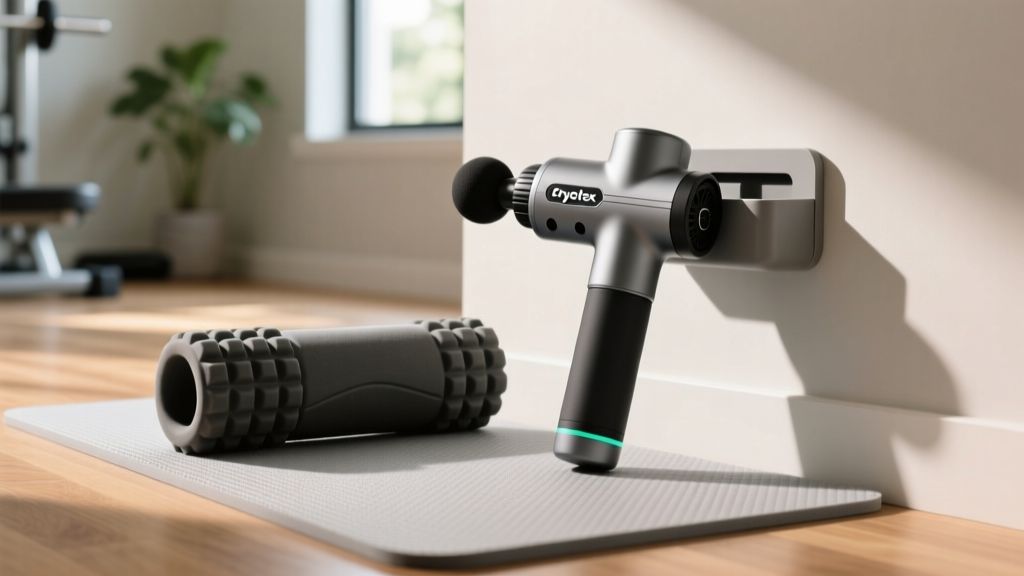
Cryotex Massage Gun Review: Is This Budget Recovery Gear Worth It?

Where to Use Massage Gun for Sciatica: 2026 Buying Guide

Home Cold Plunges & Recovery: Can a Massage Gun Help With Cellulite?

Theragun vs Hyperice: Recovery Tool USB Stick & Care
