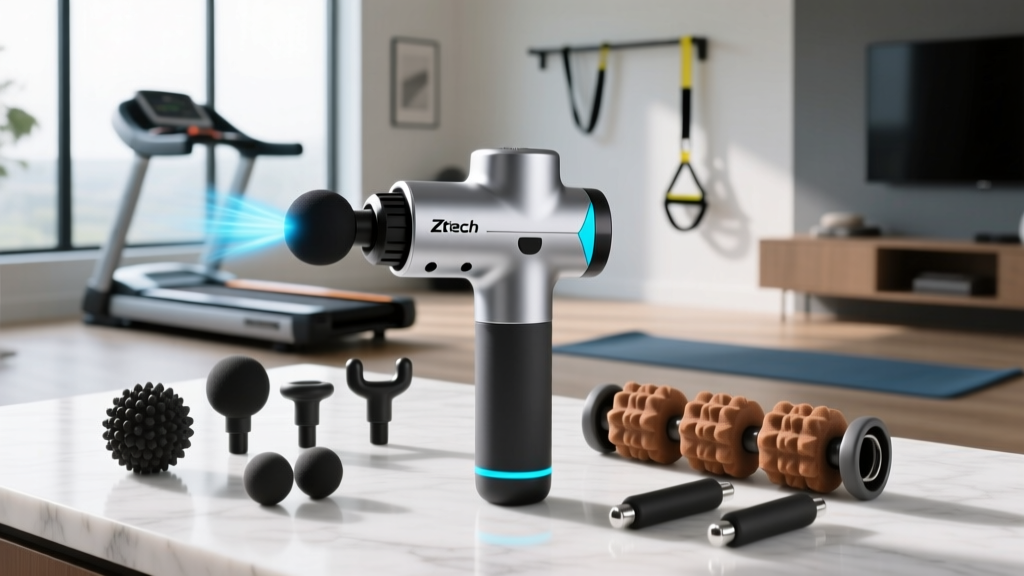
Mastering Massage Guns: 2026 Comparison & Buyer's Guide
Master your recovery with our 2026 massage gun comparison guide. We test top models from Theragun, Hyperice, and Ekrin for stall force, amplitude, and value.

The Evolution of Percussive Therapy in 2026
Mastering massage guns requires moving beyond the superficial marketing hype that dominated the early 2020s. As of 2026, percussive therapy has matured from a trendy novelty into a clinically validated recovery modality. The market is now saturated with hundreds of models, making it increasingly difficult to distinguish between professional-grade biomechanical tools and overpriced novelty items. Whether you are an elite powerlifter managing central nervous system fatigue or a weekend warrior dealing with delayed onset muscle soreness (DOMS), understanding the exact specifications of your recovery equipment is non-negotiable.
According to research published in PLOS ONE, localized vibration and percussive therapy significantly mitigate DOMS and temporarily increase range of motion by altering the viscoelastic properties of the fascia. However, these clinical benefits are entirely dependent on two critical hardware metrics: amplitude and stall force. This guide strips away the jargon and provides a rigorous, data-driven comparison of the top-tier massage guns available this year.
Quick Summary: 2026 Top Picks
- Best Overall Biomechanics: Theragun PRO Plus ($599)
- Best Smart-Tech Integration: Hyperice Hypervolt 2 Pro ($399)
- Best Ergonomic Value: Ekrin Athletics B37S ($229)
- Best for Travel/Carry-On: Bob and Brad C2 ($99)
The Science of Specs: Amplitude vs. Stall Force
Before evaluating specific brands, you must understand the physics of percussive therapy. The American Council on Exercise (ACE) notes that the efficacy of a massage gun relies on its ability to deliver force deep into the muscle belly without the motor choking under pressure.
1. Amplitude (Stroke Depth)
Amplitude dictates how far the massage head travels back and forth. Standard consumer models offer 10mm to 12mm of amplitude, which primarily stimulates surface-level mechanoreceptors. Professional-grade devices deliver 14mm to 16mm. This deeper stroke is required to physically manipulate dense muscle tissue and thick fascial layers, mimicking the deep tissue pressure of a human thumb.
2. Stall Force (Torque)
Stall force is the amount of pressure (measured in pounds) you can apply to the device before the motor stops. A weak motor with a 20 lb stall force will choke if you press it firmly into a dense quad or glute. Elite athletes and physical therapists require a minimum of 40 lbs of stall force, with top-tier 2026 models pushing 60 lbs.
2026 Flagship Massage Gun Comparison Matrix
The following table breaks down the exact hardware specifications of the market leaders. Note that RPM (Revolutions Per Minute) is less critical than amplitude; a slower device with deeper amplitude will outperform a faster, shallower device for deep tissue recovery.
| Model | Amplitude | Stall Force | Max RPM | Weight | Price (2026) |
|---|---|---|---|---|---|
| Theragun PRO Plus | 16 mm | 60 lbs | 2400 | 2.8 lbs | $599 |
| Hyperice Hypervolt 2 Pro | 14 mm | 35 lbs | 3200 | 2.6 lbs | $399 |
| Ekrin Athletics B37S | 12 mm | 56 lbs | 3200 | 2.4 lbs | $229 |
| Bob and Brad C2 | 10 mm | 35 lbs | 3200 | 1.5 lbs | $99 |
Deep Dive: Top Contenders Analyzed
Theragun PRO Plus: The Biomechanical Heavyweight
Therabody continues to dominate the premium tier with the PRO Plus. Its defining feature is the 16mm amplitude, which remains the deepest in the consumer market. This allows the device to bypass superficial nerve endings and target deep muscle bellies, such as the tensor fasciae latae (TFL) or deep hip rotators. The proprietary triangular ergonomic handle reduces wrist strain by allowing multiple grip positions, which is critical when treating your own posterior chain. The integrated OLED screen and Bluetooth connectivity allow for guided routines, though the $599 price tag restricts it to serious athletes and clinical professionals.
Hyperice Hypervolt 2 Pro: The High-Frequency Specialist
While Theragun focuses on depth, Hyperice focuses on speed and acoustics. The Hypervolt 2 Pro utilizes QuietGlide technology, making it significantly quieter than the Theragun (measuring around 55 decibels at max speed compared to the Theragun's 65 decibels). Its 14mm amplitude is a solid middle ground, but its ability to reach 3200 RPM makes it exceptional for neurological stimulation and pre-workout priming. The brushless high-torque motor is highly reliable, though the straight-handle design can cause wrist fatigue during extended self-administered sessions on the back or hamstrings.
Ekrin Athletics B37S: The Ergonomic Value Champion
Ekrin has carved out a massive niche by offering 90% of the performance of flagship models at half the price. The B37S features a unique 15-degree angled handle, which drastically improves the biomechanical leverage when reaching the mid-back or contralateral shoulder. While its 12mm amplitude falls short of the Theragun for deep tissue work, its massive 56 lb stall force means the motor will never choke, even when a physical therapist applies heavy downward pressure. Priced at $229, it is the most logical choice for CrossFit athletes and amateur powerlifters.
Attachment Head Biomechanics: Beyond the Standard Ball
A common mistake among beginners is relying exclusively on the standard EVA foam ball attachment. Mastering percussive therapy requires matching the attachment geometry to the target tissue architecture.
- Dampener (Flat Head): Best for bony areas, the spine, and highly sensitive regions. It disperses force over a wider surface area, reducing the peak pressure per square inch.
- Cone (Bullet): Designed for pinpoint trigger point therapy. Use this on the plantar fascia, the TFL, or specific scalene trigger points in the neck. Warning: Never use the cone attachment directly on the spinal column or major arteries.
- Wedge (Fork): The wedge is engineered to scrape and flush the IT band, Achilles tendon, and paraspinal muscles. Its dual-pronged design allows you to treat the muscle belly while avoiding direct percussion on the spine or bone ridges.
Battery Chemistry and Long-Term Degradation
As we evaluate equipment in 2026, battery longevity is a primary concern. Most budget massage guns utilize standard 18650 lithium-ion cells, which degrade noticeably after 300 charge cycles, leading to voltage drops that reduce the motor's stall force. Premium models like the Theragun PRO Plus and Hypervolt 2 Pro utilize advanced 21700 lithium-ion cells paired with smart battery management systems (BMS). These larger cells run cooler and maintain consistent voltage output, ensuring the stall force remains at factory specs for over 800 cycles. If you plan to use your device daily, investing in a model with a user-replaceable battery (like the Theragun) is a crucial long-term financial decision.
A 4-Step Decision Framework for Buyers
- Assess Your Tissue Density: If you are a heavyweight lifter or have dense, fibrotic tissue, prioritize stall force (40+ lbs) and amplitude (14mm+). If you are a runner or endurance athlete focusing on blood flow and flushing, prioritize higher RPMs and lighter weight.
- Evaluate Your Mobility Needs: Will you be treating yourself, or will a physical therapist use it on you? Self-treatment requires an ergonomic, angled, or triangular handle to prevent wrist extension injuries. Therapist-administered treatment prioritizes raw motor torque over handle shape.
- Consider the Acoustic Environment: If you share a living space, work late nights, or operate in a quiet clinical setting, the decibel output matters. Hyperice and Ekrin lead the market in acoustic dampening.
- Verify the Warranty and Ecosystem: Look for a minimum 2-year warranty on the motor. Brands like Ekrin offer lifetime warranties, which completely mitigates the risk of planned obsolescence.
"Percussive therapy is not a replacement for active loading and progressive tissue adaptation. It is a neuromodulatory tool designed to temporarily down-regulate pain signals and improve localized perfusion. Use it to facilitate movement, not to replace it." — Current Consensus in Sports Physiotherapy (Source: NCBI)
Frequently Asked Questions (FAQ)
Can a massage gun cause tissue damage if used incorrectly?
Yes. Applying high-amplitude percussion directly over bony prominences, the anterior neck (carotid sinus), or acute muscle tears can cause severe bruising, nerve impingement, or exacerbation of the injury. Always keep the device moving and avoid lingering on a single spot for more than 15-20 seconds.
Is it worth paying $600 for a Theragun over a $100 Amazon alternative?
It depends on your use case. A $100 alternative will provide superficial vibration that feels good and increases local blood flow. However, it lacks the 16mm amplitude and 60 lb stall force required to physically manipulate deep fascial restrictions. For clinical professionals and elite athletes, the premium is justified by the biomechanical efficacy and battery longevity.
How often should I use a massage gun for optimal recovery?
For post-workout DOMS mitigation, a 5-to-10-minute full-body sweep immediately following training is optimal. For targeted mobility work (e.g., loosening tight hip flexors before a heavy squat session), 60 seconds per specific muscle group is sufficient to trigger Golgi tendon organ autogenic inhibition without causing tissue fatigue.
More gear to consider
All reviews
Can You Use a Massage Gun on Your Neck? 2026 Cupping Trends
8 Head Massage Gun vs Trigger Point Balls: 2026 Value Breakdown

Home Cold Plunge & Ice Bath Care: Protecting Your Massage Gun Head

Massage Gun for Foot vs Trigger Point Tools: 2026 Budget Analysis
Massage Gun Dildo Trend: Safe Pelvic Stretching Tools