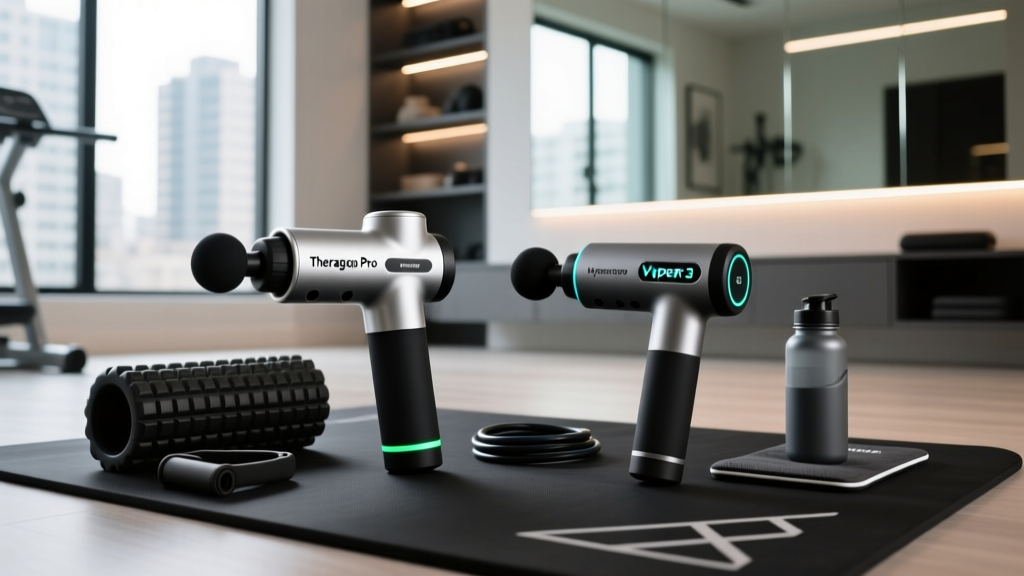
Theragun vs Hyperice Value: Where Not to Use a Massage Gun
Compare Theragun vs Hyperice value in 2026. We break down costs, ROI, and critical safety rules on where not to use a massage gun to avoid injury.

The Premium Recovery Investment: Theragun vs. Hyperice in 2026
When evaluating the top-tier percussive therapy market, the debate almost always narrows down to two titans: Therabody and Hyperice. With flagship models like the Theragun PRO Plus and the Hyperice Hypervolt 2 Pro hovering around the $550 to $600 mark, these are not impulse purchases. They are calculated investments in your biomechanical longevity. However, maximizing the return on investment (ROI) for these premium devices requires more than just understanding stall force and amplitude; it requires strict adherence to safety protocols. Knowing exactly where not to use a massage gun is the first step in protecting both your physical health and your financial investment from the costly fallout of preventable injuries.
⚠️ The Golden Rule of Percussive ROI
A $600 recovery tool loses all its value if it lands you in a physical therapist's office. Percussive therapy is highly effective for myofascial release, but it is fundamentally a blunt-force modality. Misapplication on vulnerable anatomical structures can cause nerve damage, vascular issues, or exacerbated tissue tearing.
The Danger Zones: Where Not to Use a Massage Gun
Before we break down the financial value of Theragun versus Hyperice, we must establish the operational boundaries of the hardware. According to guidelines referenced by the American Physical Therapy Association, percussive devices should only be applied to the belly of the muscle. Here is the precise anatomical breakdown of where you must never apply a massage gun:
- The Anterior Neck (Carotid Triangle): Never apply a massage gun to the front or sides of your neck. The carotid artery and vagus nerve sit superficially here. Percussive force can trigger a vasovagal response (causing fainting) or, in extreme cases, arterial dissection.
- The Popliteal Fossa (Back of the Knee): This shallow depression contains the popliteal artery, popliteal vein, and tibial nerve. Striking this area with 60 lbs of stall force can lead to severe nerve compression or vascular trauma.
- The Axilla (Armpit): The brachial plexus—a network of nerves that sends signals from your spine to your shoulder, arm, and hand—is highly exposed here. Direct percussion can cause radiating nerve pain and temporary limb numbness.
- Directly on the Spine and Bony Prominences: Massage guns are designed for soft tissue. Striking the spinous processes of the vertebrae, the collarbone, or the elbow joints will not relieve pain; it will cause severe bruising and potential periosteal (bone membrane) inflammation.
- Acute Muscle Tears and Strains: If you have just suffered a sharp, acute muscle tear (Grade 2 or 3), percussive therapy will increase localized bleeding and disrupt the initial clotting and healing cascade. Stick to gentle, active recovery and consult a physician.
Theragun vs. Hyperice: 2026 Value Matrix
With safety parameters established, let us analyze the hardware. The Theragun PRO Plus and the Hyperice Hypervolt 2 Pro represent the pinnacle of consumer percussive therapy. Below is a side-by-side value matrix based on current 2026 specifications and market pricing.
| Feature / Metric | Theragun PRO Plus | Hyperice Hypervolt 2 Pro |
|---|---|---|
| MSRP | $599 | $549 |
| Amplitude (Depth) | 16mm | 14mm |
| Stall Force | 60 lbs | 60 lbs |
| Speeds | 5 (1750-2400 PPM) | 5 (Variable up to 2700 PPM) |
| Ergonomics | Triangle Grip (Multi-hand) | Straight Handle (Traditional) |
| Smart Integration | Bluetooth, OLED Screen, App | Bluetooth, App, Pressure Sensor |
| Warranty | 1-Year Limited | 1-Year Limited |
Budget Breakdown: Hidden Costs of Ownership
The sticker price is only the entry fee into these recovery ecosystems. A true value analysis must account for the total cost of ownership over a standard 3-year lifespan.
The Therabody Ecosystem Tax
Therabody positions itself as a premium lifestyle brand, and its pricing reflects that. While the Theragun PRO Plus comes with 6 attachments and a premium carrying case, replacement attachments are notably expensive. A single replacement dampener or cone attachment can cost between $35 and $50. Furthermore, while the basic Therabody app is free, advanced guided routines and specialized recovery protocols are occasionally gated behind their premium wellness subscription tiers, adding a potential $120 to $150 annual cost if you opt into the software side of their ecosystem.
The Hyperice Multi-Device Advantage
Hyperice approaches value through cross-device integration. The Hypervolt 2 Pro is $50 cheaper upfront than the PRO Plus. More importantly, the Hyperice app ecosystem is entirely free and seamlessly integrates with their other recovery lines, like the Normatec compression boots and Venom heat wraps. If you are building a comprehensive recovery suite, Hyperice offers better bundle pricing and unified software control, effectively lowering the marginal cost of adding percussive therapy to an existing Hyperice setup.
Cost-Per-Use Analysis: When Does It Pay Off?
To justify a $550+ expenditure, we must compare it to the alternative: professional soft tissue work. According to industry data tracked by the American Council on Exercise, regular sports massage is a staple for elite and amateur athletes alike.
A standard 60-minute sports massage session in 2026 averages between $120 and $180, depending on your metropolitan area.
If you utilize your massage gun just three times a week for 15-minute targeted sessions (the clinically recommended maximum duration per muscle group to avoid over-stimulation), you are replacing roughly one professional massage every two weeks.
The Break-Even Point: At $150 per professional session, the Theragun PRO Plus ($599) pays for itself in exactly 4 professional massage sessions. If you are an endurance athlete, CrossFit competitor, or heavy lifter who requires weekly myofascial release, the ROI on either flagship device is achieved within the first 6 to 8 weeks of ownership.
Biomechanical Nuance: 16mm vs. 14mm Amplitude
Value is also dictated by how well the tool matches your specific tissue density. This is where the amplitude specification becomes a critical decision matrix.
- Theragun (16mm Amplitude): The extra 2mm of depth allows the PRO Plus to bypass superficial fascia and reach deeper muscle bellies, such as the gluteus maximus, deep hip rotators, and thick hamstring complexes. If you are a powerlifter or have dense, hypertrophied muscle tissue, the Theragun delivers superior clinical value.
- Hyperice (14mm Amplitude): The Hypervolt 2 Pro’s slightly shallower stroke, combined with its higher maximum percussion rate (up to 2700 PPM), makes it exceptional for neurological priming, lymphatic flushing, and treating thinner muscle groups like the calves, forearms, and upper trapezius. It is also generally preferred by runners and cyclists who prioritize rapid recovery over deep-tissue demolition.
Final Verdict: Matching Your Budget to Your Biomechanics
Both the Theragun PRO Plus and the Hyperice Hypervolt 2 Pro are engineering marvels that will reliably accelerate recovery—provided you respect the anatomical boundaries of where not to use a massage gun.
Choose the Theragun PRO Plus ($599) if you require maximum depth penetration for thick muscle groups, prefer a multi-grip ergonomic handle for self-administration on hard-to-reach back muscles, and do not mind paying a premium for brand prestige and heavy-duty metal internal components.
Choose the Hyperice Hypervolt 2 Pro ($549) if you prioritize a quieter motor (QuietForce technology makes it noticeably more discreet for office or gym-bag use), prefer a traditional grip, and plan to integrate the device into a broader ecosystem of Normatec or Venom recovery tools.
Frequently Asked Questions
Can I use a massage gun on my lower back?
You can use it on the thick musculature of the lower back, such as the erector spinae and quadratus lumborum, using a soft dampener attachment on a low speed. However, you must absolutely avoid the spine itself, the kidneys (flank area), and the bony crest of the pelvis. If you have a history of herniated discs or sciatica, consult a physical therapist before applying percussive force to the lumbar region.
How long should I use a massage gun on a single muscle?
Clinical studies published in the Journal of Sports Science & Medicine suggest that 2 to 3 minutes per muscle group is the optimal window for increasing localized blood flow and temporarily improving range of motion. Exceeding 5 minutes on a single area can lead to tissue desensitization, excessive localized inflammation, and delayed onset muscle soreness (DOMS) exacerbation.
Is it safe to use a massage gun on DOMS?
Yes, but with caution. Using a massage gun on mild to moderate Delayed Onset Muscle Soreness (24-48 hours post-workout) can help modulate pain signals via the gate control theory of pain. Keep the device on a low speed, use a broad attachment like the dampener, and gently glide over the area without applying heavy downward pressure. Let the weight of the machine do the work.
More gear to consider
All reviews
Massage Gun Masturbate Risks: Misuses & Foam Roller Density Guide
Trigger Point Tools & Massage Gun for Tight Calf Muscles: Space Guide

Cupping for Athletes vs Massage Gun During Labor Recovery

Normatec vs Hyperice Recovery Boots: The 2026 Comparison Guide

Smart Heat Pad vs Wrap: Surface Hub Recovery Tool
