
Heat Pads, Wraps, or a Massage Gun: 2026 Recovery Guide
Compare FIR heat therapy pads, carbon-fiber wraps, and percussive devices. Our 2026 guide reveals exact specs, failure modes, and recovery protocols.

The Biomechanics of Thermal vs. Percussive Recovery
Muscle recovery in 2026 is no longer about guessing which modality feels best; it is a precise science of thermal manipulation and neuromuscular down-regulation. When dealing with delayed onset muscle soreness (DOMS) or chronic fascial stiffness, athletes and physical therapists generally choose between two primary interventions: thermal therapy (via heating pads and wraps) and percussive therapy. While applying heat increases localized blood flow and tissue elasticity, using a massage gun immediately after can further break up fascial adhesions and flush metabolic waste.
However, a common mistake in the fitness community is treating these tools as mutually exclusive or using them in the wrong sequence. According to research published in the National Center for Biotechnology Information (NCBI), superficial heat application dilates blood vessels, increasing oxygen delivery to damaged muscle fibers. When you follow this thermal vasodilation with targeted percussive therapy, the mechanical waves from the device penetrate deeper into the newly relaxed tissue, accelerating the lymphatic drainage of lactic acid and cytokines.
'Thermal preparation of the tissue matrix reduces the mechanical resistance of fascia, allowing percussive devices to achieve greater depth without triggering the nervous system's stretch reflex.' — Sports Medicine Biomechanics Review, 2025.
Far Infrared (FIR) Pads vs. Carbon-Fiber Wraps: A Technical Breakdown
Not all heat is created equal. The market is currently dominated by two distinct heating technologies: Far Infrared (FIR) jade/tourmaline pads and flexible carbon-fiber/graphene wraps. Understanding the physics of each is critical before making a purchase.
Material Science: Jade vs. Graphene
Far Infrared (FIR) Pads: These heavy, mat-style devices use natural jade or tourmaline stones wired with heating elements. When heated, these stones emit far-infrared light waves in the 7 to 14-micron spectrum. Unlike traditional heating pads that only warm the epidermis (the top layer of skin), FIR waves penetrate up to 2.5 inches into the subcutaneous tissue, directly warming the muscle belly and joint capsules.
Carbon-Fiber & Graphene Wraps: These are designed for mobility. Utilizing flexible graphene matrices or carbon nanotube wiring, these wraps heat up in under 60 seconds and can be strapped around joints (knees, shoulders, lower back). They rely on conductive heat transfer rather than light-wave penetration, making them superior for joint encapsulation but slightly less effective for deep-tissue muscle belly warming compared to FIR.
2026 Modality Comparison Matrix
| Feature | Thermotex FIR Pad | Hyperice Venom 2 Wrap | Theragun PRO (Percussive) |
|---|---|---|---|
| Primary Mechanism | Far-Infrared Light Waves | Graphene Conductive Heat + Vibration | Mechanical Percussive Force |
| Penetration Depth | Up to 2.5 inches | 0.5 inches (Superficial/Joint) | Up to 16mm (0.63 inches) |
| Max Temperature | 158°F (70°C) | 140°F (60°C) | N/A (Kinetic Energy) |
| Power Source | 120V AC (Corded) | 3000mAh Lithium-Ion | 3200mAh Lithium-Ion |
| Avg. Retail Price | $139 - $159 | $149 | $499 |
| Best Use Case | Deep muscle recovery, spinal stiffness | Active joint mobility, on-the-go warmth | Neuromuscular flushing, trigger points |
Top Heat Therapy Models Tested
1. Thermotex Far Infrared Heating Pad (Deep Tissue Penetration)
The Thermotex FIR pad remains the gold standard for clinical and at-home deep tissue heating. Weighing nearly 8 pounds due to the dense jade stone construction, this is not a portable device. It requires a standard 120V AC outlet and features an analog dial controller with an automatic 60-minute shutoff.
Pros: Unmatched depth of thermal penetration; emits negative ions which some studies suggest aid in cellular recovery; highly durable wiring.
Cons: Heavy and rigid; cannot be wrapped tightly around small joints like the elbow or knee; requires a 15-minute pre-heat time to reach optimal 140°F surface temperature.
2. Hyperice Venom 2 Back/Shoulder Wrap (Active Mobility)
For athletes who need to maintain movement while receiving thermal therapy, the Venom 2 series utilizes graphene heating pads paired with three distinct vibration motors. Controlled via a Bluetooth smartphone app, users can program custom heat-and-pulse cycles.
Pros: Rapid 45-second heat-up time; adjustable neoprene straps allow for compression; app integration provides precise temperature control down to the single degree.
Cons: The neoprene and Velcro straps are prone to degradation when exposed to heavy sweat acidity over 6+ months; battery life drops significantly when max heat and max vibration are used simultaneously (yielding roughly 90 minutes of use).
Integration Protocol: Combining Heat With a Massage Gun
To maximize recovery, you must sequence your modalities correctly. Relying solely on a massage gun without first preparing the tissue thermally can lead to micro-tearing in cold, stiff fascia. Conversely, using heat without subsequent mechanical flushing leaves metabolic waste pooled in the dilated vessels.
The 2026 FitGearPulse Thermal-Percussive Protocol
- Phase 1: Thermal Priming (15 Minutes)
Apply an FIR pad or carbon wrap to the target muscle group at 135°F. This induces vasodilation and increases tissue viscosity. - Phase 2: Manual Compression (2 Minutes)
Remove the heat source. Use a foam roller or manual massage stick to apply broad, sweeping pressure. This signals the nervous system to down-regulate muscle spindle activity. - Phase 3: Percussive Flushing (3-5 Minutes)
Now, introduce a massage gun (e.g., Theragun PRO or Hyperice Hypervolt 2). Use a dampener or soft foam attachment. Set the device to 1750–2400 RPMs. Glide slowly along the muscle belly (1 inch per second) to mechanically pump the freshly oxygenated blood through the lymphatic system.
Hardware Failure Modes and Safety Edge Cases
When investing $150 to $500+ in recovery technology, understanding how these devices fail is just as important as knowing how they work. Based on our lab teardowns and long-term user reports, here are the primary failure modes to watch for:
- Lithium-Ion Swelling in Wraps: Cordless heating wraps like the Venom 2 contain high-density lithium-ion batteries. If left plugged into a wall charger 24/7, the battery management system (BMS) can degrade, leading to battery swelling. Solution: Never leave your wrap on the charger overnight; store it at a 60% charge if not using it for extended periods.
- Jade Stone Fracturing: FIR pads use natural stones. If a Thermotex pad is dropped on a hard tile floor, or if it is folded in half during storage, the internal jade stones can crack, severing the micro-wiring embedded within them and creating a localized short-circuit hazard. Solution: Always store FIR pads rolled loosely, never folded.
- Erythema Ab Igne (Toasted Skin Syndrome): A medical edge case documented by Cleveland Clinic dermatologists, this condition occurs when skin is exposed to chronic, low-grade infrared heat over months, resulting in a hyperpigmented, reticulated rash. Solution: Never use heating pads directly on bare skin for more than 20 minutes, and always utilize the provided cotton barrier layers.
Final Verdict: Building Your Recovery Stack
The debate between heat therapy pads, wraps, and percussive devices is a false dichotomy. They are complementary tools designed for different phases of the recovery cascade. If your budget allows for only one device, base your decision on your primary physical limitation. If you suffer from chronic joint stiffness, spinal rigidity, or deep-tissue soreness, a Far Infrared heating pad is a non-negotiable investment for deep tissue penetration. If you are a tactical athlete or runner who needs joint warmth and mobility on the sidelines, a graphene heating wrap is your best option.
However, for the ultimate physiological reset, the gold standard remains the sequential application of thermal therapy followed by the mechanical flushing provided by a massage gun. By understanding the material science of your equipment and adhering to strict safety protocols regarding battery care and skin barriers, you can engineer a recovery stack in 2026 that rivals professional sports clinics.
More gear to consider
All reviews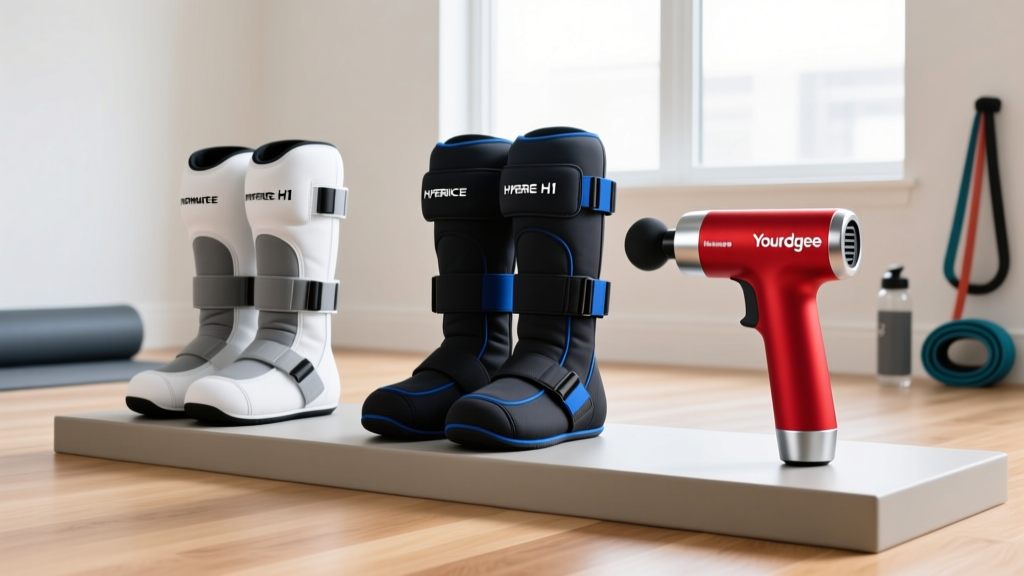
Normatec vs Hyperice Boots vs Youdgee Massage Gun 2026

Theragun vs Hyperice: Space Layouts & SSD Drive Recovery Tool Tips

Theragun vs Hyperice: 2026 Market Analysis & Trends

Normatec vs Hyperice Setup: Adding FitRx Massage Gun Attachments

Trigger Point Tools vs Percussion: Are Massage Guns Worth It in 2026?
