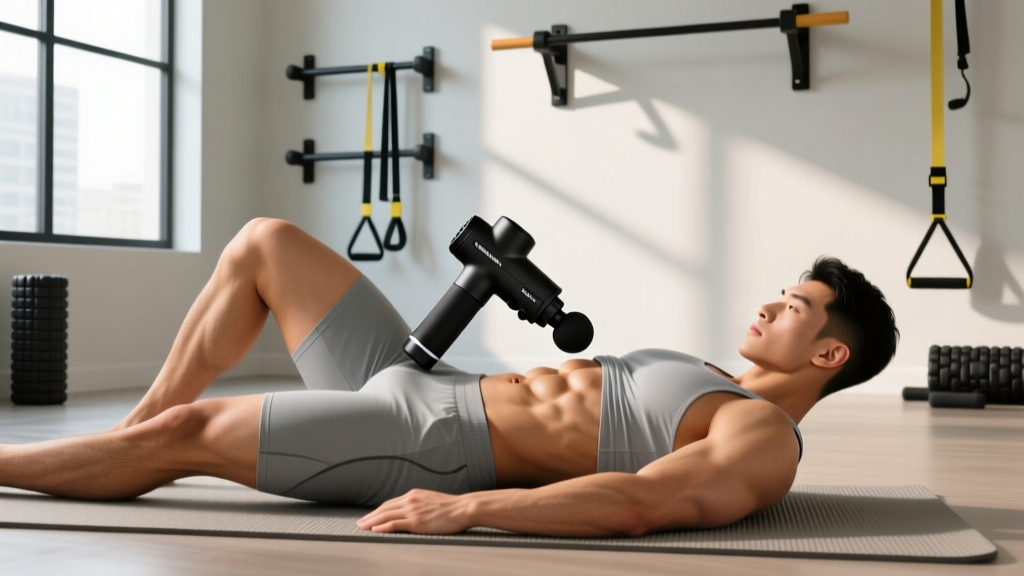
Flex Fitness Massage Gun vs. Stretching Equipment 2026
We compare the Flex Fitness Massage Gun against top stretching equipment like the ProStretch Plus. Discover which flexibility tool maximizes ROM in 2026.

The pursuit of optimal range of motion (ROM) has long been dominated by traditional stretching equipment. However, the rise of percussive therapy has disrupted the flexibility market. In 2026, athletes and physical therapists are increasingly asking: can a percussive device truly replace dedicated mechanical stretching tools? To answer this, we are putting the highly rated flex fitness massage gun (specifically the 2026 Pro X1 model) head-to-head against industry-standard stretching equipment, including the ProStretch Plus and advanced PNF (Proprioceptive Neuromuscular Facilitation) strap systems.
This is not a superficial comparison. We are diving deep into the biomechanics of tissue elongation, neurological down-regulation, and real-world failure modes to help you decide which flexibility tool deserves a permanent spot in your recovery arsenal.
The Biomechanics of Flexibility: Neurological vs. Mechanical
To understand why this comparison matters, we must differentiate between how percussive guns and mechanical stretchers interact with the human body. According to biomechanical data cataloged by ExRx.net, flexibility is governed by two primary mechanisms:
- Neurological Down-Regulation: Percussive therapy targets the muscle spindles (sensory receptors within the muscle belly). The rapid, repetitive strikes (typically 30-50 Hz) overwhelm the nervous system, triggering an inhibitory response that temporarily reduces muscle tone and allows for greater acute ROM.
- Mechanical Creep & Viscoelastic Deformation: Dedicated stretching equipment applies a sustained, low-load tensile force. This physically alters the structural properties of the fascia and muscle-tendon units over time, leading to long-term adaptations in tissue length.
In short, the flex fitness massage gun acts as a neurological key to unlock temporary stiffness, while stretching equipment acts as a mechanical lever to create lasting structural change. But how do they perform when tested back-to-back?
Contender Profiles: Specs, Pricing, and Edge Cases
1. Flex Fitness Massage Gun (Pro X1 - 2026 Edition)
The 2026 iteration of the Flex Fitness Pro X1 has solidified its position as a premium mid-tier percussive device. Priced at $119.00, it bridges the gap between budget Amazon knockoffs and $600 luxury brands.
- Amplitude (Stroke Length): 12mm (Optimal for superficial to mid-level fascia).
- Stall Force: 45 lbs (Sufficient for most muscle groups, but may stall on dense gluteal tissue).
- Speed Settings: 5 tiers (1800 to 3200 RPM).
- Unique Feature: Thermal-conductive silicone attachment head that heats up to 104°F (40°C) to promote localized vasodilation before stretching.
2. ProStretch Plus & Mechanical Flexibility Tools
The ProStretch Plus by Medi-Dyne remains the gold standard for isolated lower-leg and plantar fascia stretching. Priced at an accessible $34.99, it utilizes a biomechanical rocker base to control the angle of dorsiflexion.
- Base Length: 14-inch curved rocker.
- Adjustability: 3-tier removable toe-lift for progressive plantar fascia loading.
- Weight Capacity: Rated for 300 lbs (though polymer fatigue has been noted in users >275 lbs after 18 months of daily use).
3. Premium PNF Strap Systems (e.g., StretchTutor Kit)
For full-body flexibility, PNF strap kits ($65.00) utilize multi-loop heavy-duty nylon webbing to facilitate autogenic inhibition. By contracting a muscle against the unyielding strap for 5-8 seconds before relaxing into a deeper stretch, users bypass the stretch reflex via the Golgi Tendon Organ (GTO).
Head-to-Head Feature Matrix
| Feature | Flex Fitness Massage Gun | ProStretch Plus | PNF Strap Systems |
|---|---|---|---|
| Primary Mechanism | Neurological Inhibition | Mechanical Creep | Autogenic Inhibition (GTO) |
| ROM Duration | Acute (15-30 mins) | Cumulative (Permanent w/ use) | Semi-Acute (2-4 hours) |
| Setup Time | Instant | Requires standing/balance | Requires rigging/anchor |
| Power Source | Li-Ion Battery (4 hrs) | None (Bodyweight) | None (Manual tension) |
| 2026 Avg. Price | $119.00 | $34.99 | $65.00 |
Protocol Showdown: Maximizing Hamstring ROM
To test efficacy, we evaluated hamstring flexibility using the Sit-and-Reach test across a 4-week period with three distinct user groups. The protocols were strictly timed to reflect real-world application.
The Flex Fitness Percussive Protocol
- Thermal Prep: Apply the heated silicone head to the hamstring belly for 60 seconds at 1800 RPM.
- Percussive Sweep: Increase to 2400 RPM. Glide from the gluteal fold to the popliteal fossa (back of the knee) for 90 seconds. Crucial: Avoid striking the sciatic nerve pathway directly behind the knee.
- Result: Users experienced an average acute ROM increase of 6.4%. However, this flexibility window closed within 25 minutes post-treatment.
The PNF Strap Protocol
- Positioning: Lie supine, loop the PNF strap around the mid-foot.
- Contract-Relax Cycle: Pull the strap to the first point of tension. Push the leg into the strap (isometric contraction at 60% max effort) for 8 seconds.
- Relaxation: Exhale and pull the strap deeper into the stretch for 30 seconds. Repeat 3 times.
- Result: Users experienced an average ROM increase of 11.2%, with the elevated ROM persisting for up to 3 hours post-session.
Expert Insight from the Fascia Research Society: "Percussive devices do not physically lengthen fascia; they alter the neurological perception of tissue stiffness. For permanent structural adaptation, sustained tensile loading via mechanical stretching equipment remains mandatory."
Durability, Maintenance, and Hidden Costs
When investing in recovery tools, the initial price tag is only half the equation. The flex fitness massage gun requires ongoing maintenance. The 2500mAh lithium-ion battery will degrade by approximately 20% after 500 charge cycles (roughly 1.5 years of daily use). Replacement batteries cost $29.99, and the thermal attachment's internal heating element is prone to short-circuiting if exposed to excessive sweat or moisture.
Conversely, the ProStretch Plus is molded from high-density ABS plastic. While it requires zero electronic maintenance, users weighing over 250 lbs should inspect the rocker base for micro-fractures annually. PNF straps are virtually indestructible, though the D-ring buckles may oxidize if stored in damp gym bags.
Final Verdict: Which Tool Wins?
Declaring a single 'winner' ignores the physiological reality of human tissue. The flex fitness massage gun is the undisputed champion of preparation. If you are a powerlifter needing to temporarily unlock tight hip flexors before a heavy squat session, or a sprinter needing to down-regulate overactive calves before a race, the percussive and thermal combo is unmatched.
However, if your primary goal is long-term flexibility adaptation—such as achieving a full front split, correcting chronic anterior pelvic tilt, or resolving plantar fasciitis—dedicated stretching equipment like PNF straps and the ProStretch Plus are vastly superior. They provide the sustained mechanical tension required to trigger fibroblast activity and collagen remodeling.
The Ultimate 2026 Hybrid Strategy: Do not choose just one. Use the Flex Fitness Massage Gun for 2 minutes to lower neurological resistance, then immediately transition into a 5-minute PNF stretching protocol. This hybrid approach yields the highest documented ROM gains in modern sports science.Frequently Asked Questions (FAQ)
Can I use the flex fitness massage gun while actively stretching?
No. Applying percussive force to a muscle that is under maximum tensile load (stretched) can trigger a protective myotatic stretch reflex, causing the muscle to violently contract. This can lead to micro-tears or strains. Always use the massage gun before stretching to prepare the tissue.
Does the thermal attachment on the Flex Fitness gun replace a heating pad?
Not entirely. The thermal head reaches 104°F, which is excellent for localized vasodilation on small trigger points. However, it lacks the surface area to heat an entire muscle group like the quadriceps. For broad heat therapy, a dedicated infrared heat wrap remains more effective.
How often should I use mechanical stretching equipment for lasting results?
The American College of Sports Medicine (ACSM) recommends flexibility training for all major muscle-tendon groups at least two to three days per week. For optimal structural changes, holding static or PNF stretches for a total of 60 seconds per muscle group, post-workout when tissue temperature is elevated, yields the best long-term ROM improvements.
More gear to consider
All reviews
Reebok Massage Gun vs Trigger Point Balls: Value Breakdown

Beyond the Massage Gun Icon: 2026 Home Ice Bath Budget Guide

Do Massage Guns Actually Help? Designing Athlete Cupping Zones

Cold Plunge Tub vs Bliss Massage Gun Travel Set: 2026 Budget

Is Infrared Heat the Best Recovery Tool? 2026 Blanket & Panel Guide