
Foam Roller Types & Massage Gun Usage Guide for 2026
Explore our 2026 foam roller density guide and massage gun usage guide. Compare materials, sizes, and hybrid recovery protocols for optimal muscle relief.

The 2026 Recovery Stack: Myofascial Release Market Shifts
The at-home recovery equipment market has undergone a radical transformation over the last five years. While percussive therapy devices dominated the early 2020s, the 2026 landscape is defined by the 'hybrid recovery stack'—a strategic combination of traditional compressive tools and targeted percussive technology. According to recent industry analyses tracked by the National Strength and Conditioning Association (NSCA), elite athletes and physical therapists now rarely rely on a single modality. Instead, they sequence tools based on tissue depth and neurological response. This shift has elevated the humble foam roller from a generic gym accessory to a highly engineered, material-specific tool that must be paired correctly with percussive devices. In this comprehensive trend report, we break down the definitive foam roller types, density, and size guide, while seamlessly integrating a modern massage gun usage guide to help you build a scientifically backed, cost-effective recovery arsenal.
Comprehensive Foam Roller Types, Density, and Size Guide
Before investing in high-tech recovery gear, it is critical to understand the biomechanical role of cylindrical compression. Foam rollers provide broad, sustained myofascial release, promoting parasympathetic nervous system down-regulation and global blood flow. However, not all rollers are created equal. The market is currently segmented by material density, structural core, and geometric surface area.
The Density Spectrum: Material Science and Compression Rates
Choosing the wrong density is the leading cause of user abandonment and tissue bruising. In 2026, manufacturers categorize rollers into three primary material tiers:
- Soft / Low-Density (EVA Foam): Crafted from closed-cell Ethylene-Vinyl Acetate, these rollers feature a compression density of 20 to 30 kg/m³. They are ideal for beginners, acute injury rehabilitation, and sensitive areas like the cervical spine or IT band. Market Price: $15 to $25. Lifespan: 6 to 9 months before structural 'pancaking' occurs under heavy loads.
- Medium / Standard-Density (EPP Foam): Expanded Polypropylene is bead-fused, offering a resilient 45 kg/m³ density that handles up to 300 lbs of direct pressure without permanent deformation. This is the gold standard for daily maintenance on the quadriceps, calves, and latissimus dorsi. Market Price: $20 to $40. Lifespan: 2 to 3 years.
- Firm / High-Density (ABS Core with EVA Shell): Pioneered by the TriggerPoint GRID, this design utilizes a rigid Acrylonitrile Butadiene Styrene (ABS) plastic hollow core wrapped in varying densities of EVA foam. This prevents the roller from flattening over time and allows for multi-directional surface zones that mimic a massage therapist's thumb and palm. Market Price: $45 to $75. Lifespan: 5+ years.
Size and Geometry: Matching Dimensions to Biomechanics
Dimension selection dictates the tool's utility. The 36-inch by 6-inch roller remains the clinical standard for full-spine extension, Pilates integration, and bilateral quad rolling. However, the 2026 market trend heavily favors the 12-inch to 18-inch travel models (typically 4 to 5.5 inches in diameter). These compact sizes allow for precise, unilateral targeting of the gluteus medius and TFL (tensor fasciae latae) without the cumbersome footprint of a full-length roller. Furthermore, vibrating rollers, such as the Hyperice Vyper 3.0 ($229), have captured a 15% market share in the premium segment by combining broad compression with localized 200Hz vibratory analgesia, effectively overriding pain receptors during deep tissue work.
| Material / Core | Density (kg/m³) | Best Use Case | Avg. Cost | Degradation Timeline |
|---|---|---|---|---|
| Pure EVA (Soft) | 20 - 30 | Rehab, Spine, IT Band | $18 | 6 - 9 Months |
| Pure EPP (Medium) | 40 - 50 | Daily Flushing, Calves | $28 | 24 - 36 Months |
| ABS Core + EVA | Variable (Firm) | Deep Trigger Point, Glutes | $55 | 5+ Years |
| Vibrating Core | Variable + Tech | Neurological Override | $229 | Battery dependent |
Integrating Percussive Therapy: A Modern Massage Gun Usage Guide
While foam rollers excel at global tissue flushing and parasympathetic down-regulation, they lack the focal depth required to break up localized adhesions or target deep intrinsic muscles like the piriformis. This is where percussive therapy bridges the gap. A proper massage gun usage guide must emphasize amplitude (stroke depth) and stall force (pressure tolerance) rather than just speed (PPM).
In 2026, top-tier devices like the Theragun PRO Plus ($599) offer a 16mm amplitude and 60 lbs of stall force, capable of reaching deep fascial layers without stalling the motor. Conversely, the Hyperice Hypervolt 2 Pro ($399) provides a 14mm amplitude with a 40 lb stall force, favoring a quieter, more surface-level flushing experience. Understanding how to sequence these tools with your foam roller is the cornerstone of modern sports science recovery.
Protocol Timing: The Flush and Target Method
According to research indexed in the National Center for Biotechnology Information (PubMed) database, sequencing matters. Applying broad compression before focal percussion yields superior tissue pliability. Follow this 10-minute hybrid protocol post-training:
- Phase 1: Global Flush (Foam Roller, 3 Minutes): Use a medium-density EPP roller on the target muscle group (e.g., hamstrings). Roll at a slow pace of 1 inch per second. Do not pause on trigger points yet; the goal is to increase local tissue temperature and promote vasodilation.
- Phase 2: Focal Targeting (Massage Gun, 4 Minutes): Switch to your percussive device. Equip a dampener or soft ball attachment. Set the device to 1750 PPM. Apply the massage gun directly to the localized knots identified during Phase 1, holding for 15 to 30 seconds per adhesion. The 16mm amplitude will mechanically disrupt cross-linked collagen fibers that the roller merely compressed.
- Phase 3: Active Mobilization (2 Minutes): Immediately following the hybrid release, perform active range-of-motion exercises (e.g., deep bodyweight squats or walking lunges) to encode the newly acquired tissue length into your neuromuscular system.
Troubleshooting Edge Cases and Failure Modes
- Nerve Tingling During Percussion: If you experience a 'zinging' or numb sensation while using a massage gun on the neck or inner thigh, you are striking a superficial nerve plexus. Immediately reduce the amplitude by switching to a flat head attachment, lower the speed to 1200 PPM, and angle the device away from the neurovascular bundle.
- Roller 'Pancaking': If your EVA foam roller has lost its cylindrical shape and features permanent flat spots, it has exceeded its compressive yield strength. Continuing to use a deformed roller creates uneven shear forces on the fascia. Replace it with an EPP or ABS-core model immediately.
- Bruising Post-Rolling: Bruising indicates capillary damage from excessive localized pressure. You are likely using a roller that is too firm for your current tissue tolerance, or spending more than the recommended 90 seconds on a single trigger point. Downgrade to a soft-density roller and limit focal holds to 30 seconds.
Market Analysis: Cost-Benefit and Depreciation
From a financial perspective, building a hybrid recovery stack requires understanding asset depreciation. A premium percussive device like the Theragun PRO Plus represents a high upfront capital expenditure ($599), but its modular motor design and 2-year warranty offer a low cost-per-use over a 5-year lifespan, assuming regular firmware updates and battery care. Conversely, foam rollers are consumable goods. A $20 EVA roller used daily by a 200 lb athlete will require replacement twice a year, resulting in a hidden recurring cost of $40 annually. Investing $55 in an ABS-core grid roller upfront eliminates this recurring expense, freeing up capital for percussive therapy attachments or specialized recovery supplements. The American Council on Exercise (ACE) consistently recommends prioritizing durable, multi-density tools for home gyms to ensure long-term adherence to mobility routines.
Authoritative Citations and Further Reading
To further explore the clinical efficacy of myofascial release and percussive therapy, consult the following authoritative resources:
- PubMed / National Center for Biotechnology Information: Search for recent meta-analyses on the acute effects of foam rolling on range of motion and delayed onset muscle soreness (DOMS).
- American Council on Exercise (ACE): Comprehensive guidelines on integrating self-myofascial release into general fitness and corrective exercise programming.
- National Strength and Conditioning Association (NSCA): Position stands and peer-reviewed journals detailing the biomechanical impacts of vibration and percussive therapy on athletic performance.
More gear to consider
All reviews
Home Recovery Budget: Ice Baths & Massage Gun for Cough Relief

Theragun vs Hyperice: Is a TimTam Massage Gun Worth It?
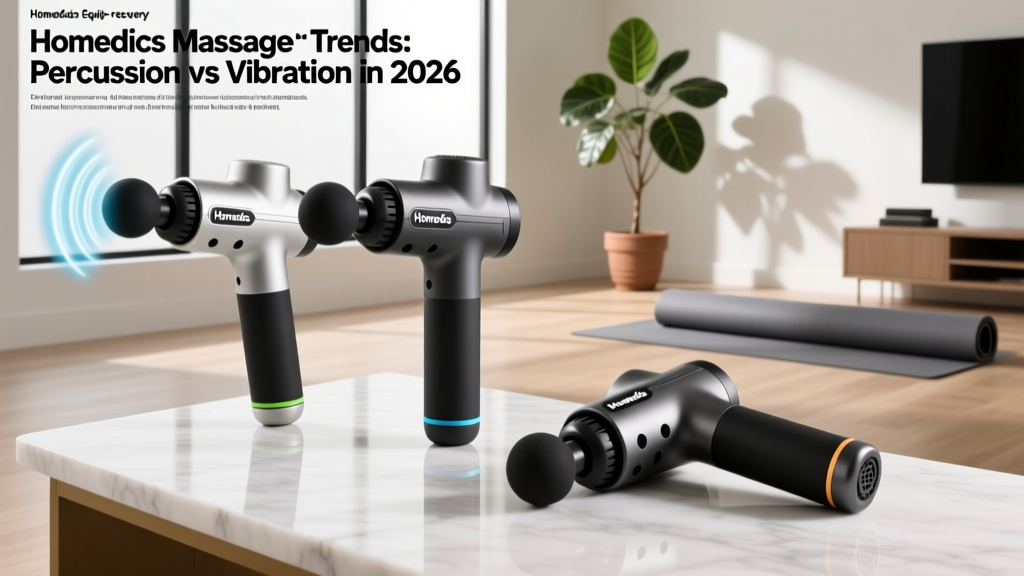
Homedics Massage Gun Trends: Percussion vs Vibration in 2026

Renpho Muscle Massage Gun vs Theragun and Hyperice: Value Analysis

Theragun vs Hyperice Layouts: Is Massage Gun Safe for Pregnancy?
