Conair PowerMaster Percussion Massage Gun vs Trigger Point Tools
We break down the true cost and value of the Conair PowerMaster percussion massage gun compared to manual trigger point therapy tools and balls.

Key Takeaways
- The Conair PowerMaster percussion massage gun excels at broad, deep-tissue stimulation using motorized impacts.
- Trigger point balls offer superior precision for localized joint, spinal, and fascial adhesion targeting.
- Choose the PowerMaster for large muscle groups and automated relief; choose massage balls for manual control and travel.
Conair PowerMaster Percussion Massage Gun vs. Trigger Point Balls
The Conair PowerMaster percussion massage gun delivers rapid, motorized percussive therapy ideal for deep tissue relief and large muscle groups, while trigger point balls provide localized, manual myofascial release perfect for precise joint and spinal targeting. Choosing between them depends entirely on whether you need broad, automated muscle stimulation or targeted, user-controlled pressure.
This comparison is designed for recreational athletes, physical therapy patients, and desk workers seeking the most effective muscle recovery tools for their specific biomechanical needs. By evaluating the mechanical differences, you can align your recovery strategy with your physiological demands.
Understanding the Conair PowerMaster Percussion Massage Gun
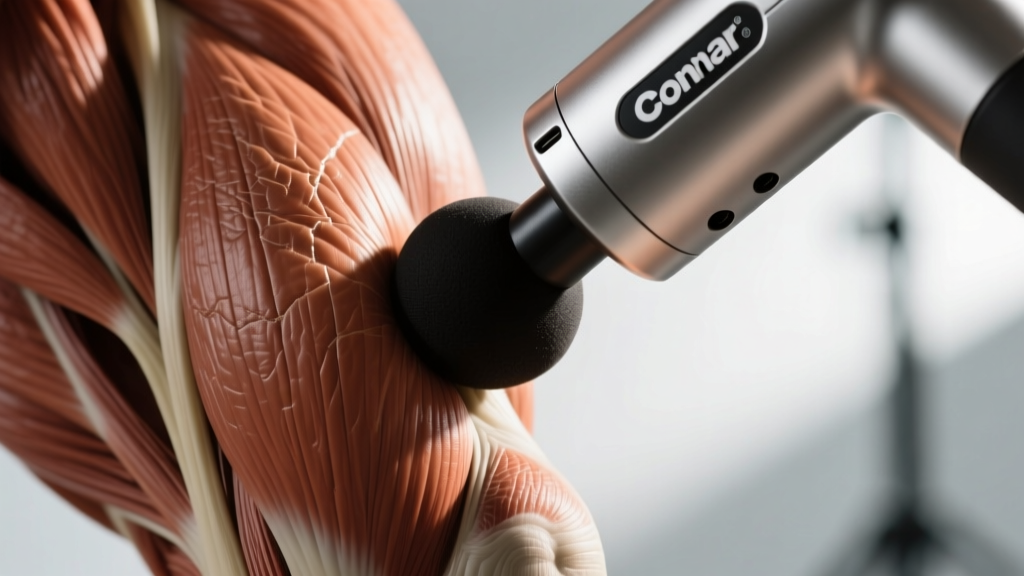
The Conair PowerMaster utilizes a high-torque motor to drive a piston mechanism into muscle tissue. This automated delivery system reduces the physical effort required from the user while maintaining consistent impact velocity.
Key Specifications and Performance
Motorized percussive devices rely on amplitude and frequency to dictate therapeutic outcomes. The Conair PowerMaster operates at up to 3200 percussions per minute, providing high-frequency stimulation that overrides pain signals via the gate control theory of pain.
Furthermore, the device features a 12-millimeter stroke length. According to research published by the National Center for Biotechnology Information, stroke lengths exceeding 10 millimeters are necessary to reach deeper fascial layers and induce meaningful neuromuscular adaptations in dense tissue like the glutes and hamstrings.
Percussive Therapy: A neuromuscular treatment method utilizing rapid, repetitive bursts of pressure into muscle tissue. This mechanical stimulation increases local blood flow, reduces nociceptor sensitivity, and disrupts fascial adhesions to accelerate post-exercise recovery and alleviate delayed onset muscle soreness.
The Mechanics of Trigger Point Therapy Balls
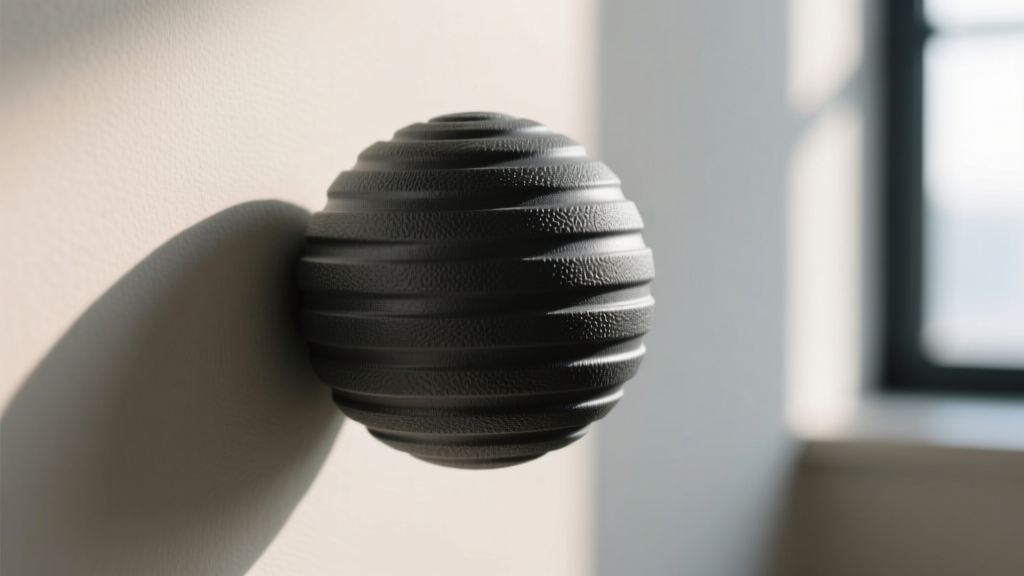
Trigger point balls operate on the principles of sustained ischemic compression. Unlike motorized devices, these tools require the user to leverage their body weight against a hard surface, such as a wall or floor, to generate therapeutic force.
Benefits of Manual Myofascial Release
A standard massage ball features a 4.5-inch diameter, which perfectly contours to the natural curvature of the human spine and shoulder girdle. This geometry allows users to isolate the rhomboids and erector spinae without applying dangerous pressure to the vertebrae.
Clinical evidence documented in the PubMed database on manual therapy confirms that sustained pressure applied for 30 to 90 seconds effectively decreases localized muscle tension and improves regional range of motion. The manual nature of the tool guarantees the user never exceeds their personal pain tolerance.
Myofascial Release: A manual therapy technique applying sustained, localized pressure to connective tissue restrictions. Practitioners or patients use tools to eliminate pain, restore motion, and release tension within the fascial network surrounding muscles, promoting structural alignment and improved biomechanical function.
Head-to-Head Comparison Matrix
Use this decision framework to determine which recovery tool aligns with your primary physical requirements and lifestyle constraints.
| Metric | Conair PowerMaster | Trigger Point Balls |
|---|---|---|
| Primary Mechanism | Automated high-frequency impacts | Sustained manual compression |
| Device Weight | 2.2-pound device weight | Under 0.5 pounds |
| Battery / Runtime | 45-minute battery runtime | Not applicable (manual tool) |
| Best Target Areas | Quads, hamstrings, calves, lats | Upper back, glutes, feet, neck |
| Cost Efficiency | Moderate to High initial cost | Extremely low initial cost |
Frequently Asked Questions
Is the Conair PowerMaster worth the investment for casual gym-goers?
For casual gym-goers experiencing generalized delayed onset muscle soreness, the Conair PowerMaster is highly effective. The automated percussion reduces the time required for post-workout recovery routines from 20 minutes of manual rolling to roughly 5 minutes of targeted gun application.
Can I use a massage gun instead of a lacrosse ball for back pain?
You should avoid using any percussion massage gun directly on the spine, shoulder blades, or neck vertebrae. A lacrosse ball or specialized trigger point ball remains the superior and safer choice for paraspinal muscles and upper back trigger points due to its precise, non-impact nature.
What are the Conair PowerMaster battery life and maintenance requirements?
The Conair PowerMaster delivers a 45-minute battery runtime on a single charge, which is sufficient for roughly nine standard 5-minute full-body recovery sessions. Maintenance requires only periodic wiping of the attachment heads with an antibacterial solution to prevent material degradation.
Final Verdict and Next Steps
The debate between the Conair PowerMaster percussion massage gun and trigger point balls is not about which tool is universally superior, but which tool solves your specific mechanical deficit. The PowerMaster dominates large muscle group recovery through automated frequency, while trigger point balls provide unmatched safety and precision for spinal and joint-adjacent tissues.
Your next step is to audit your primary pain points. If your soreness is concentrated in your legs and lats, purchase the Conair PowerMaster. If your daily discomfort stems from desk posture and upper back tension, acquire a set of textured trigger point balls. For comprehensive athletes, integrating both tools into a periodized recovery protocol yields the highest physiological return.
More gear to consider
All reviews
Infrared Sauna Blanket Setup & Installation Beyond Massage Gun Ratings
Benefits of Massage Gun on Stomach & Stretching Tools

Chasing the Massage Gun Orgasm: Theragun vs Hyperice & Space Layouts

Theragun vs Hyperice: 2026 Market Analysis & Trends

Home Recovery Budget: Ice Baths & Massage Gun for Cough Relief