
Home Recovery Trends: Cold Plunges & Why Massage Guns Make Me Itchy
Explore 2026 home recovery trends, from premium cold plunge tubs to percussive therapy, and uncover the science behind why massage guns make you itchy.

The 2026 Home Recovery Boom: Thermal Meets Percussive
The residential recovery equipment market has undergone a radical transformation over the last 24 months. What was once a niche pursuit reserved for elite Olympic facilities and biohackers has firmly entrenched itself in the modern home. As we navigate 2026, the market is dominated by two distinct but complementary pillars: the explosive proliferation of home ice baths and cold plunge tubs, and the widespread adoption of high-torque percussive therapy devices.
For sports physiologists and home athletes alike, understanding the intersection of these modalities is critical. This trend report analyzes the current state of the home cold plunge market, outlines the hidden infrastructure costs of installation, and answers one of the most highly searched, yet poorly understood, consumer questions in the percussive therapy space: why do massage guns make me itchy?
The Cold Plunge Market: From DIY Chest Freezers to Architectural Integration
The days of hacking a $200 chest freezer with a temperature controller are largely behind us. The 2026 consumer demands clinical-grade filtration, aesthetic integration, and smart-home connectivity. According to recent industry analyses, the global cold water immersion market is projected to surpass $1.2 billion by 2028, driven heavily by residential sales.
Brands like Plunge, Renu Therapy, and Sun Home Saunas have pivoted toward 'furniture-grade' recovery equipment. Modern units feature matte black acrylics, cedar wood paneling, and dual-zone chillers capable of heating the water to 104°F (40°C) for contrast therapy protocols.
2026 Home Cold Plunge Comparison Matrix
| Model | Price Range (2026) | Min Temp | Filtration & Chiller | Footprint |
|---|---|---|---|---|
| Plunge Evolve XL | $8,900 - $9,500 | 37°F (2.7°C) | 1.5 HP Chiller, In-Line UV + Ozone | 72" x 32" x 38" |
| Sun Home Cold Plunge Pro | $5,499 - $5,999 | 39°F (3.8°C) | Titanium Heat Exchanger, Ozone | 60" x 30" x 36" |
| Renu Therapy Cold Stoic | $8,500 - $9,200 | 35°F (1.6°C) | Dual-Stage Ozone, 1 HP Chiller | 68" x 34" x 40" |
| Nurecover PodPro | $1,199 - $1,399 | 41°F (5°C) | Portable Inline Chiller, Mesh Filter | 75" x 33" (Inflated) |
Infrastructure Realities: The Hidden Costs of Home Ice Baths
The most common failure point for home cold plunge adoption isn't the user's tolerance to the cold shock response—it's the structural and electrical infrastructure of the home. Consumers frequently underestimate the logistical requirements of a permanent thermal tub.
⚠️ Structural & Electrical Warning:Water weighs approximately 8.34 lbs per gallon. A standard 100-gallon cold plunge tub weighs over 830 lbs when empty, and upwards of 1,500 lbs when filled and occupied. Do not place a rigid cold plunge on a standard wooden balcony or elevated deck without a structural engineering assessment. Furthermore, premium 1.5 HP chillers require dedicated 220V/20A circuits with GFCI breakers. Retrofitting a standard 110V outdoor outlet will result in tripped breakers and voided warranties.
The Percussive Paradox: Why Do Massage Guns Make Me Itchy?
While thermal therapy dominates the high-ticket recovery market, percussive therapy remains the most accessible entry point for consumers. However, a massive volume of support tickets and forum queries center around a bizarre physiological side effect. If you have ever used a Theragun PRO Plus or Hyperice Hypervolt and suddenly experienced intense, localized redness and itching, you are not alone.
So, why do massage guns make me itchy? The answer lies in cellular mechanotransduction and histamine release.
The Science of Vibration-Induced Pruritus
When a high-frequency percussive device (operating between 30 to 40 Hz, delivering up to 2,400 percussions per minute) strikes the skin, it creates immense mechanical shear stress on the dermal layers. This rapid vibration triggers two simultaneous physiological responses:
- Mast Cell Degranulation: The mechanical force causes local mast cells in the skin to rupture and release histamine. Histamine is a compound that causes capillaries to dilate (vasodilation), increasing blood flow to the area to aid in recovery.
- C-Fiber Stimulation: Histamine binds to H1 receptors on local sensory nerve endings known as C-fibers. These nerves transmit both itch (pruritus) and mild pain signals to the brain.
Essentially, the itch is a byproduct of rapid, localized blood vessel expansion. It is a sign that the percussive therapy is effectively increasing microcirculation. However, it must be distinguished from Vibratory Urticaria, a rare genetic condition where vibration causes severe allergic hives and systemic reactions. For 99% of users, the itch is a benign, temporary histamine response.
Actionable Protocols to Mitigate the Itch
- Use Dampening Attachments: Swap the hard EVA plastic 'Thumb' or 'Cone' attachments for the 'Dampener' or 'Supersoft' foam heads, which disperse shear stress across a wider surface area.
- Lower the Amplitude/Speed: Reduce the device speed to under 30 Hz. High speeds over bony prominences (like the shins or spine) trigger the highest histamine response.
- Avoid Direct Skin Contact on Sensitive Areas: Wear compression garments or leggings when treating the IT bands and quadriceps to create a friction barrier.
- Pre-Condition the Tissue: Perform 2 minutes of light manual foam rolling before introducing high-torque percussive therapy to gradually acclimate the capillary beds.
Market Synthesis: Bundling Thermal and Percussive Recovery
The most significant trend in 2026 is the 'Contrast Protocol Bundle.' Consumers are no longer buying isolated tools; they are building sequential recovery stations. The optimal physiological window for percussive therapy and blood flow enhancement occurs immediately after cold water immersion.
When you exit a 40°F ice bath, your peripheral blood vessels are heavily constricted. Applying a massage gun to the major muscle groups (glutes, quads, lats) immediately post-plunge forces rapid vasodilation, flushing metabolic waste and accelerating the rewarming process. Brands have caught on, with companies like Hyperice and Plunge offering cross-promotional bundles that pair a cold plunge with a percussive device and compression boots.
Final Verdict for the Home Athlete
The home recovery equipment sector has matured from a gimmick into a cornerstone of preventative health and athletic longevity. If you are investing in a cold plunge, prioritize structural integrity and electrical foresight over aesthetic upgrades. And the next time your massage gun leaves your skin red and itchy, recognize it not as an allergic reaction, but as the visceral, mechanical reality of microvascular expansion. Understanding the 'why' behind your body's response to these tools is the first step in mastering your recovery stack.
More gear to consider
All reviews
Walgreens Massage Gun vs Stretching Tools: 2026 Comparison

Toloco Percussion Massage Gun EM26 Setup & Compression Boot Review

Foam Roller Types & How to Use Massage Gun on Neck and Shoulders

Active Massage Gun vs Compression Boots: 2026 Recovery Review
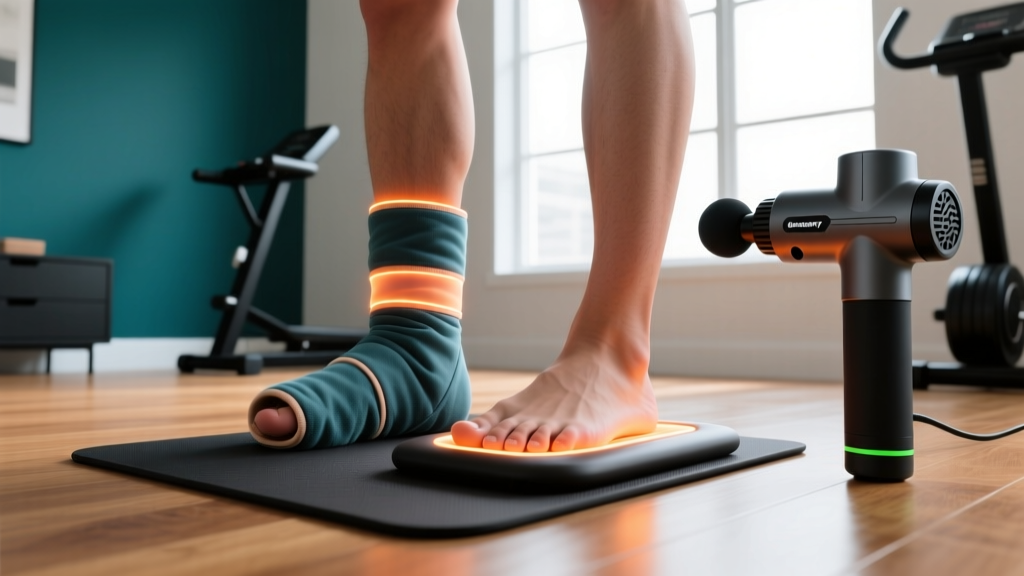
Heat Pads vs Wraps: Does a Massage Gun Help Plantar Fasciitis?
