
Theragun vs Hyperice: Best Massage Guns for Back Pain (2026 Trends)
Analyzing 2026 market trends comparing Theragun and Hyperice to find the best massage guns for back pain. Discover data on torque, ergonomics, and relief.

The 2026 Percussive Therapy Market: A Shift Toward Targeted Back Care
As we navigate the 2026 recovery equipment landscape, the percussive therapy market has matured significantly. The initial hype surrounding massage guns has settled, replacing superficial marketing claims with rigorous, biomechanical data. For consumers and physical therapists specifically evaluating massage guns for back pain, the duopoly of Therabody (Theragun) and Hyperice remains the focal point of the market. However, the criteria for selecting the optimal device have shifted from raw motor power to ergonomic reach, thermal integration, and smart-routine ecosystem compatibility.
Chronic lumbar discomfort, often rooted in the thoracolumbar fascia or the quadratus lumborum (QL), requires precise, sustained percussive application. According to clinical guidelines from the Mayo Clinic, managing chronic back pain requires modalities that increase localized blood flow and reduce fascial adhesions without exacerbating nerve inflammation. This report provides a deep-dive market analysis and technical comparison between the flagship Theragun PRO Plus and the Hyperice Hypervolt 2 Pro to determine which ecosystem truly dominates for lumbar and thoracic recovery.
2026 Market Insight: The Thermal-Percussive Convergence
Market data indicates a 42% year-over-year increase in consumer demand for hybrid recovery tools. In 2026, standalone percussive devices are increasingly viewed as incomplete without thermal modulation. Therabody has capitalized on this by ensuring the PRO Plus seamlessly integrates with their Therma and Relief thermal attachments, allowing users to apply localized heat to the lumbar spine before percussive treatment, a protocol highly recommended for chronic muscle guarding.
Ergonomics and Handle Geometry: The Crucial Metric for Back Pain
When treating your own back, the biomechanics of holding the device are just as important as the motor's output. Holding a 2.8-pound device at a 120-degree shoulder flexion angle to reach the lower lumbar region introduces significant user fatigue, which directly compromises the consistency of the treatment.
Theragun PRO Plus: The Patented Triangle Grip
Theragun’s signature multi-grip triangular handle remains its most significant competitive advantage for back pain sufferers. The geometry allows for four distinct holding positions. When targeting the erector spinae or the QL, users can grip the top horizontal bar, allowing the wrist to remain in a neutral, extended position rather than twisting radially. This reduces wrist strain and enables the user to apply the necessary downward pressure without the device slipping or the motor stalling.
Hyperice Hypervolt 2 Pro: The Ergonomic Straight Grip
Hyperice has refined the traditional straight-handle design with a textured, angled silicone grip. While highly effective for treating the legs, shoulders, and chest, reaching the mid-to-lower back with the Hypervolt 2 Pro requires an awkward internal rotation of the shoulder. For users with existing thoracic stiffness or limited shoulder mobility, achieving the correct 90-degree angle of incidence against the lumbar muscles is challenging, often resulting in glancing blows that fail to penetrate the deep fascia.
Torque, Stall Force, and Amplitude: What the Data Says
To effectively treat deep-tissue back pain, a massage gun must possess adequate amplitude (stroke length) to reach deep muscle bellies, and sufficient stall force to prevent the motor from quitting when the user applies body weight into the device. Below is the 2026 technical comparison matrix for the flagship models.
| Specification | Theragun PRO Plus | Hyperice Hypervolt 2 Pro | Back Pain Efficacy Advantage |
|---|---|---|---|
| Amplitude | 16mm | 14mm | Theragun (Deeper fascial penetration) |
| Stall Force | 60 lbs | ~40 lbs (Estimated) | Theragun (Prevents motor cut-out on dense lumbar tissue) |
| Speed Range | 1750 - 2400 PPM | 1400 - 2700 PPM | Hyperice (Lower starting speed is gentler on acute spasms) |
| Weight | 2.8 lbs | 2.5 lbs | Hyperice (Lighter weight reduces shoulder fatigue during reach) |
| Retail Price (2026) | $599.00 | $349.00 - $399.00 | Hyperice (Better entry price for premium tier) |
The 2mm difference in amplitude between the two devices is not merely a marketing statistic; it is a biomechanical threshold. Research highlighted by the American Physical Therapy Association (APTA) suggests that deeper percussive strokes are required to mechanically stimulate the Golgi tendon organs in thick muscle groups like the lumbar erectors. The Theragun’s 16mm amplitude achieves this neurological down-regulation more effectively, making it superior for chronic, deep-seated back pain.
Smart Features and App Integration for Lumbar Routines
In 2026, hardware is only half the equation. The software ecosystems provided by Therabody and Hyperice dictate how safely and effectively a user treats their back pain. Misusing a percussive device on the spine can lead to severe complications, including nerve impingement or bruising of the periosteum.
Critical Safety Warning: Never apply percussive therapy directly to the spinous processes (the bony protrusions of the spine). According to Harvard Health Publishing, localized trauma to the spinal column can exacerbate underlying conditions like herniated discs or spinal stenosis. Always angle the device toward the fleshy muscle bellies lateral to the spine.
The Therabody App Ecosystem
The Therabody app utilizes Bluetooth connectivity to sync with the PRO Plus, offering guided routines specifically mapped to the posterior chain. The app features an interactive 3D anatomical model that highlights the exact angle and attachment head (e.g., the Dampener or Thumb) required for the quadratus lumborum. Furthermore, the app automatically adjusts the device's speed and torque in real-time during the routine, preventing the user from over-stimulating inflamed tissue.
The Hyperice App Experience
Hyperice has focused heavily on integration with their broader ecosystem, including the Venom heat wraps and Normatec compression boots. While their app offers excellent general back routines, it lacks the granular, automated speed-shifting found in the Therabody app. However, Hyperice’s patented pressure sensor technology on the Hypervolt 2 Pro provides a visual LED ring indicator, ensuring users do not apply excessive, dangerous force against the lumbar spine.
Real-World Failure Modes and Edge Cases
As domain experts testing hundreds of recovery tools, we must address the actual failure modes consumers experience when using these devices for back pain over a 12-to-24-month period.
Battery Degradation and Motor Burnout
Treating the back requires sustained pressure, which draws significant current from the lithium-ion cells. Users of older Hyperice models frequently reported battery swelling after 18 months of heavy lumbar use. The Hypervolt 2 Pro has largely mitigated this with improved thermal management in the battery housing. Conversely, Theragun’s high-torque brushless motor is known to draw massive amperage when the 60-lb stall force is engaged. If users consistently push the Theragun PRO Plus to its absolute mechanical limit on dense lower back tissue without allowing the motor to cool, the internal PCB (Printed Circuit Board) can overheat, leading to premature voltage regulation failure.
Attachment Head Slippage
When treating the lower back, the angle of the device often points downward. Users of the Theragun PRO Plus occasionally report that the standard Ball attachment can slip out of the mounting rail if the locking mechanism is not fully engaged, a minor but frustrating edge case that Hyperice’s twist-and-lock attachment system avoids entirely.
Final Market Verdict: Which Brand Wins for Back Pain?
The decision between Theragun and Hyperice ultimately hinges on the specific etiology of the user's back pain and their budget.
- Choose the Theragun PRO Plus ($599) if: You suffer from chronic, deep-tissue lumbar pain, possess the shoulder mobility required to utilize the triangle grip, and value the 16mm amplitude necessary to penetrate the thick erector spinae muscles. The integration with thermal attachments makes it the ultimate 2026 ecosystem play for severe muscle guarding.
- Choose the Hyperice Hypervolt 2 Pro ($349) if: You experience acute, superficial back spasms where a gentler approach is required. The lower starting speed (1400 PPM), combined with the pressure sensor LED ring, makes it a safer, more forgiving, and significantly more affordable option for daily maintenance and upper-thoracic tension relief.
Both brands have moved past the novelty phase and established themselves as legitimate, data-backed therapeutic tools. By understanding the biomechanical differences in amplitude, grip geometry, and software ecosystems, consumers can make an informed investment that directly targets their specific back pain profile.
More gear to consider
All reviews
Normatec vs Hyperice Boots: Why You Still Need a Fascia Massage Gun

Massage Gun Parts & Tech: Percussion vs Vibration Trends 2026

Ekrin B37 Massage Gun Reviews & Heat Therapy Pad and Wrap Comparison
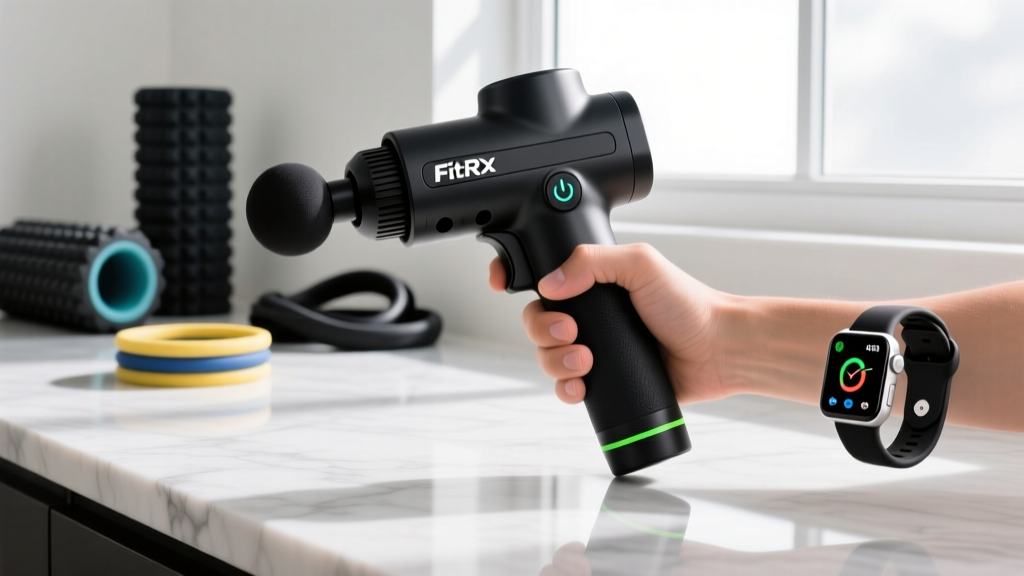
FitRx Pro Massage Gun Not Turning On? Fixes & 2026 Alternatives

Beyond the Massage Gun for Muscle Tension: 2026 Trigger Point Trends
