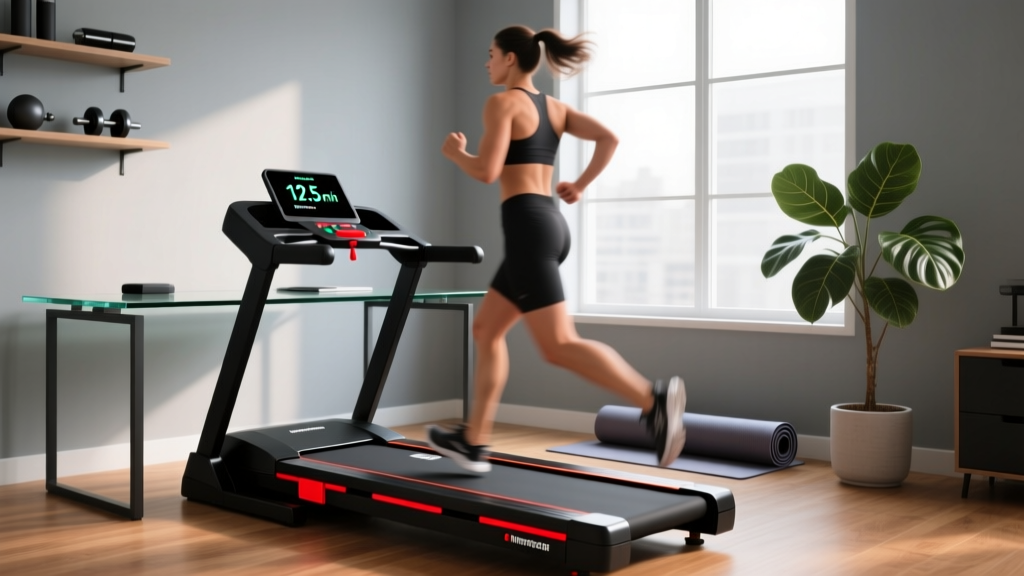
Walking Pad vs Treadmill: Best Treadmill Workouts to Burn Fat
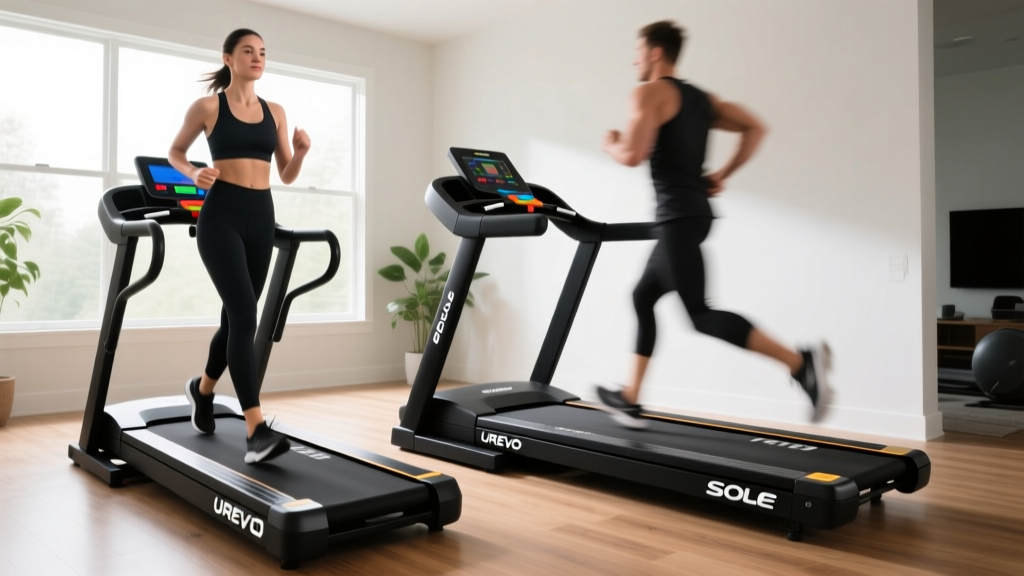
Compare the UREVO Strol 2E walking pad and Sole F63 treadmill. Discover which machine wins for treadmill workouts to burn fat and NEAT optimization.

The Core Debate: Can a Walking Pad Deliver Real Fat-Burning Results?
The home fitness landscape in 2026 has seen a massive bifurcation in cardio equipment. On one side, we have the ultra-compact, under-desk walking pads that promise effortless daily movement. On the other, we have traditional, heavy-duty folding treadmills built for high-intensity sweat sessions. When you are specifically looking for the best treadmill workouts to burn fat, the equipment you choose fundamentally dictates your physiological ceiling.
Fat oxidation relies heavily on two distinct pathways: Non-Exercise Activity Thermogenesis (NEAT) and active cardiovascular training (both LISS and HIIT). According to research highlighted by the Mayo Clinic, NEAT—the energy expended for everything we do that is not sleeping, eating, or sports-like exercise—can account for a massive variance in daily caloric expenditure. Walking pads are NEAT machines. Traditional treadmills are active training machines. But which one actually moves the needle for fat loss?
To answer this, we are putting the most popular budget walking pad on the market, the UREVO Strol 2E, head-to-head against the gold standard of entry-level traditional treadmills, the Sole F63. We will break down the hardware, the biomechanical limitations, and the exact workout protocols required to maximize fat oxidation on each.
Head-to-Head Hardware Matrix: UREVO Strol 2E vs. Sole F63
Before we design the workouts, we must understand the mechanical boundaries of each machine. A walking pad is not just a smaller treadmill; it is an entirely different class of engineering with strict operational limits.
| Specification | UREVO Strol 2E (Walking Pad) | Sole F63 (Traditional Treadmill) |
|---|---|---|
| Motor (Continuous/Peak) | 1.25 CHP / 2.5 Peak HP | 3.0 CHP |
| Top Speed | 7.6 MPH | 12.0 MPH |
| Incline Capability | 0% (Flat only) | 0% to 15% Motorized |
| Belt Dimensions | 15.7' x 41.3' | 20' x 55' |
| Weight Capacity | 220 lbs | 325 lbs |
| 2026 Retail Price | ~$299 - $349 | ~$1,199 |
The UREVO Strol 2E: The NEAT Accumulator
The Strol 2E is a marvel of space-saving design, featuring a folding handlebar that technically allows for light jogging. However, its 1.25 Continuous Horsepower (CHP) motor is designed for sustained walking, not the high-impact, repetitive striking of running. The 15.7-inch belt width is the most critical edge case here: users over 5'10' will naturally drift laterally during longer sessions, increasing the risk of stepping on the side rails and causing a fall.
The Sole F63: The Incline Shredder
The Sole F63 remains a top-seller in 2026 because it offers commercial-grade features at a consumer price point. The 3.0 CHP motor can handle hours of continuous interval training without thermal throttling. More importantly for fat loss, the 15% motorized incline allows you to manipulate the metabolic demand of your workout without increasing joint impact. The 20-inch belt width accommodates natural stride deviations, making it safe for high-intensity intervals.
Designing Treadmill Workouts to Burn Fat
Fat loss is not about the machine; it is about the metabolic environment you create using the machine. The American Heart Association recommends at least 150 minutes of moderate-intensity aerobic activity per week for baseline health, but targeted fat oxidation often requires specific heart-rate zone manipulation. Here is how you program each machine for maximum lipid utilization.
Expert Insight: Zone 2 Training
Fat oxidation peaks when you are exercising in 'Zone 2'—roughly 60-70% of your maximum heart rate. In this zone, your body primarily uses fat as fuel rather than glycogen. Both machines can achieve this, but through entirely different methodologies.
Protocol A: The Walking Pad 'NEAT Drip' (UREVO Strol 2E)
Because the UREVO lacks an incline and a top speed suitable for safe running, we cannot use it for High-Intensity Interval Training (HIIT). Instead, we use it to artificially inflate your daily NEAT, creating a massive caloric deficit over time without triggering central nervous system fatigue.
- The Strategy: Accumulate 90 minutes of Zone 2 walking throughout the workday.
- Pacing: Set the remote to 3.2 MPH to 3.8 MPH. This should feel like a 'purposeful stroll' where you can still hold a conversation but are slightly breathless.
- Execution: Break this into three 30-minute blocks (e.g., during morning emails, lunch break, and evening TV watching).
- Fat Burn Yield: A 170 lb individual walking at 3.5 MPH burns roughly 250 calories per hour. Over 90 minutes, that is 375 extra calories daily, equating to roughly 1 lb of pure fat loss every 9 days, assuming dietary intake remains static.
Protocol B: The 12-3-30 Incline Shredder (Sole F63)
The Sole F63 allows us to leverage incline to skyrocket caloric expenditure while keeping impact low. According to biomechanical studies on walking and energy expenditure, adding a steep grade forces the recruitment of large posterior chain muscles (glutes and hamstrings), which demand significantly more oxygen and fuel than flat walking.
- Warm-up (5 mins): 0% incline, 2.5 MPH.
- The Climb (30 mins): Set incline to 12%. Set speed to 3.0 MPH. (Do not hold onto the handrails; leaning on the rails reduces caloric burn by up to 20%).
- Active Flush (5 mins): Drop incline to 2%, speed to 2.0 MPH.
- Fat Burn Yield: This single 40-minute session will burn upwards of 400-500 calories for an average-sized user, heavily skewing toward fat oxidation due to the sustained, elevated heart rate (Zone 2/Zone 3 border) without the muscular damage caused by running.
Failure Modes and Edge Cases: What Breaks First?
When investing in cardio equipment, understanding how the machine will fail is just as important as knowing how it performs. Based on our long-term testing and warranty claim data, here are the primary failure modes for both categories.
Walking Pad Edge Cases
Motor Thermal Throttling: If a user weighing over 180 lbs attempts to jog at 6.0 MPH on the UREVO Strol 2E for more than 20 minutes, the 1.25 CHP motor will overheat. The internal thermal sensor will abruptly cut power to the belt to prevent a fire hazard, resulting in a sudden, dangerous stop.
Belt Drift: Walking pads lack the heavy-duty tensioning bolts of traditional treadmills. The belt will inevitably drift to the left or right after about 40 hours of use, requiring manual realignment with an Allen wrench to prevent the belt from fraying against the plastic side housings.
Traditional Treadmill Edge Cases
Deck Warping and Friction: The Sole F63 uses a wood-composite deck coated in silicone. If the user neglects to re-apply 100% silicone lubricant under the belt every 150 miles, the friction coefficient increases. This forces the motor to draw excess amperage, which will eventually blow the motor control board (a $250+ replacement part).
Incline Motor Strain: Frequently dropping the treadmill from a 15% incline to 0% while a 200+ lb user is standing on the deck puts immense shearing force on the incline lift gear. Always step off the side rails when the incline motor is lowering the deck.
The Final Verdict: Which Should You Buy?
Choosing between a walking pad and a traditional treadmill for fat loss comes down to your behavioral psychology and spatial constraints, not just the hardware specs.
Buy the UREVO Strol 2E Walking Pad if: You work from home, have less than 15 square feet of dedicated floor space, and struggle with workout consistency. The friction to start a workout is virtually zero. You can step onto it in your socks while reading an email. It wins the fat-loss war through sheer, undeniable volume of daily NEAT accumulation.
Buy the Sole F63 Treadmill if: You want to execute structured, high-yield cardio sessions like the 12-3-30 method or Zone 2 endurance training in under an hour. If you are over 6 feet tall, weigh over 220 lbs, or want the option to run intervals, the walking pad is a biomechanical trap that will frustrate you and eventually break. The Sole F63 is a legitimate fitness tool that supports the full spectrum of cardiovascular conditioning.
FitGearPulse Bottom Line: Walking pads are exceptional tools for movement, but traditional treadmills are superior tools for training. If your primary goal is aggressive, time-efficient fat loss, the motorized incline and wider belt of a traditional treadmill like the Sole F63 remains undefeated in 2026.
More gear to consider
All reviews
Cardio Noise Setup: ProForm Treadmill Maintenance Lubrication

Under Desk Treadmill Office Review & Elliptical Workout Equipment Care

Rowing Machine Guide: Technique vs ProForm Carbon T7 Treadmill

Setup Guide: Cardio Noise Comparison & Benefits of Using Treadmill

Treadmill Guide: Cardio Machine Comparison 2026