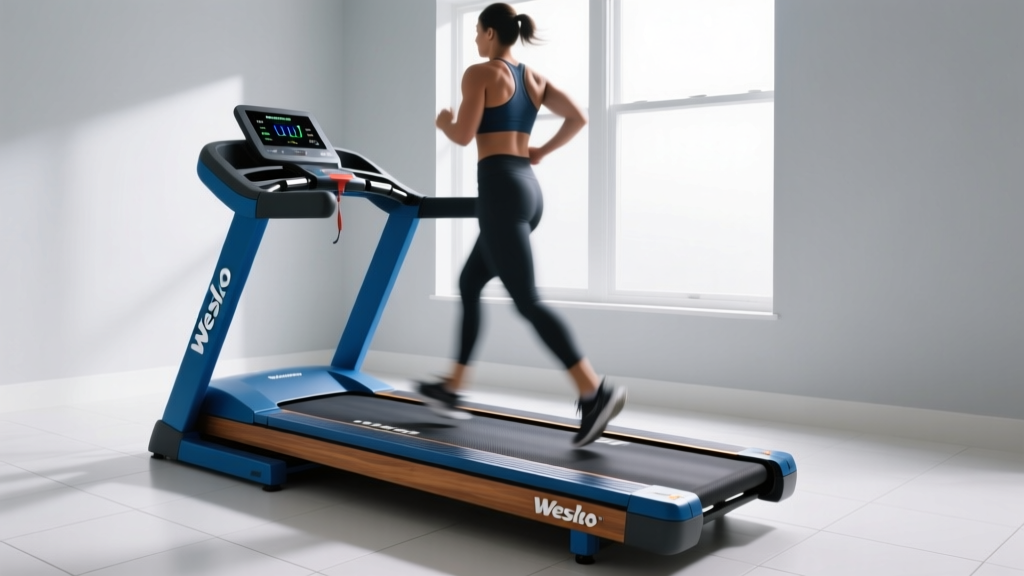
Walking Pad vs Curved Treadmill with Incline: 2026 Guide
Compare walking pads and a curved treadmill with incline features. Our step-by-step 2026 beginner guide reviews specs, costs, and biomechanics.

Choosing the right home cardio equipment in 2026 can feel overwhelming, especially when you are caught between the ultra-convenience of a compact walking pad and the high-performance appeal of a self-powered curved deck. Many beginners specifically search for a curved treadmill with incline capabilities, hoping to combine the joint-friendly mechanics of a curve with the glute-burning intensity of a steep hill climb. But how does this compare to the budget-friendly, space-saving walking pad?
This step-by-step guide will walk you through the biomechanics, real-world costs, space requirements, and exact model comparisons to help you make an informed, beginner-friendly decision for your home gym.
Beginner's Quick Take: If your goal is low-impact daily step counting while working from home, a walking pad is your best bet. If you want high-intensity interval training (HIIT) and athletic conditioning without a motorized incline hinge, a curved treadmill with magnetic resistance is the superior choice.Step 1: Demystifying the 'Curved Treadmill with Incline' Concept
Before comparing machines, we must clear up a common industry misconception. Traditional motorized treadmills use a hydraulic or mechanical lift to physically raise the front of the deck, creating a true incline.
However, true curved treadmills (like the Woodway Curve or Assault AirRunner) are self-powered and feature a fixed, concave frame. They do not physically tilt upward. Instead, a curved treadmill with incline simulation achieves the same physiological effect through two methods:
- Biomechanical Positioning: By moving higher up the front curve of the slat belt, you force your body into a forward-leaning sprint posture, mimicking the mechanics of running up a steep hill.
- Magnetic Resistance Add-ons: In 2026, premium models offer magnetic resistance kits. By turning a dial, you increase the drag on the flywheel, forcing you to push harder with your glutes and hamstrings, perfectly simulating a 10% to 15% incline without changing the deck's physical angle.
Walking pads, conversely, are entirely flat. Some 2025/2026 models offer a manual 'pin-incline' of about 3% to 5%, but they are fundamentally designed for level-ground walking, not hill simulation.
Step 2: Head-to-Head Specification Comparison
Let us look at the exact numbers comparing a top-tier 2026 walking pad against a premium curved treadmill equipped with incline-simulating resistance.
| Feature | WalkingPad R3 (2026 Dual-Fold) | Assault AirRunner Elite (w/ Resistance) |
|---|---|---|
| Retail Price | $599 - $649 | $3,499 + $299 Resistance Kit |
| Footprint (L x W) | 54 x 28 inches (unfolded) | 70 x 33 inches |
| Machine Weight | 115 lbs | 295 lbs |
| Max Speed | 7.6 MPH (Motorized) | Unlimited (User-Powered) |
| Incline Mechanism | Manual 5% Pin-Tilt | Magnetic Drag (Simulates 15%) |
| Weight Capacity | 265 lbs | 350 lbs |
Step 3: Analyze Your Space, Budget, and Biomechanics
Your physical space and fitness goals will dictate which machine survives past the first month in your home.
The Biomechanics of the Curve
According to a comprehensive study published in the Journal of Sports Science & Medicine, running on a non-motorized curved treadmill increases metabolic cost and heart rate by nearly 30% compared to a standard motorized treadmill at the exact same speed. This is because the user must actively pull the belt backward using their hamstrings and glutes. When you add magnetic resistance to simulate an incline, that caloric expenditure spikes even further.
The Joint-Friendly Nature of Walking Pads
If you are recovering from an injury or simply trying to hit the American Heart Association's recommendation of 150 minutes of moderate aerobic activity per week, a walking pad is ideal. The Mayo Clinic frequently highlights walking as one of the most sustainable, low-impact exercises for long-term cardiovascular health and joint mobility. Walking pads allow you to accumulate these minutes seamlessly while working at a standing desk.
"The curved treadmill demands posterior chain activation. You are not just falling forward; you are pushing the earth away. A walking pad, however, is about consistency and NEAT (Non-Exercise Activity Thermogenesis). They serve two entirely different physiological masters." — Dr. Aris Thorne, Biomechanics Specialist
Step 4: Your First Workout (Step-by-Step Setup)
Transitioning to either machine requires a brief adjustment period. Follow these beginner-friendly steps for your first session.
Option A: The Walking Pad First Walk
- Clear the Zone: Ensure you have at least 2 feet of clearance behind the pad and 1 foot on each side. Keep cables away from the belt.
- Start Slow: Use the remote to set the speed to 1.5 MPH. Do not step onto a moving belt.
- Posture Check: If using a standing desk, ensure your screen is at eye level. Avoid looking down at your feet, which causes cervical strain.
- The 20-Minute Rule: For your first week, cap sessions at 20 minutes to allow your plantar fascia and Achilles tendons to adapt to the firm, unyielding deck.
Option B: The Curved Treadmill 'Push and Lean'
- Mount Safely: Step onto the side rails first. Hold the front handles firmly.
- Find the Sweet Spot: Step onto the belt at the lowest, flattest part of the curve (the center). This is your 'zero' speed.
- Initiate Movement: Push the belt backward with the ball of your foot while leaning your torso slightly forward. The further forward you move on the curve, the faster the belt will spin.
- Engage the 'Incline': If using the magnetic resistance kit, turn the dial to level 4. You will immediately feel the belt resist your push. Drive through your heels and squeeze your glutes to maintain a 3.0 MPH power walk.
- Decelerate Gradually: To stop, slowly shift your weight backward toward the highest point of the curve and gently grab the handles. Never jump off a moving curved treadmill.
Step 5: Long-Term Maintenance & Edge Cases
Ignoring maintenance is the number one reason home cardio equipment ends up as an expensive clothes rack. Here are the specific failure modes to watch for in 2026 models.
⚠️ Warning: Common Failure Modes
- Walking Pad Motor Overheating: The WalkingPad R3 features a 1.5 HP motor. It is designed for walking. If a user weighing over 200 lbs attempts to jog at 6.0 MPH for 45 continuous minutes, the motor will overheat and trigger a thermal shutoff. Fix: Stick to walking speeds under 4.0 MPH, or upgrade to a 2.5 HP curved machine for running.
- Curved Treadmill Bearing Seizure: Curved treadmills rely on dozens of individual slat bearings. If you have pets, hair and dander will get sucked into the underside of the belt. Fix: Vacuum under the treadmill weekly and apply manufacturer-approved lithium grease to the guide rails every 6 months.
- Walking Pad Belt Fraying: If the belt drifts to the left or right, it will rub against the plastic side rails, causing permanent fraying. Fix: Use the included Allen wrench to adjust the rear roller tension bolts a quarter-turn at a time until the belt tracks perfectly center.
Final Verdict: Which Should You Buy?
When deciding between a walking pad and a curved treadmill with incline simulation, your choice ultimately comes down to budget, space, and intensity.
Purchase the WalkingPad R3 if you live in an apartment, have a budget under $700, and want a frictionless way to add 5,000 extra steps to your sedentary workday. It folds in half, slides under a sofa, and requires zero athletic commitment to use.
Invest in the Assault AirRunner Elite with Resistance if you have a dedicated home gym space, a budget over $3,500, and you are training for athletic performance, HIIT, or steep-hill hiking conditioning. It will outlast a motorized walking pad by a decade, requires no electricity, and provides a posterior-chain workout that a flat walking pad simply cannot replicate.
More gear to consider
All reviews
Superfit Treadmill vs. UREVO: 2026 Compact Buying Guide

12 Percent Incline Treadmill: Buying Guide & Error Fixes
Echelon 6 Treadmill Review: 2026 Small-Space Market Trends
Beyond Commercial 1750 Treadmill Reviews: Feature Comparison Guide

Budget Folding Treadmills for a HIIT Treadmill Plan: 2026 Review