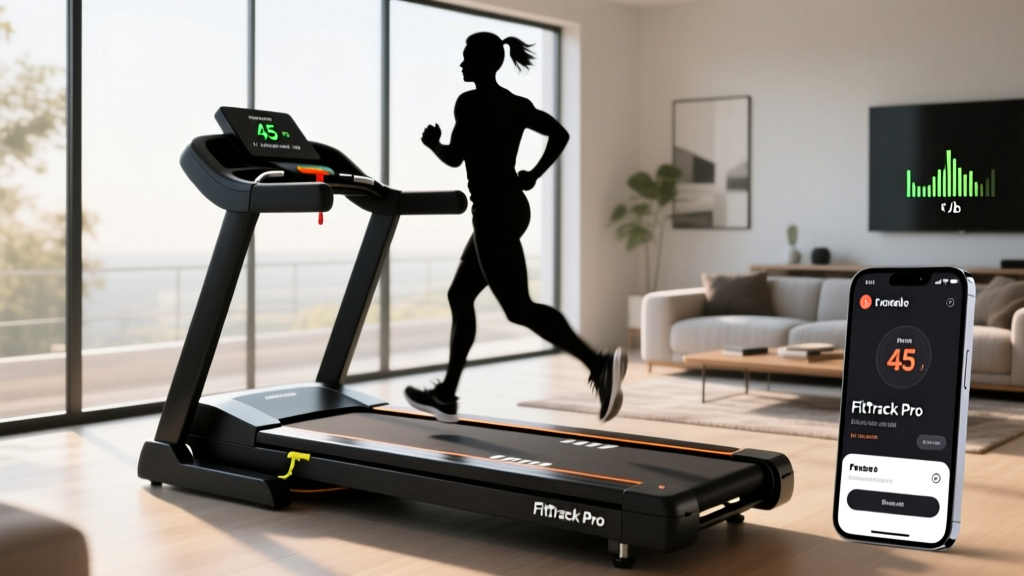
ProForm XP 650e Treadmill vs Rowing: Buying Guide
Compare the ProForm XP 650e treadmill against top rowing machines. Explore our rowing buying guide, technique tips, and cardio equipment insights.

The Cardio Crossroads: Treadmill vs. Ergometer
When outfitting a home gym in 2026, buyers frequently face a pivotal decision: invest in a traditional walking and running machine, or pivot to a full-body ergometer. The ProForm XP 650e Treadmill has long been a staple in the budget and secondary market, offering a reliable platform for walking and light jogging. However, as fitness science increasingly emphasizes posterior chain engagement and low-impact cardiovascular conditioning, rowing machines have surged in popularity. This head-to-head comparison uses the ProForm XP 650e as a baseline to explore the nuances of treadmill walking versus indoor rowing, culminating in a comprehensive rowing machine buying guide and technique breakdown to help you make an informed, biomechanically sound decision.
Quick Decision Matrix
- Choose the ProForm XP 650e Treadmill if: You prefer passive walking while working at a standing desk, need a simple folding mechanism for small apartments, or are rehabilitating lower-body joints with low-incline walking.
- Choose a Rowing Machine if: You want to engage 86% of your muscle mass per stroke, require a zero-impact workout that spares the knees, and are willing to learn a highly technical movement pattern for superior cardiovascular output.
Head-to-Head Specifications: ProForm XP 650e vs. Concept2 RowErg
To understand the fundamental differences in engineering and utility, we must look at the raw data. The ProForm XP 650e is a legacy model, meaning in 2026, it is primarily found on the refurbished or secondary market, whereas the Concept2 RowErg remains the gold standard for new indoor rowers.
| Feature | ProForm XP 650e Treadmill | Concept2 RowErg (Standard) |
|---|---|---|
| Primary Muscle Focus | Lower Body (Calves, Quads, Glutes) | Full Body (Legs, Core, Back, Arms) |
| Drive System | 2.25 CHP Motor & 1-Ply Belt | Air Flywheel & Nickel-Plated Chain |
| Footprint (In Use) | 68' L x 28' W | 95' L x 24' W |
| Storage Profile | Folds vertically via hydraulic lift | Separates into two pieces (Frame & Rail) |
| Max User Weight | 300 lbs | 500 lbs |
| Typical 2026 Market Price | $400 - $600 (Refurbished/Used) | $1,195 (New Direct) |
| Acoustic Output | Motor hum + footstrike impact | Air whoosh + chain mechanical hum |
Rowing Machine Buying Guide: What to Look for in 2026
If the head-to-head comparison above pushes you toward the ergometer, you must navigate a market flooded with subpar magnetic rowers and gimmick-laden water tanks. A proper rowing machine buying guide requires you to evaluate three critical engineering pillars: resistance type, rail ergonomics, and telemetry.
1. Resistance Types and Drag Factor
The resistance mechanism dictates the feel and maintenance requirements of the machine. According to the American Council on Exercise (ACE), matching the resistance type to your living situation and fitness goals is paramount.
- Air Resistance (e.g., Concept2 RowErg): Utilizes a flywheel with fan blades. The harder you pull, the more wind is displaced, creating infinite, dynamic resistance. It is loud but offers the most authentic, competitive feel.
- Magnetic Resistance (e.g., NordicTrack RW900): Uses electromagnets to brake a metal flywheel. It is nearly silent and allows for precise, programmed resistance levels, making it ideal for shared living spaces, though it lacks the organic 'catch' of air rowers.
- Water Resistance (e.g., WaterRower Natural): Features a polycarbonate tank with internal paddles. It provides a soothing auditory experience and a smooth catch, but requires periodic water purification tablets and lacks the granular data tracking of air/magnetic models.
2. Rail Length and Ergonomics
A frequently overlooked spec is the monorail length. Standard rails measure around 54 inches, accommodating users up to 6'2'. If you are taller, you must seek out machines with 59-inch rails or extended leg attachments to prevent the seat from rolling off the track during the 'catch' phase. Furthermore, examine the footplate strapping system; rigid plastic footplates with dual-ratcheting straps ensure your heels remain anchored during high-drag sprints.
3. Telemetry and Monitor Accuracy
In 2026, a rower's monitor must accurately calculate wattage, split times (per 500m), and drag factor. Avoid machines that use simple RPM counters disguised as calorie trackers. Look for monitors that support Bluetooth FTMS or ANT+ heart rate broadcasting to integrate with third-party apps like Zwift or EXR.
Mastering the Row: Technique Breakdown
Unlike the ProForm XP 650e treadmill, where the motor dictates the pace and the user simply places one foot in front of the other, rowing is a highly technical, self-driven movement. Poor form on a rower doesn't just reduce caloric output; it actively invites lumbar spine injury. The Concept2 official technique guide breaks the stroke into four distinct phases.
The Catch (The Setup)
Slide forward until your shins are vertical (perpendicular to the floor). Your arms should be straight, shoulders relaxed, and torso hinged forward at roughly 11 o'clock. Crucial: Do not over-compress. If your heels lift entirely off the footplate or your lower back rounds, you have slid too far forward.
The Drive (The Power Phase)
The drive is a sequential explosion of power: Legs, then Core, then Arms. Push explosively through your heels. As your legs reach about 75% extension, hinge your torso back to the 1 o'clock position. Finally, draw the handle to your lower sternum. The legs should provide roughly 60% of the power, the core 30%, and the arms 10%.
The Finish (The Anchor)
At the end of the drive, your legs are fully extended, torso is leaning back slightly past vertical, and the handle is resting just below your ribcage. Your wrists must remain flat and neutral, not curled inward.
The Recovery (The Reset)
The recovery is the exact reverse of the drive and should take twice as long. Extend your Arms first, hinge the Core forward past vertical, and only then bend the Legs to slide back to the catch.
Expert Warning: 'Shooting the Slide'
The most common and dangerous error in indoor rowing is 'shooting the slide.' This occurs when the legs push the seat backward, but the handle doesn't move, meaning the lower back is absorbing the entire load of the leg drive. To fix this, ensure your core is braced and your arms remain completely straight until the legs are nearly fully extended.
Biomechanical and Spatial Considerations
When deciding between the ProForm XP 650e and a rowing machine, you must audit your physical limitations and your floor plan. The American Heart Association recommends at least 150 minutes of moderate-intensity aerobic activity per week, meaning the machine you choose must be comfortable enough to use consistently.
Joint Health and Impact
Treadmills, even those with basic deck cushioning like the XP 650e, introduce repetitive ground reaction forces (GRF) into the ankles, knees, and hips. For users with patellofemoral pain syndrome or severe plantar fasciitis, the repetitive strike can exacerbate inflammation. Rowing is entirely closed-chain and zero-impact. However, rowing demands significant hip and knee flexion at the catch. Users with limited ankle dorsiflexion or severe hip impingements may find the deep compression of the catch position uncomfortable, making a low-incline treadmill walk a safer alternative.
Space and Acoustic Footprint
The ProForm XP 650e folds upward, utilizing vertical clearance to free up floor space—a massive advantage in studio apartments. However, folded treadmills are visually bulky and heavy to lower. Rowing machines do not fold, but premium models like the Concept2 separate into two lightweight pieces that can be slid under a bed or stood upright in a closet. Acoustically, the XP 650e's 2.25 CHP motor produces a low-frequency hum, while air rowers generate a significant 'whoosh' that can easily exceed 75 decibels at high stroke rates, potentially disturbing sleeping household members.
Final Verdict: Matching the Machine to Your Biomechanics
The ProForm XP 650e Treadmill remains a highly functional, cost-effective tool for users whose primary goal is daily step accumulation, NEAT (Non-Exercise Activity Thermogenesis) optimization, and low-impact walking. Its secondary market pricing in 2026 makes it an accessible entry point for basic home cardio.
Conversely, if your objective is to maximize caloric expenditure per minute, build posterior chain resilience, and engage in high-intensity interval training (HIIT) without joint degradation, a quality rowing machine is the superior investment. By prioritizing air or magnetic resistance, ensuring adequate rail length, and strictly adhering to the legs-core-arms sequencing of the stroke, you will unlock a level of cardiovascular conditioning that a motorized belt simply cannot replicate.
More gear to consider
All reviews
Elliptical vs Treadmill: Value & How to Apply Treadmill Lubricant
What to Look for in a Treadmill: Belt Maintenance & Lube Trends

Hey Play Treadmill vs UREVO: 2026 Budget Feature Comparison

Walking Pad vs AFG Treadmill 7.1 AT: Common Mistakes & Fixes

Folding Treadmills for Small Spaces & The Treadmill Murder Trial