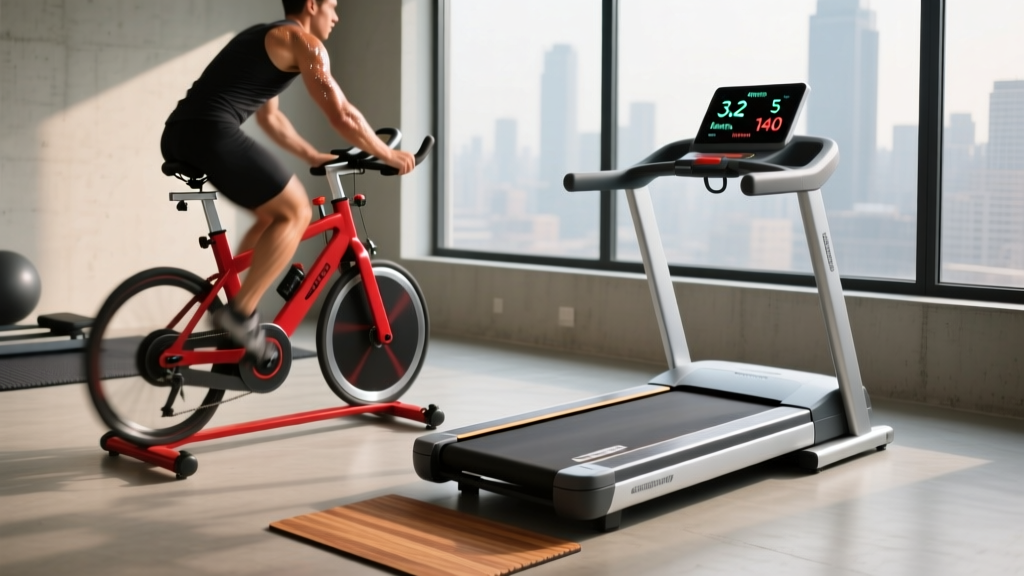
Bicycle and Treadmill Troubleshooting: Walking Pad Comparison & Fixes
Avoid common bicycle and treadmill mistakes. Read our walking pad treadmill comparison, review, and expert troubleshooting guide for home cardio setups.

The Home Cardio Dilemma: Walking Pad vs. Traditional Treadmill
As home fitness setups evolve in 2026, the debate between compact walking pads and full-sized traditional treadmills remains a primary focus for cardio enthusiasts. Whether you are outfitting a small apartment or a dedicated garage gym, understanding the biomechanical and mechanical differences is critical. According to the Centers for Disease Control and Prevention (CDC), adults need at least 150 minutes of moderate-intensity aerobic activity weekly, making the reliability of your equipment non-negotiable. Yet, thousands of users experience premature motor burnout, belt slipping, and electrical failures simply because they treat a compact walking pad like a commercial gym treadmill. This guide breaks down the most common mistakes, provides a detailed walking pad vs. treadmill comparison, and offers advanced troubleshooting for your home cardio layout.
5 Critical Mistakes on Walking Pads (and How to Fix Them)
Walking pads, such as the popular KingSmith WalkingPad X21 or the generic 2.5 HP under-desk models flooding the market, are engineering marvels of space-saving design. However, their compact nature makes them highly susceptible to user error.
- 1. Ignoring Belt Tension and Lubrication: The most frequent cause of the dreaded 'E02' motor overload error is a dry belt. Walking pad belts require 100% pure silicone lubricant. The Fix: Apply exactly 15ml of silicone oil under the belt on both sides every 3 months or every 130 miles. If the belt slips when you step on it, use the included Allen wrench to tighten the rear roller bolts by exactly one-quarter turn clockwise on each side.
- 2. Suffocating the Motor on Thick Carpet: Walking pads have low ground clearance. Placing them directly on plush carpet blocks the underside motor ventilation and creates static electricity buildup that can fry the lower control board. The Fix: Always use a high-density PVC equipment mat (at least 3/8-inch thick) to ensure proper airflow and ground the static charge.
- 3. Over-Striding on Compact Decks: Traditional treadmills offer 55 to 60-inch running surfaces. Most walking pads max out at 43 to 47 inches. Attempting to run at speeds above 5.0 mph on a 43-inch deck forces an unnatural, shortened gait that leads to shin splints and Achilles strain. The Fix: Restrict walking pads to brisk walking (2.5 to 4.0 mph). For running, you must upgrade to a traditional treadmill.
- 4. Exceeding the Continuous Duty Horsepower (CHP): Many budget walking pads advertise a '2.5 HP Motor,' but this is Peak HP, not Continuous Duty. A 1.25 CHP motor will overheat and shut down if a 220 lb user walks at 3.5 mph for more than 45 minutes straight. The Fix: Check the manufacturer's spec sheet for 'CHP' and strictly adhere to the recommended weight limit minus 20% for longevity.
- 5. Leaving the Machine Folded While Hot: If your walking pad features a 180-degree folding hinge, folding it immediately after a 60-minute session traps residual heat inside the motor housing, degrading the internal wiring insulation over time. The Fix: Let the machine cool in the flat position for 15 minutes before folding.
Troubleshooting Your Cardio Layout: The Bicycle and Treadmill Factor
When designing a comprehensive home gym, balancing the footprint and electrical draw of a stationary bicycle and treadmill is a common logistical hurdle that leads to frustrating mid-workout shutdowns. Many users mistakenly plug both machines into a single 15-amp household circuit using a heavy-duty extension cord or power strip.
⚠️ Electrical Warning: Under peak load, a traditional treadmill (like the NordicTrack T Series 10 or Sole F63) can draw 12 to 15 amps. A motorized or smart magnetic resistance bicycle (like the Peloton Bike+ or Echelon EX-5s) draws an additional 2 to 4 amps. This combined 18-amp draw on a standard 15-amp residential breaker will inevitably trip the switch, potentially corrupting the treadmill's digital console memory.The Fix: Ensure your primary cardio machines are on dedicated 20-amp circuits. If your home's electrical panel does not support this, spread the bicycle and treadmill across two separate 15-amp circuits that are controlled by different breaker switches. Never use an extension cord for a treadmill; the voltage drop over 10 feet of 14-gauge wire can starve the motor, causing it to pull excess amperage and overheat.
2026 Walking Pad vs. Traditional Treadmill Comparison Matrix
To help you decide which machine fits your specific biomechanical needs and spatial constraints, we have compiled a direct comparison based on current 2026 market leaders.
| Feature | Compact Walking Pad (e.g., KingSmith X21) | Traditional Treadmill (e.g., Sole F63) |
|---|---|---|
| Motor (Continuous) | 1.25 CHP | 3.0 CHP |
| Max Speed | 6.2 mph (10 km/h) | 12.0 mph |
| Deck Length | 47 inches | 60 inches |
| Incline Capability | 0% (Flat only) | 0% to 15% Auto-Incline |
| Shock Absorption | Minimal (Firm EVA foam) | Advanced (Cushion Flex system) |
| Average Price (2026) | $450 - $650 | $1,199 - $1,800 |
| Best Use Case | NEAT (Non-Exercise Activity Thermogenesis), under-desk walking | HIIT, marathon training, heavy running |
"A walking pad is a precision tool for low-impact steady-state cardio and increasing daily NEAT. It is not a replacement for high-intensity interval training. Treat the motor accordingly, and respect the deck limitations." — Home Fitness Equipment Technician
Translating Error Codes: A Mechanic's Perspective
When your machine abruptly stops, the digital console will usually flash an alphanumeric error code. Understanding these codes saves you from unnecessarily voiding your warranty by opening the motor hood.
Common Walking Pad & Treadmill Error Codes
- E01 (Communication Error): The console is not receiving data from the lower control board. Troubleshooting: Unplug the machine. Check the data cable running down the upright post (if applicable) or the internal ribbon cable. Ensure the pins are not bent and the connection is seated firmly. 90% of E01 errors are simply loose ribbon cables from factory assembly or moving the unit.
- E02 (Motor Overload / Short Circuit): The motor is drawing too much current. Troubleshooting: This is almost always caused by a dry belt or a belt that is too tight. Lubricate the deck. If the error persists, the motor's carbon brushes may be worn out (common after 3,000+ miles) and require replacement.
- E05 (Speed Sensor Failure): The console cannot read the RPM of the motor. Troubleshooting: Locate the optical or magnetic speed sensor near the motor flywheel. Wipe away accumulated dust and belt lubricant residue with isopropyl alcohol. Ensure the sensor is aligned within 2mm of the magnet or optical disc.
Maintenance Schedule for Longevity
To ensure your equipment survives past its 1-year limited warranty, implement this strict maintenance schedule. As noted in the Consumer Reports Treadmill Buying Guide, proper maintenance is the single highest predictor of long-term cardio machine reliability.
- Weekly: Wipe down the console and handrails with a non-abrasive, ammonia-free cleaner. Sweat is highly corrosive and will pit the aluminum handrails and degrade the plastic console overlay.
- Monthly: Inspect the belt alignment. If the belt is tracking too far to the left or right, adjust the rear roller bolts. Check the power cord for any fraying or crimping.
- Quarterly: Apply 100% silicone belt lubricant. Vacuum under and around the motor hood (ensure the machine is unplugged) to remove dust bunnies that act as thermal insulators.
- Annually: Check the deck for wear. If the walking belt is sticking in the center even after lubrication, the phenolic resin coating on the MDF deck has worn through, and the deck must be replaced to prevent motor burnout.
Final Verdict: Which Should You Choose?
If your primary goal is to hit 10,000 steps a day while working from home, or if you are integrating a low-impact cardio option into a tight space alongside a stationary bike, a high-quality walking pad like the WalkingPad R2 or KingSmith X21 is an exceptional investment. However, if your training involves running intervals, incline hiking, or you weigh over 220 lbs, the mechanical limitations of a walking pad will lead to endless troubleshooting and frustration. In that case, invest in a traditional, 3.0 CHP folding treadmill. By understanding the electrical requirements of your bicycle and treadmill setup, respecting the mechanical limits of compact motors, and adhering to a strict lubrication schedule, you can ensure your home cardio ecosystem remains functional and effective for years to come.
More gear to consider
All reviews
YMCA Treadmills vs Rowers: 2026 Buying & Technique Guide
Treadmill Motor Guide: Sizing the NordicTrack EXP1000x Treadmill
Future Glide Treadmill Review: Top Folding Picks for Small Spaces

Manual vs Motorized: Troubleshooting the NordicTrack X32i Treadmill

Hitting a 7.2 Treadmill Pace on Compact Portable Cardio Gear
