
Walking Pad vs Treadmill with Curved Track: Review & Fixes
Compare walking pads and a treadmill with curved track. Discover buying mistakes, biomechanical form errors, and hardware troubleshooting fixes.

The Home Cardio Divide: Compact Walking Pads vs. Manual Curved Treadmills
The home fitness landscape has fractured into two distinct extremes. On one end, we have the ultra-compact, motorized walking pad designed for under-desk stepping and low-impact movement. On the other end sits the heavy-duty, non-motorized treadmill with curved track, engineered for high-intensity interval training (HIIT) and elite biomechanical conditioning. Comparing a standard walking pad to a curved manual treadmill is like comparing a hybrid commuter car to a track-focused sports car. Both get you moving, but their engineering, use cases, and maintenance requirements are worlds apart.
In this comprehensive review and troubleshooting guide, we break down the hardware realities of popular 2026 models—like the KingSmith WalkingPad R2 and the AssaultRunner Elite—highlighting the costly mistakes buyers make and providing exact mechanical fixes for common hardware failures.
Head-to-Head Comparison Matrix
| Feature | Motorized Walking Pad (e.g., KingSmith R2) | Treadmill with Curved Track (e.g., AssaultRunner Elite) |
|---|---|---|
| Drive System | 1.25 HP to 2.0 HP Electric Motor | Non-Motorized (User-Driven Magnetic/Slatted) |
| Top Speed | 7.5 mph (Fixed Limit) | Unlimited (Dictated by User Output) |
| Avg. Price Range | $399 - $599 | $3,499 - $5,500 |
| Machine Weight | 60 - 95 lbs | 280 - 350 lbs |
| Maintenance Level | Low (Silicone lubrication, belt tracking) | Medium (Slat tensioning, guide rail cleaning) |
| Primary Use Case | LISS cardio, under-desk walking, rehab | HIIT, sprint mechanics, athletic conditioning |
5 Costly Mistakes Buyers Make
1. Using a Walking Pad for Sprint Intervals
A walking pad is engineered for continuous, low-impact loading. The 1.25 HP motors found in models like the UREVO Strol 2E or WalkingPad R2 rely on passive air cooling. When users attempt sprint intervals or sustained running over 6.0 mph, the motor draws excessive amperage, rapidly overheating the internal windings and tripping the thermal overload switch. Over time, this degrades the motor's copper wiring, leading to a complete stall (often displaying an E02 error code).
2. Ignoring Floor Load Limits for Curved Treadmills
A manual treadmill with curved track is incredibly dense. The TrueForm Runner weighs over 350 lbs, and the footprint concentrates that weight onto four small leveling feet. If you place this on a second-floor apartment or a raised wooden subfloor with a standard 40 psf (pounds per square foot) live load rating, you risk structural deflection. Always use a high-density rubber equipment mat (at least 3/8-inch thick) to distribute the point-load across the floor joists.
3. Applying the Wrong Belt Lubricant
Walking pad belts require 100% pure silicone fluid. A common and fatal mistake is using WD-40 or petroleum-based lubricants. Petroleum breaks down the PVC and polyurethane layers of the walking pad belt, causing it to stretch, delaminate, and ultimately snap under tension.
4. Miscalculating the Biomechanical Stride Shift
According to biomechanical analyses referenced by the American Council on Exercise (ACE), a treadmill with curved track forces a mid-foot or forefoot strike due to the downward slope of the front arc. Buyers transitioning from flat motorized treadmills often suffer from acute Achilles tendonitis or calf strains because they attempt to heel-strike on the curved arc, fighting the machine's natural momentum.
5. Neglecting the UHMWPE Guide Rails
Curved treadmills do not use a traditional deck and belt system. Instead, rubber slats glide on Ultra-High Molecular Weight Polyethylene (UHMWPE) guide rails. Users often ignore these rails until the belt develops a severe lateral drag, not realizing that household dust and pet hair have created an abrasive paste on the tracks.
Troubleshooting Guide: Fixing Common Hardware Failures
⚠️ Safety First: Always unplug motorized walking pads from the wall outlet and remove the safety magnetic key from curved treadmills before performing any mechanical adjustments.Walking Pad: Belt Slippage and Tracking Errors
If your walking pad belt slips when you step on it, or drifts to the left/right and frays against the side rail, the rear roller tension is misaligned.
- Locate the Adjustment Bolts: Find the two hex bolts at the very back of the walking pad (left and right sides).
- Fixing Slippage (Tension): Using the provided Allen wrench (usually 5mm or 6mm), turn both the left and right bolts clockwise by exactly one-quarter (1/4) turn. Test the belt. Do not over-tighten, as this will strain the motor bearings and cause an E01 communication error.
- Fixing Drift (Tracking): If the belt drifts to the left, turn the left bolt clockwise by 1/4 turn, and the right bolt counter-clockwise by 1/4 turn. Run the pad at 2.0 mph for two minutes to let the belt self-center.
Curved Track: Slat Belt Drag and Sticking
Unlike motorized treadmills, a treadmill with curved track relies on gravity and the user's foot strike to rotate the belt. If the belt feels 'sticky' or requires immense effort to start, the issue is almost always friction on the guide rails.
- Inspect the Slat Underside: Lift the edge of the rubber slat belt. You will see the UHMWPE plastic guide strips.
- Clean the Rails: Use a microfiber cloth dampened with 90% isopropyl alcohol to wipe down the entire length of the guide rails. Never use silicone spray on the guide rails—it attracts micro-dust and creates a grinding compound that will permanently score the plastic.
- Check the Polyurethane Wheels: On models like the AssaultRunner, the slats are guided by small polyurethane wheels on the outer edges. If these wheels develop flat spots or wobble, they must be replaced. This is a standard wear-and-tear item that typically requires replacement every 1,500 to 2,000 miles.
Biomechanics and Form Errors: What the Data Shows
When reviewing these machines for home use, understanding human kinetics is just as important as understanding the hardware. Research published in sports science journals and indexed by the National Institutes of Health (NIH) indicates that self-powered curved treadmills elicit a 10% to 15% higher heart rate response and greater caloric expenditure at the exact same perceived pace compared to flat motorized treadmills.
Expert Form Checklist for Curved Treadmills
- Posture: Maintain a tall spine. Leaning too far forward shifts your center of gravity past the apex of the curve, causing the belt to accelerate uncontrollably.
- Foot Strike: Aim for a mid-foot strike directly under your center of mass. Heel striking on the downward slope acts as a braking mechanism, sending shockwaves up the tibia.
- Arm Drive: Because there is no motorized belt pulling your legs, your arm drive dictates your pace. Aggressive arm pumping is required to initiate sprint intervals on a curved track.
Final Verdict: Which Machine Belongs in Your Home?
The decision between a walking pad and a manual treadmill with curved track ultimately comes down to your training goals, spatial constraints, and budget. If your goal is to increase daily NEAT (Non-Exercise Activity Thermogenesis) while working from home, a $499 walking pad is an unparalleled, space-saving tool. However, if you are an athlete looking to improve sprint mechanics, perform high-intensity metabolic conditioning, and want a machine that will literally outlast your lifetime without a motor to burn out, investing $3,500+ in a curved manual treadmill is the superior choice.
By avoiding the common purchasing mistakes outlined above and adhering to the specific maintenance protocols for your chosen machine, you can ensure your cardio equipment remains a reliable asset to your fitness journey for years to come.
More gear to consider
All reviews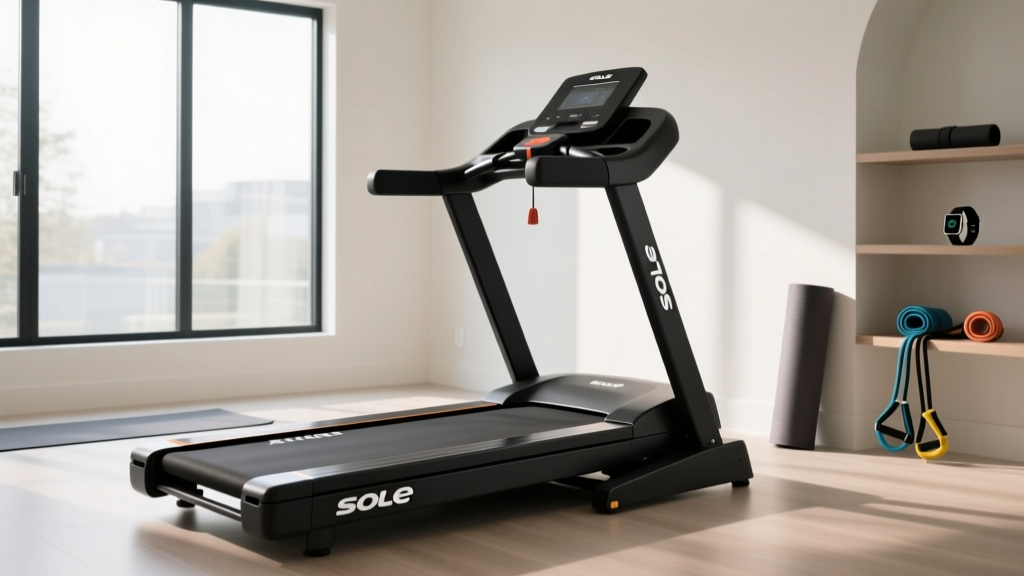
Sole F63 Treadmill Setup and Motor Horsepower Guide

Walking Pad Setup & Review: Avoid a Funny Treadmill GIF

BXT6 Treadmill vs Sole F63: Home Gym Noise Level Showdown

40 Incline Treadmill vs Stationary Bikes: Budget Breakdown

Treadmill Guide: Cardio Machine Comparison 2026
