
Echelon Stride 6s Treadmill vs Rowers: Buying Guide & Technique
Master rowing machine technique and buying choices. We compare top rowers against the Echelon Stride 6s treadmill to build your perfect home gym.

Designing a home gym in 2026 requires making ruthless decisions about floor space, budget, and biomechanics. When outfitting a dedicated cardio zone, fitness enthusiasts frequently find themselves caught in a modality war: the low-impact, high-volume walking experience of a compact treadmill versus the full-body, high-intensity metabolic demand of an indoor rower. In this comprehensive guide, we will put the highly popular Echelon Stride 6s treadmill head-to-head against the industry's premier rowing machines. More importantly, we will provide a deep-dive rowing machine buying guide and a masterclass in ergometer technique to ensure you extract maximum ROI from your equipment, regardless of which machine ultimately claims your floor space.
Head-to-Head Matrix: Echelon Stride 6s Treadmill vs. Top Rowers
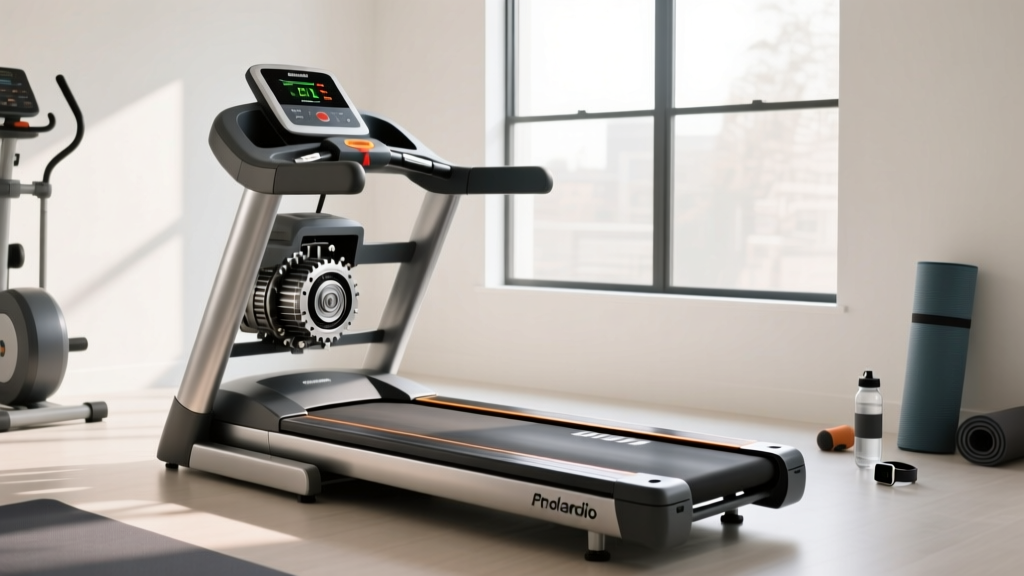
Before dissecting rowing mechanics, we must establish the baseline hardware comparison. The Echelon Stride 6s treadmill is an auto-fold walking pad designed for under-desk usage and compact storage, whereas rowers like the Concept2 RowErg demand dedicated operational length. Below is a direct hardware and physiological comparison.
| Feature | Echelon Stride 6s Treadmill | Concept2 RowErg (Standard Legs) | Hydrow (2nd Gen) |
|---|---|---|---|
| Primary Modality | Walking / Light Jogting | Full-Body Aerobic & Anaerobic Rowing | Immersive Full-Body Rowing |
| Price Range (2026) | $1,099 - $1,299 | $1,100 - $1,350 | $2,495 - $2,795 |
| Footprint (In Use) | 57' x 31' (Auto-folds to 12' height) | 96' x 24' (Separates into 2 pieces) | 86' x 25' (Stows vertically) |
| Weight Capacity | 300 lbs | 500 lbs | 375 lbs |
| Muscle Engagement | Lower Body (Calves, Quads, Glutes) | 86% of Total Body Muscle Mass | 86% of Total Body Muscle Mass |
| Impact Profile | Low-to-Moderate (Joint dependent) | Zero Impact (Seated, horizontal plane) | Zero Impact (Seated, horizontal plane) |
The Ultimate Rowing Machine Buying Guide
If your fitness goals demand higher metabolic output than a walking pad can provide, transitioning to a rower is the logical next step. According to Harvard Health Publishing, indoor rowing is a super-efficient, full-body workout that spares the joints while torching calories. When shopping for a rower, you must evaluate three critical engineering pillars.
1. Resistance Mechanics: Air vs. Magnetic vs. Water
- Air Resistance (e.g., Concept2 RowErg): Utilizes a flywheel with fan blades. The harder you pull, the more wind resistance is generated. This provides an infinite, dynamic resistance curve that perfectly mimics on-water rowing. The tradeoff? They are inherently loud, producing a distinct 'whoosh' that may disrupt household members.
- Magnetic Resistance (e.g., Hydrow, Echelon Row): Uses electromagnets to brake a metal flywheel. These are virtually silent and offer highly precise, digitally controlled drag factors. They are ideal for apartment dwellers or early-morning athletes, though they lack the organic, infinite ceiling of air resistance.
- Water Resistance (e.g., WaterRower): Features a water-filled tank and impeller. They offer a highly aesthetic, furniture-grade wood finish and a soothing water sound. However, they require periodic water purification tablets and lack the granular telemetry of digital ergometers.
2. Ergonomics, Rail Length, and Seat Height
Never buy a rower without checking the rail length against your inseam. Athletes with an inseam over 34 inches must ensure the monorail accommodates full compression without the seat wheels hitting the rear bumper. Furthermore, seat height matters. The Concept2 RowErg sits at 14 inches (standard) or 20 inches (tall legs), which is crucial for users with limited hip mobility or knee replacements who struggle to rise from low-seated positions.
3. Monitor Telemetry and Drag Factor
A machine is only as good as its data. Look for monitors that track split time per 500 meters (the gold standard for rowing pace), stroke rate (SPM), and watts. The ability to adjust the 'damper setting' (which alters the drag factor, not just 'weight') is essential for tailoring the machine to your specific body weight and biomechanical leverage.
Rowing Technique: The 4-Phase Stroke Sequence
Unlike the Echelon Stride 6s treadmill, where the belt dictates your movement and walking is a natural human gait, rowing is a highly technical, learned skill. Poor technique on an ergometer doesn't just reduce your caloric output; it actively invites lumbar spine injuries. The Concept2 Technique Guide outlines the stroke as a continuous loop broken into four distinct phases.
- The Catch (The Setup): Shins are vertical (or as close as your ankle mobility allows). Hips are hinged forward at roughly a 1-o'clock position. Arms are fully extended, lats engaged, and shoulders relaxed away from the ears. You are a coiled spring.
- The Drive (The Power Phase): The sequence is strictly Legs -> Body -> Arms. Push explosively through the heels. The arms remain completely straight, acting merely as straps connecting the handle to your torso. Only when the legs are nearly fully extended does the core swing open to an 11-o'clock position, followed finally by the arms drawing the handle to the lower ribcage.
- The Finish (The Anchor): Legs are fully extended, core braced, and the handle is resting just below the pectoral line. Elbows are drawn back, wrists are flat, and the lats are squeezed.
- The Recovery (The Reset): The exact reverse of the drive: Arms -> Body -> Legs. Extend the arms fully, hinge forward from the hips (clearing the knees), and only then allow the knees to bend as the seat slides back to the catch. The recovery should take exactly twice as long as the drive (a 1:2 ratio).
Common Technique Failure Modes (And How to Fix Them)
When transitioning from a passive treadmill walk to active ergometry, beginners frequently develop compensatory movement patterns. Identifying these failure modes early is critical for long-term joint health.
Failure Mode 1: 'Shooting the Slide'
The Error: The athlete pushes with their legs, but the seat moves backward faster than the handle. The hips rise before the shoulders, placing massive shear force on the lumbar spine.
The Fix: Visualize your torso and legs as a single, rigid unit during the first half of the drive. The handle and the seat must move in unison until the knees are cleared.
Failure Mode 2: Early Arm Bend
The Error: Biceps activate at the catch, bending the elbows before the legs have generated power. This results in immediate bicep fatigue and a massive loss of wattage.
The Fix: Wrap your fingers over the handle like a hook. Think of your arms as ropes. The power must originate from the footplate, travel through the rigid core, and transfer through straight arms.
Programming: Integrating Modalities for Optimal Cardio
The American Heart Association recommends at least 150 minutes of moderate-intensity aerobic activity or 75 minutes of vigorous activity per week. You do not necessarily have to choose strictly between the Echelon Stride 6s treadmill and a rower; combining them yields a highly periodized, joint-sparing weekly split.
Sample 2026 Hybrid Cardio Split
- Monday (Vigorous): 30-Minute Rowing Intervals. (1 min hard / 1 min easy recovery x 15 rounds). Target: 28-32 SPM.
- Tuesday (Moderate): 45-Minute Echelon Stride 6s Incline Walk. Maintain Zone 2 heart rate (approx. 110-130 BPM) while catching up on podcasts or emails.
- Wednesday (Active Recovery): 20-Minute Light Paddle on the Rower. Focus strictly on the 1:2 drive-to-recovery ratio and hip hinge mechanics. Low drag factor (damper at 3).
Thursday (Vigorous): 5,000-Meter Rowing Time Trial. Steady state, aiming for a consistent 500m split time. - Friday (Moderate): 60-Minute Echelon Stride 6s Treadmill Walk. Utilize the auto-fold feature post-workout to reclaim floor space for weekend guests.
Final Thoughts on Your Cardio Investment
Choosing between the Echelon Stride 6s treadmill and a dedicated rowing machine ultimately hinges on your biomechanical needs, spatial constraints, and intensity preferences. The Stride 6s is an unparalleled tool for NEAT (Non-Exercise Activity Thermogenesis) accumulation and low-impact daily movement. However, if your goal is to build a bulletproof posterior chain, maximize VO2 max, and engage 86% of your musculature in a zero-impact environment, investing in a high-quality air or magnetic rower is non-negotiable. By applying the buying criteria and strict 4-phase technique protocols outlined above, you will transform your home gym from a simple storage room into a high-performance metabolic laboratory.
More gear to consider
All reviews
Gold's Gym Trainer 410 Treadmill vs Ellipticals: 2026 Market Trends

Rowing Technique & Buying Guide: Horizon Fitness 7.0at Treadmill

Troubleshooting 15 3 30 Treadmill Noise: Cardio Machine Comparison
What Does Watts Mean on a Treadmill? Motor Power Guide

Best Folding Treadmills for a Treadmill and Dumbbell Workout in 2026
